
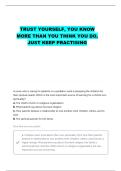
A nurse who is caring for patients on a pediatric ward is assessing the children for
their spiritual needs. Which is the most important source of learning for a child’s own
spirituality?
A. The child’s church or religious organization
B. What parents say about God and religion
C. How parents behave in relationship to one another, their children, others, and to
God
D. The spiritual adviser for the family
Give this one a try later!
c. Children learn most about their own spirituality from how their parents
behave in relationship to one another, their children, others, and God (or a
higher being). What parents say about God and religion, the family’s
spiritual advisor, and the child’s church or religious organization are less
important sources of learning.
,ageism
Give this one a try later!
attitudes that stereotype the older adult on the basis of chronologic age
culture conflict
Give this one a try later!
situation that occurs when people become aware of cultural differences,
feel threatened, and respond by ridiculing the beliefs and traditions of
others to make themselves feel more secure about their own values
Mr. Brown's teenage daughter had been involved in shoplifting. He expresses much
anger toward her and states he cannot face her, let alone discuss this with her: "I just
will not tolerate a thief." Which nursing intervention would the nurse take to assist Mr.
Brown with his deficit in forgiveness?
A. Assure Mr. Brown that many parents feel the same way.
B. Reassure Mr. Brown that many teenagers go through this kind of rebellion and that
it will pass.
C. Assist Mr. Brown to identify how unforgiving feelings toward others hurt the person
who cannot forgive.
D. Ask Mr. Brown if he is sure he has spent sufficient time with his daughter.
Give this one a try later!
c. Helping Mr. Brown identify how his unforgiving feelings may be harmful
to him is the only nursing intervention that directly addresses his unmet
spiritual need concerning forgiveness. Assuring Mr. Brown that many
parents would feel the same way or that many teenagers shoplift out of
, rebelliousness may make him feel better initially, but neither option
addresses his need to forgive. Suggesting that Mr. Brown may not have
spent enough time with his daughter is likely to make him feel guilty.
A patient states she feels so isolated from her family and church, and even from God,
“in this huge medical center so far from home.” A nurse is preparing nursing goals for
this patient. Which is the best goal for the patient to relieve her spiritual distress?
A. The patient will express satisfaction with the compatibility of her spiritual beliefs
and everyday living.
B. The patient will identify spiritual beliefs that meet her need for meaning and
purpose.
C. The patient will express peaceful acceptance of limitations and failings.
D. The patient will identify spiritual supports available to her in this medical center.
Give this one a try later!
d. Each of the four options represents an appropriate spiritual goal, but
identifying spiritual supports available to this patient in the medical center
demonstrates a goal to decrease her sense of isolation.
A nurse is interviewing a newly admitted patient. Which question is considered
culturally sensitive?
A. “Do you think you will be able to eat the food we have here?”
B. “Do you understand that we can’t prepare special meals?”
C. “What types of food do you eat for meals?”
D. “Why can’t you just eat our food while you are here?”
Give this one a try later!
c. Asking patients what types of foods they eat for meals is culturally
sensitive. The other questions are culturally insensitive.
their spiritual needs. Which is the most important source of learning for a child’s own
spirituality?
A. The child’s church or religious organization
B. What parents say about God and religion
C. How parents behave in relationship to one another, their children, others, and to
God
D. The spiritual adviser for the family
Give this one a try later!
c. Children learn most about their own spirituality from how their parents
behave in relationship to one another, their children, others, and God (or a
higher being). What parents say about God and religion, the family’s
spiritual advisor, and the child’s church or religious organization are less
important sources of learning.
,ageism
Give this one a try later!
attitudes that stereotype the older adult on the basis of chronologic age
culture conflict
Give this one a try later!
situation that occurs when people become aware of cultural differences,
feel threatened, and respond by ridiculing the beliefs and traditions of
others to make themselves feel more secure about their own values
Mr. Brown's teenage daughter had been involved in shoplifting. He expresses much
anger toward her and states he cannot face her, let alone discuss this with her: "I just
will not tolerate a thief." Which nursing intervention would the nurse take to assist Mr.
Brown with his deficit in forgiveness?
A. Assure Mr. Brown that many parents feel the same way.
B. Reassure Mr. Brown that many teenagers go through this kind of rebellion and that
it will pass.
C. Assist Mr. Brown to identify how unforgiving feelings toward others hurt the person
who cannot forgive.
D. Ask Mr. Brown if he is sure he has spent sufficient time with his daughter.
Give this one a try later!
c. Helping Mr. Brown identify how his unforgiving feelings may be harmful
to him is the only nursing intervention that directly addresses his unmet
spiritual need concerning forgiveness. Assuring Mr. Brown that many
parents would feel the same way or that many teenagers shoplift out of
, rebelliousness may make him feel better initially, but neither option
addresses his need to forgive. Suggesting that Mr. Brown may not have
spent enough time with his daughter is likely to make him feel guilty.
A patient states she feels so isolated from her family and church, and even from God,
“in this huge medical center so far from home.” A nurse is preparing nursing goals for
this patient. Which is the best goal for the patient to relieve her spiritual distress?
A. The patient will express satisfaction with the compatibility of her spiritual beliefs
and everyday living.
B. The patient will identify spiritual beliefs that meet her need for meaning and
purpose.
C. The patient will express peaceful acceptance of limitations and failings.
D. The patient will identify spiritual supports available to her in this medical center.
Give this one a try later!
d. Each of the four options represents an appropriate spiritual goal, but
identifying spiritual supports available to this patient in the medical center
demonstrates a goal to decrease her sense of isolation.
A nurse is interviewing a newly admitted patient. Which question is considered
culturally sensitive?
A. “Do you think you will be able to eat the food we have here?”
B. “Do you understand that we can’t prepare special meals?”
C. “What types of food do you eat for meals?”
D. “Why can’t you just eat our food while you are here?”
Give this one a try later!
c. Asking patients what types of foods they eat for meals is culturally
sensitive. The other questions are culturally insensitive.


