

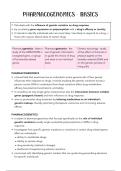
PHARMACOGENOMICS - BASICS
• PGx deals with the in uence of genetic variation on drug response
• by co-relating gene expression or polymorphism with a drug’s ef cacy or toxicity
• It intends to identify individuals who are more likely / less likely to respond to a drug, +
those who require altered dose of certain drugs
Pharmacogenetics - often a Pharmacogenomics - the Genetic toxicology - study
study of the VARIATIONS in use of genetic information of the effect of chemical or
a targeted gene, or group to guide the choice of drug physical agents on the
of functionally related and dose on an individual heredity material (DNA) and
genes. basis. on the genetic process of
living cells
PHARMACOGENOMICS
• a broad field that examines how an individual's entire genome (all of their genes)
influences their response to drugs. Involves studying the genetic variations across a
person's entire DNA to understand how these variations affect drug metabolism,
efficacy (via plasmoconcentration), and safety.
• It considers not only single gene variations but also the interactions between multiple
genes (polygenic factors) and their influence on drug response.
• aims to personalize drug treatment by tailoring medications to an individual's
genetic makeup, thereby optimizing therapeutic outcomes and minimizing adverse
effects.
PHARMACOGENETICS
• a subset of pharmacogenomics that focuses specifically on the role of individual
genetic variations (usually single nucleotide polymorphisms or SNPs) in drug
response.
• Investigates how specific genetic mutations or variations in certain drug-related genes
affect an individual’s…
• ability to metabolize drugs,
• Ability to excrete drugs
• drug sensitivity, (related to dosage)
• likelihood of experiencing adverse reactions.
• concerned with identifying genetic markers that can guide drug prescribing decisions
for specific individuals.
fl fi
,GENETIC TOXICOLOGY
• a distinct field - explores the genetic damage and mutations caused by exposure to
various chemical and physical agents, such as drugs, radiation, and environmental
toxins.
• assesses the potential of these agents to induce mutations, chromosomal damage,
and other genetic alterations that may lead to cancer or other diseases.
• Genetic toxicology plays a crucial role in evaluating the safety of drugs, chemicals, and
environmental factors, especially in terms of their genotoxicity or their ability to
damage genetic material.
• NB - UV rays - 3 types - A, B, C
• 3 flourescent UVC bulbs - degrade exogenous DNA and sterilise pipette tips
• Immediate sunburn unless behind glass or plastic
PRINCIPLE OF PHARMACOGENOMICS
• Non responders and toxic responders - treat with alternative drug or dose
• Responders and patients not predisposed to toxicity - treat with conventional drug or
dose
, • Gene • A segment of DNA that contains the instructions for
making a specific protein.
• Variant • A variation in the DNA sequence. Variants can
affect how individuals metabolize drugs.
• Copy Number • Changes in the number of copies of a particular
Variations (CNVs): gene.
Mutations • inheritable changes produced in the genetic information
stored in the DNA of living cells.
• Mutation is a difference in DNA sequence among
individuals, groups, or populations.
• Sources include SNPs, sequence repeats, insertions,
deletions, and recombination.
SINGLE NUCLEOTIDE POLYMORPHISM (SNP)
—> DNA sequence variation that occurs when a single nucleotide in the genome
sequence is altered.
• Normal Genes and SNP Variants in Drug Response
• Normal Gene: Standard genetic variant with typical drug response.
• SNP Variant: A single nucleotide polymorphism (SNP) represents an altered gene,
resulting in different drug targets. The most common type of genetic variation among
people.
• Drug Speci city: Differences in gene variants affect the drug-receptor interactions.
• Example: Diabetics Taking Metformin
• Normal Gene: 60% success rate in controlling diabetes.
• SNP Variant: Metformin's bioavailability is reduced in individuals with mutated genes
because it doesn't pass through the gut effectively. While it may control diabetes, it's
not fully effective.
• Problem: In 40% of the population, SNPs lead to drug failure, causing metformin to
remain in blood plasma, potentially becoming toxic.
• Implications for Drug Development:
• Success Rate: Indicates that the drug is well-tolerated and metabolized.
fi
• PGx deals with the in uence of genetic variation on drug response
• by co-relating gene expression or polymorphism with a drug’s ef cacy or toxicity
• It intends to identify individuals who are more likely / less likely to respond to a drug, +
those who require altered dose of certain drugs
Pharmacogenetics - often a Pharmacogenomics - the Genetic toxicology - study
study of the VARIATIONS in use of genetic information of the effect of chemical or
a targeted gene, or group to guide the choice of drug physical agents on the
of functionally related and dose on an individual heredity material (DNA) and
genes. basis. on the genetic process of
living cells
PHARMACOGENOMICS
• a broad field that examines how an individual's entire genome (all of their genes)
influences their response to drugs. Involves studying the genetic variations across a
person's entire DNA to understand how these variations affect drug metabolism,
efficacy (via plasmoconcentration), and safety.
• It considers not only single gene variations but also the interactions between multiple
genes (polygenic factors) and their influence on drug response.
• aims to personalize drug treatment by tailoring medications to an individual's
genetic makeup, thereby optimizing therapeutic outcomes and minimizing adverse
effects.
PHARMACOGENETICS
• a subset of pharmacogenomics that focuses specifically on the role of individual
genetic variations (usually single nucleotide polymorphisms or SNPs) in drug
response.
• Investigates how specific genetic mutations or variations in certain drug-related genes
affect an individual’s…
• ability to metabolize drugs,
• Ability to excrete drugs
• drug sensitivity, (related to dosage)
• likelihood of experiencing adverse reactions.
• concerned with identifying genetic markers that can guide drug prescribing decisions
for specific individuals.
fl fi
,GENETIC TOXICOLOGY
• a distinct field - explores the genetic damage and mutations caused by exposure to
various chemical and physical agents, such as drugs, radiation, and environmental
toxins.
• assesses the potential of these agents to induce mutations, chromosomal damage,
and other genetic alterations that may lead to cancer or other diseases.
• Genetic toxicology plays a crucial role in evaluating the safety of drugs, chemicals, and
environmental factors, especially in terms of their genotoxicity or their ability to
damage genetic material.
• NB - UV rays - 3 types - A, B, C
• 3 flourescent UVC bulbs - degrade exogenous DNA and sterilise pipette tips
• Immediate sunburn unless behind glass or plastic
PRINCIPLE OF PHARMACOGENOMICS
• Non responders and toxic responders - treat with alternative drug or dose
• Responders and patients not predisposed to toxicity - treat with conventional drug or
dose
, • Gene • A segment of DNA that contains the instructions for
making a specific protein.
• Variant • A variation in the DNA sequence. Variants can
affect how individuals metabolize drugs.
• Copy Number • Changes in the number of copies of a particular
Variations (CNVs): gene.
Mutations • inheritable changes produced in the genetic information
stored in the DNA of living cells.
• Mutation is a difference in DNA sequence among
individuals, groups, or populations.
• Sources include SNPs, sequence repeats, insertions,
deletions, and recombination.
SINGLE NUCLEOTIDE POLYMORPHISM (SNP)
—> DNA sequence variation that occurs when a single nucleotide in the genome
sequence is altered.
• Normal Genes and SNP Variants in Drug Response
• Normal Gene: Standard genetic variant with typical drug response.
• SNP Variant: A single nucleotide polymorphism (SNP) represents an altered gene,
resulting in different drug targets. The most common type of genetic variation among
people.
• Drug Speci city: Differences in gene variants affect the drug-receptor interactions.
• Example: Diabetics Taking Metformin
• Normal Gene: 60% success rate in controlling diabetes.
• SNP Variant: Metformin's bioavailability is reduced in individuals with mutated genes
because it doesn't pass through the gut effectively. While it may control diabetes, it's
not fully effective.
• Problem: In 40% of the population, SNPs lead to drug failure, causing metformin to
remain in blood plasma, potentially becoming toxic.
• Implications for Drug Development:
• Success Rate: Indicates that the drug is well-tolerated and metabolized.
fi


