

Med-surg pharmacology
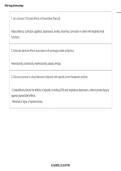
1. List common CNS side effects of Famotidine (Pepcid):
Hallucinations, confusion, agitation, depression, anxiety, insomnia, convulsion in client with impaired renal
functions.
2. Describe adverse effects associated with aminoglycoside antibiotics:
Neurotoxicity, ototoxicity, nephrotoxicity, ataxia, vertigo.
3. Discuss purpose of using Naloxone (Narcan) with opioids; know therapeutic actions:
• Competitively blocks the effects of opioids, including CNS and respiratory depression, without producing any
agonist (opioid like) effects.
• Reversal of signs of opioid excess.
4/16/2026, 12:59:57 PM
,Med-surg pharmacology
4. Describe what comprises Balanced or Neuroleptic Anesthesia:
The combing of several drugs, each with a specific effect, to achieve analgesia, muscle relaxation,
unconsciousness and amnesia. Balanced anesthesia involves the following agents:
• Preoperative meds: the use of anticholinergics that decrease secretions to facilitate intubation and prevent
bradycardia associated with neural depression.
• Sedative-hypnosis: to relax the patient, facilitate amnesia and decrease sympathetic stimulations.
• Antiemetic: to decrease nausea and vomiting associated with the slowing of the GI activity.
• Antihistamines: to decrease the chance of allergic reactions and help to dry up secretions.
• Narcotics: to aid analgesia and sedation.
5. Identify the antidote or reversal agent for Pancuronium bromide (Pavulon) used in General Anesthesia:
(Regonol) Pyridostigmine bromide injection, neostigmine, or edrophonium, in conjunction with atropine or
glycopyrrolate, will ususally antagonize the skeletal muscle relaxant action of Pancuronium bromide (pavulon)
by adequacy of respiration a peripheral nerve stimulator may also be used to monitor restoration of twitch
response.
6. Identify uses for Aminophylline and list common/serious side effects:
Uses: Treats and prevent wheezing and trouble breathing caused by ongoing lung disease like asthma,
emphysema, and chronic bronchitis.
Common side effects: Upset stomach, stomach pain, diarrhea, headache, restlessness, insomnia, irritability.
Serious side effects: Vomiting, increasing or rapid heart rate, irregular heartbeat, seizures, skin rash.
4/16/2026, 12:59:57 PM
, Med-surg pharmacology
7. Describe lifelong medication therapy & diagnostic test(s) appropriate for
Pernicious Anemia:
Lifelong medication therapy:
• A shot of B12 once a month (if a client has severe low B12 may get more shots at the beginning).
• B12 supplements by mouth (for some patients a high dose of B12 tablets work well and don't need shots)
• A certain type of B12 may be given though the nose.
Diagnostic tests:
• Physical exam, bone narrow examination (only if diagnostic is unclear), CBC, reticulocyte count, schilling test,
LDH, methyl/malonic acid (MMA) level, B12 level.
8. List states in which folic acid deficiency may exist:
• Occurs secondary to increased demand (as in pregnancy or growth spurts).
• As a result of absorption problems in the small intestines.
• Because of drugs that cause folate deficiencies.
• Secondary to malnutrition of alcoholism.
4/16/2026, 12:59:57 PM
1. List common CNS side effects of Famotidine (Pepcid):
Hallucinations, confusion, agitation, depression, anxiety, insomnia, convulsion in client with impaired renal
functions.
2. Describe adverse effects associated with aminoglycoside antibiotics:
Neurotoxicity, ototoxicity, nephrotoxicity, ataxia, vertigo.
3. Discuss purpose of using Naloxone (Narcan) with opioids; know therapeutic actions:
• Competitively blocks the effects of opioids, including CNS and respiratory depression, without producing any
agonist (opioid like) effects.
• Reversal of signs of opioid excess.
4/16/2026, 12:59:57 PM
,Med-surg pharmacology
4. Describe what comprises Balanced or Neuroleptic Anesthesia:
The combing of several drugs, each with a specific effect, to achieve analgesia, muscle relaxation,
unconsciousness and amnesia. Balanced anesthesia involves the following agents:
• Preoperative meds: the use of anticholinergics that decrease secretions to facilitate intubation and prevent
bradycardia associated with neural depression.
• Sedative-hypnosis: to relax the patient, facilitate amnesia and decrease sympathetic stimulations.
• Antiemetic: to decrease nausea and vomiting associated with the slowing of the GI activity.
• Antihistamines: to decrease the chance of allergic reactions and help to dry up secretions.
• Narcotics: to aid analgesia and sedation.
5. Identify the antidote or reversal agent for Pancuronium bromide (Pavulon) used in General Anesthesia:
(Regonol) Pyridostigmine bromide injection, neostigmine, or edrophonium, in conjunction with atropine or
glycopyrrolate, will ususally antagonize the skeletal muscle relaxant action of Pancuronium bromide (pavulon)
by adequacy of respiration a peripheral nerve stimulator may also be used to monitor restoration of twitch
response.
6. Identify uses for Aminophylline and list common/serious side effects:
Uses: Treats and prevent wheezing and trouble breathing caused by ongoing lung disease like asthma,
emphysema, and chronic bronchitis.
Common side effects: Upset stomach, stomach pain, diarrhea, headache, restlessness, insomnia, irritability.
Serious side effects: Vomiting, increasing or rapid heart rate, irregular heartbeat, seizures, skin rash.
4/16/2026, 12:59:57 PM
, Med-surg pharmacology
7. Describe lifelong medication therapy & diagnostic test(s) appropriate for
Pernicious Anemia:
Lifelong medication therapy:
• A shot of B12 once a month (if a client has severe low B12 may get more shots at the beginning).
• B12 supplements by mouth (for some patients a high dose of B12 tablets work well and don't need shots)
• A certain type of B12 may be given though the nose.
Diagnostic tests:
• Physical exam, bone narrow examination (only if diagnostic is unclear), CBC, reticulocyte count, schilling test,
LDH, methyl/malonic acid (MMA) level, B12 level.
8. List states in which folic acid deficiency may exist:
• Occurs secondary to increased demand (as in pregnancy or growth spurts).
• As a result of absorption problems in the small intestines.
• Because of drugs that cause folate deficiencies.
• Secondary to malnutrition of alcoholism.
4/16/2026, 12:59:57 PM


