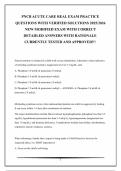
This comprehensive acute care pediatric nurse practitioner exam preparation guide is fully updated for the 2025–2026 PNCB testing cycle and is specifically designed for the Certified Pediatric Nurse Practitioner – Acute Care (CPNP-AC) certification examination. It contains over 150 real exam-style questions with verified answers and detailed rationales, covering all major content areas required for success on the PNCB Acute Care exam.
Content is organized into the following major topic areas:
1. Fluid, Electrolytes, and Nutrition
Refeeding syndrome – hypophosphatemia (phosphate 3.5 mg/dL), hypokalemia (K+ 3.5 mEq/L), hypomagnesemia (Mg 1.8 mg/dL), thiamine deficiency
Enteral nutrition in severe malnutrition – laboratory values indicative of refeeding syndrome (phosphate 3.0 mg/dL & potassium 2.8 mEq/L)
Parenteral nutrition – triglycerides should be monitored 48-72 hours after initiation to adjust formulation
Maintenance fluids for child with pneumonia and adequate urine output – D5 normal saline + potassium chloride 20 mEq/L
Indirect calorimetry – BEST estimate of energy requirements for mechanically ventilated child
Cholestatic liver disease – complication of long-term parenteral nutrition
Positive nitrogen balance – main objective of parenteral nutrition in septic shock
2. Respiratory Disorders and Mechanical Ventilation
Tracheal plug in mechanically ventilated child – low tidal volumes, high respiratory rate, high peak inspiratory pressure (PIP)
Readiness for extubation – infant with bronchiolitis on pressure support ventilation with tidal volumes 6-7 mL/kg
Pneumomediastinum – chest radiograph shows air (increased lucency) in mediastinum; presenting with chest pain and mild dyspnea
Bronchiolitis – diffuse wheezes and crackles, RSV most common, hypoxia may be present
Pneumonia – fever, cough, decreased breath sounds, rales over affected lobe
Croup (laryngotracheobronchitis) – parainfluenza virus, barky cough, stridor (high-pitched whistling on inspiration)
Foreign body aspiration – sudden onset wheezing in previously healthy child during playtime
Pulmonary contusion after trauma – low tidal volumes (6-8 mL/kg), permissive hypercapnia, PaO2 55-80 mmHg
ARDS management – lower tidal volumes (6-8 mL/kg), PEEP 8-12 cm H2O, permissive hypercapnia, SpO2 88-95%
Positive end-expiratory pressure (PEEP) of 10 – decreased preload (decreased venous return)
3. Cardiovascular Disorders
Coarctation of the aorta – right upper extremity hypertension, weak femoral pulses, asymptomatic school-age child
Medical management of coarctation – monitoring upper extremity blood pressures for hypertension
Ductal-dependent congenital heart lesion in neonate – alprostadil (PGE1) to reopen ductus arteriosus
Tetralogy of Fallot – hypercyanotic spells indicate urgent surgical intervention
Post-pericardiotomy syndrome – 1-2 weeks after cardiac surgery, fever, pleuritic chest pain, pericardial friction rub
Pericarditis – PR-segment depression on ECG, jugular venous distention, muffled heart sounds, friction rub
Cardiac tamponade – CVP 20 mmHg with BP 70/55 mmHg (high CVP, narrowed pulse pressure)
Hypertrophic cardiomyopathy – autosomal dominant, family history of early sudden death, ECG with LVH and ST changes
Mitral valve prolapse – most consistent echocardiogram finding in Marfan syndrome
Critical congenital heart disease (CCHD) screening – failed screen (SpO2 90%), hyperoxia test no improvement → initiate alprostadil
Supraventricular tachycardia (SVT) in infant – heart rate 290, likely outgrow by 1 year of age
Endocarditis – Janeway lesions (nontender erythematous macules on soles/palms), Osler nodes (tender nodules on finger/toe pads)
4. Neurologic Disorders
Epidural hematoma – lucid interval followed by acute decline in GCS from 15 to 8
Subdural hematoma – hyperdense crescentic mass along cerebral convexities → neurosurgical consult
Abusive head trauma – retinal hemorrhages, rib fractures, classic metaphyseal lesions (CML)
Stage III hepatic encephalopathy – confusion, arousable from stupor, asterixis, hyperreflexia
Pseudotumor cerebri – overweight adolescent female, headaches with Valsalva, pulsatile tinnitus, vision changes
Cerebral palsy – non-progressive, increased DTRs, peripheral hypertonia, weakness, cognitive impairment
Guillain-Barré syndrome – ascending weakness, areflexia, post-viral illness, treatment with IVIG
Myasthenia gravis – myasthenic crisis = respiratory distress (NOT excessive salivation – that's cholinergic crisis)
Long QT syndrome – syncope with sudden auditory stimuli (school bell), prolonged QT interval on ECG
Intracranial mass with herniation – hypertension, bradycardia, anisocoria, fixed dilated pupil → hypertonic saline
SIADH post-resection of astrocytoma – hyponatremia, decreased UOP, increased urine osmolality → fluid restriction (D5 NS at 2/3 maintenance)
Diabetes insipidus – UOP 8 mL/kg/hour, serum Na+ 150, urine specific gravity 1.001 → IV vasopressin
5. Endocrine and Metabolic Disorders
Diabetic ketoacidosis (DKA) – initial management: NS fluid bolus 20 mL/kg, insulin infusion 0.1 units/kg/hr (bicarbonate contraindicated, bolus insulin contraindicated)
Transition from insulin infusion to subcutaneous insulin – venous pH 7.30
DKA first hour priority – initiate fluid resuscitation (electrolyte replacement, acidosis reversal, hyperglycemia correction come later)
New onset diabetes – polyuria, weight loss, pH 7.12, HCO3 9, glucose 567, positive ketones → NS bolus + insulin infusion
Hypoglycemia in infant – bedside glucose 65 mg/dL (normal 45 mg/dL) → reassess prior to next feeding
Hyperthyroidism (Graves' disease) – decreased TSH, elevated free T4, decline in school performance, weight loss
Hypothyroidism – elevated TSH, decreased T4
Adrenal insufficiency – hypoglycemia, hyponatremia, hyperkalemia → serum cortisol
Inborn error of metabolism – first priority: IV dextrose (stop enteral intake, avoid protein)
6. Renal and Genitourinary Disorders
Hemolytic uremic syndrome (HUS) – fever, abdominal pain, bloody diarrhea, decreased UOP, hematuria, schistocytes, thrombocytopenia, normal coagulation labs
HUS history question – "What has the child eaten in the past week?" (undercooked beef, E. coli O157:H7)
Acute poststreptococcal glomerulonephritis (APSGN) – 1-2 weeks after pharyngitis, hypertension, periorbital edema, hematuria, proteinuria → serum antistreptolysin O titer
Nephrotic syndrome – first-line treatment: corticosteroids (prednisone 2 mg/kg/day)
Nephrolithiasis prevention – ensure at least 2 liters of fluid intake daily
Pyelonephritis – fever 102.2°F (39°C) with UTI (leukocyte esterase and nitrites positive)
Type I renal tubular acidosis (RTA) – normal anion gap metabolic acidosis, hypokalemia, failure to thrive
Renal injury (grade II) – most important to monitor: hemoglobin and hematocrit (hematuria common sign)
7. Infectious Diseases
Occult bacteremia – highest risk: 1 month old with decreased capillary refill and fever 102°F
Meningitis – bacterial: urine output 8 mL/kg/hr, serum Na+ 150 → IV vasopressin for DI
Osteomyelitis – MOST common cause of secondary hypertension in school-age children? (No – renal parenchymal disease is #1)
Septic shock – intubation agent of choice: ketamine (maintains cardiovascular stability; etomidate not recommended)
Sepsis therapeutic endpoints – UOP 1 mL/kg/hr, capillary refill ≤2 seconds, normal BP, warm extremities
Transition from aerobic to anaerobic metabolism – serum lactate 6.2 mmol/L
Pertussis in infant 6 months – apnea (not cough) after catarrhal stage
Measles – cough, coryza, conjunctivitis, Koplik spots (greyish-white spots on posterior buccal mucosa)
Rocky Mountain spotted fever (RMSF) – erythematous maculopapular rash on wrists and ankles, fever, myalgias, headache
Necrotizing fasciitis – pain out of proportion to clinical findings, crepitus, elevated CK indicates myonecrosis → urgent surgical debridement
Cellulitis – treatment: cephalexin or cloxacillin PO
Skin abscess (purulent, 1.5 cm, afebrile) – incision & drainage with Gram stain (antibiotics not indicated without systemic symptoms)
Human bite – most common location: over dorsal MCP from punch in mouth → urgent surgical exploration
Dog/cat bite pathogens – Pasturella, S. aureus, S. viridans; treatment: Clavulin
Chylothorax post-aortic arch repair – high protein, low fat diet (medium-chain triglycerides)
8. Hematology and Oncology
Leukemia – hyperleukocytosis (WBC 105,000), thrombocytopenia (plt 10,000), anemia (Hgb 6.1) → fluid bolus + oncology consult
Trisomy 21 with leukemia – higher incidence, presents with fever, pallor, decreased activity, pancytopenia
Tumor lysis syndrome – Chvostek sign and Trousseau sign (hypocalcemia) after chemotherapy initiation
Wilms tumor – nephrectomy followed by chemotherapy (always)
Neuroblastoma with urinary retention – medical emergency (spinal cord compression)
Immune thrombocytopenic purpura (ITP) – post-viral, isolated thrombocytopenia (plt 95,000), bleeding gums, bruises
Osteosarcoma – sunburst pattern on radiograph
Splenectomy preventive care – pneumococcal, Haemophilus influenzae, and meningococcal vaccines
Intrathecal chemotherapy – desired intervertebral space: L4-L5 (below spinal cord termination)
Opiate withdrawal risk – infant on morphine infusion for 6 days (minimum 3 days, 100% after 10 days)
Platelet transfusion threshold – post-op epidural hematoma evacuation with plt 72,000 (active bleeding/risk)
Transfusion-related acute lung injury (TRALI) – hypoxia and bilateral infiltrates within 6 hours of transfusion
Propofol infusion syndrome – refractory bradycardia, metabolic acidosis, hyperkalemia, rhabdomyolysis
Factor V Leiden deficiency with femur fracture – high risk for thrombosis and embolus
Sickle cell disease – penicillin prophylaxis until 5 years of age
9. Trauma and Surgical Conditions
Blast injury – abdominal manifestations delayed 8-36 hours after exposure
Compartment syndrome in children – most sensitive early indicator: increasing analgesic requirement (not the 5 Ps)
Tension pneumothorax after chest trauma – needle thoracostomy priority (2nd ICS, midclavicular line)
Slipped capital femoral epiphysis (SCFE) – adolescent, overweight, groin pain, "pop" while playing basketball → plain radiograph (AP and lateral)
Septic arthritis vs. transient synovitis – temperature 38.5°C (101.3°F) most helpful differentiating finding
Appendicitis – right lower quadrant pain, N/V, low-grade fever (standard presentation)
Intussusception – currant jelly stool (not in this file but classic)
Necrotizing enterocolitis (NEC) history – peritoneal drain placement → risk for intestinal strictures
Vascular ring – intermittent tracheal narrowing, posterior pulsatile indentation of esophagus on swallowing study
Burn management – keep patient covered and warm, fluid resuscitation, antimicrobial dressings, tetanus prophylaxis
Burn depth – first degree (erythema, painful), superficial partial thickness (blisters, sensate, heals 2-3 weeks)
Rule of Nines – head/neck 9%, each UE 9%, each LE 9%, front trunk 18%, back trunk 18%
Parkland formula – fluid resuscitation in burn patients
Escharotomy – for circumferential burns
Nutritional support in burns – enteral nutrition within 24 hours, consult nutrition service
10. Medications and Toxicology
Propranolol (Inderal) – bradycardia adverse effect (beta-blocker)
Succinylcholine contraindication – family history of Duchenne muscular dystrophy (risk of hyperkalemia, rhabdomyolysis)
Opiate intoxication – pinpoint pupils, respiratory depression, depressed LOC, bradycardia
Anticholinergic toxicity (diphenhydramine overdose) – agitation, mydriasis, flushing ("Mad as a hatter, blind as a bat, red as a beet, hot as a hare, dry as a bone")
Dextromethorphan abuse – euphoric effects, popular among adolescents
Fentanyl chest wall rigidity – treatment: neuromuscular blocking agent (rocuronium)
Propofol infusion syndrome – refractory bradycardia, metabolic acidosis
Alprostadil (PGE1) – for ductal-dependent congenital heart lesions
Terbutaline – adverse effect: heart palpitations (preterm labor)
Magnesium sulfate toxicity – calcium gluconate as antidote
Betamethasone – stimulates fetal lung maturity
Rho(D) immune globulin – for Rh-negative mother with Rh-positive newborn
Acyclovir – for genital herpes (antiviral)
Metronidazole – for bacterial vaginosis, trichomoniasis
Oxytocin induction – contraindicated with active genital herpes
Methylergonovine – contraindicated with hypertension (BP 142/92)
11. Developmental and Behavioral Pediatrics
Preschooler behavioral/psychiatric disorder – frequent temper tantrums
2-year-old psychomotor development – builds tower of 6-7 blocks
Palliative care primary focus – develop desirable goals of care, recommend life-prolonging therapies, enhance quality of life
Beneficence – prescribing antibiotics for bacterial pneumonia (providing care that benefits the child)
Informed consent comprehension – have person explain in own words what will be done
Transition from pediatric to adult care – care coordination initiated by pediatric team
Telehealth – MOST important consideration: patient location (across state lines determines regulations)
Privileging for NP – hospital permits NP to perform procedures after demonstrating competence
Evidence-based practice – interprofessional team reviewing literature to develop algorithms
Child Protective Services reporting – focus on child's well-being when informing family
Sexual abuse reporting – provide information to law enforcement as requested (mandated reporter)
12. Genetic and Congenital Disorders
Turner syndrome – pedal edema, low hairline, loose skinfolds at nape of neck → echocardiogram (cardiac defects common: bicuspid aortic valve, coarctation)
DiGeorge syndrome (22q11.2 deletion) – interrupted aortic arch, dysmorphic features, thymic aplasia → immune dysfunction
Down syndrome (trisomy 21) – atlantoaxial instability screening before contact sports
Prader-Willi syndrome – severe hypotonia, feeding difficulties, hypogonadism, small hands/feet, risk for FTT
Marfan syndrome – mitral valve prolapse most common on echocardiogram
Noonan syndrome – short stature, developmental delay, cardiac defects
Fragile X syndrome – most common inherited form of intellectual disability
Fetal alcohol syndrome – developmental delay, growth retardation
13. Rheumatology and Immunology
Henoch-Schönlein purpura (HSP) – classic triad: abdominal pain, purpura, arthritis → ask about joint pain
Systemic lupus erythematosus (SLE) – malar rash (photosensitive), leukopenia, thrombocytopenia, proteinuria
Juvenile idiopathic arthritis (JIA) – routine ophthalmology screening for uveitis (slit lamp exam)
Patellofemoral pain syndrome – adolescent, bilateral knee pain, worsens with stairs/sitting with knees flexed, grinding sensation
Reactive arthritis post-gastroenteritis – PT and OT to maximize return to mobility
14. Neonatology
Vitamin K deficiency in premature neonate (30 weeks) – prolonged PT/aPTT, normal fibrinogen → diagnosis confirmed by IV vitamin K administration
Newborn screening – ensure newborn has been feeding for 24 hours prior to specimen
Apgar scoring – heart rate, respiratory effort, muscle tone, reflex irritability, color
Newborn reflexes – Babinski (positive – normal), tonic neck, Moro, rooting, sucking
Neonatal abstinence syndrome (NAS) – swaddle in flexed position, initiate seizure precautions, exaggerated reflexes
Newborn of mother with narcotic use disorder – contraindication: frequent stimulation (need quiet, calm environment)
Phototherapy – remove all clothing except diaper, ensure eyes closed beneath shield, turn/reposition q2-3 hours
Hypoglycemia in newborn – glucose 20 mg/dL requires intervention; 65 mg/dL is normal (reassess prior to next feeding)
15. Ethics, Legal, and Professional Issues
Mandated reporting – report suspected abuse to Child Protective Services, focus on child's well-being
Informed consent – have legal guardian explain procedure in own words to verify comprehension
Privileging – hospital grants specific procedural privileges after competence demonstrated
Evidence-based practice – reviewing literature, grading evidence, developing practice guidelines
Telehealth – patient location determines applicable state regulations
Transition to adult care – pediatric team initiates care coordination (not family-led)
Beneficence vs. nonmaleficence – beneficence = providing beneficial care (antibiotics for pneumonia); nonmaleficence = avoiding harm (double-checking dosage)
Key features:
150+ multiple-choice questions with verified answers
Detailed rationales for many questions
Comprehensive coverage of acute care pediatrics: PICU, NICU, trauma, infectious disease, cardiology, neurology, endocrinology, hematology/oncology, nephrology, pulmonology, gastroenterology, rheumatology, genetics, neonatology, ethics, and professional issues
Original page-numbered layout (106 pages)
High-yield for PNCB CPNP-AC certification exam, acute care pediatric nurse practitioner boards, and pediatric critical care nursing exams
Perfect for acute care pediatric nurse practitioner (CPNP-AC) candidates, PICU nurses, NICU nurses, pediatric hospitalists, and any advanced practice provider preparing for PNCB acute care certification.
Content preview
PNCB ACUTE CARE REAL EXAM PRACTICE
QUESTIONS WITH VERIFIED SOLUTIONS 2025/2026
NEW MODIFIED EXAM WITH CORRECT
DETAIILED ANSWERS WITH RATIONALE
CURRENTLY TESTED AND APPROVED!!!
Enteral nutrition is initiated in a child with severe malnutrition. Laboratory values indicative
of refeeding syndrome include a magnesium level of 1.5 mg/dL, and:
A. Phosphate 3.0 ml/dL & potassium 2.8 mEq/L
B. Phosphate 3.0 ml/dL & potassium 6 mEq/L
C. Phosphate 7.0 ml/dL & potassium 2.8 mEq/L
D. Phosphate 7.0 ml/dL & potassium 6 mEq/L -- ANSWER--A. Phosphate 3.0 ml/dL &
potassium 2.8 mEq/L
(Refeeding syndrome occurs when malnourished patients are refed too aggressively leading.
It can occur within 1-3 days after reinstitution of nutrition.
The major manifestations include fluid overload, hypophosphatemia (phosphate less than 3.5
mg/dL), hypokalemia (potassium less than 3.5 mEq/L), hypomagnesemia (magnesium less
than 1.8 mg/dL), and thiamine deficiency. Complications include heart failure, dysrhythmias,
respiratory muscle weakness, seizures,
When informing a family that a report is being made to Child Protective Services for
suspected abuse, it is MOST important to
A. Focus on the child's well being
1
,B. Identify the suspected perpetrator
C. Identify legal requirements for mandatory reporting
D. Share details with family to avoid misunderstanding -- ANSWER--A. Focus on the child's
well being
Manifestations of abdominal injuries secondary to a blast mechanism are typically:
A. Acute & immediately apparent
B. Observed less than 6 hours after exposure
C. Delayed 8-36 hours after exposure
D. Chronic & slow to develop -- ANSWER--C. Delayed 8-36 hours after exposure
(Blast attack, as seen in explosions, causes extensive compression and distortion of the
gastrointestinal (GI) tract & other air-filled organs. Manifestations generally delayed,
presenting 8-36 hours after exposure.)
In a child with myasthenia gravis, which of the following symptoms would be MOST
indicative of a myasthenic crisis?
A. Eye drooling
B. Respiratory distress
C. Excessive salivation
D. Muscle fasciculation -- ANSWER--B. Respiratory distress
(Characterized by weakness and fatigue of skeletal muscle tissue that results from
autoimmune destruction of acetylcholine receptors (AchR). A crisis event, or myasthenic
crisis, is an acute exacerbation of the disease process that results in severe weakness from
2
,dysfunction of the neuromuscular junctions. It is characterized by respiratory failure due to
weakness of the airway or respiratory muscles.
A cholinergic crisis, is a severe weakness caused by overtreatment with cholinergic
medications used to treat MG & crisis present with excessive salivation, excessive
lacrimation, diarrhea, sweating, pupillary constriction, and muscle fasciculation.
A child with a history of congenital heart disease fell while playing and presents with a
closed fracture of the humerus. Physical exam reveals mild bradycardia and a moderate pain
score.
Which of the following medications would MOST likely explain this child's bradycardia?
A. Enalapril (Vasotec)
B. Furosemide (Lasix)
C. Levothyroxine (Synthroid)
D. Propranolol (Inderal) -- ANSWER--D. Propranolol (Inderal)
(Decreases heart rate, myocardial contractility, blood pressure, and myocardial oxygen
demand. Adverse effects include bradycardia, hypotension, and atrioventricular conduction
disturbances)
A previously healthy preschooler who is fully immunized, presents with a history of fever,
URI symptoms, & joint pain over the past several days. Physical exam reveals petechiae and
hepatosplenomegaly. Vital signs include HR 156, RR 32, temp 101.6 (38.7), BP 86/44 & O2
98% on RA. Lab results include Na+ 132, K+ 6, Glucose 100, Ca+ 0.95, Phos 6.3, WBC
105,000, Hgb 6.1 & Plt 10,000. Which is the BEST course of action?
A. Obtain LFTS & type & cross for blood products
B. Administer calcium gluconate & consult nephrology
C. Obtain blood cultures & administer IV Ceftriaxone
3
, D. Administer a fluid bolus & consult oncology -- ANSWER--D. Administer a fluid bolus &
consult oncology
(The combination of leukocytosis, thrombocytopenia, and anemia should raise red flags for
an oncologic process, most likely leukemia. After initial laboratory values are obtained, the
child should receive aggressive hydration.)
An adolescent presents with bilateral knee pain that has occurred for several months,
exacerbated with activities such as climbing stairs and running. Pain is also worsened by
sitting with the knees flexed for an extended time and is described as a grinding sensation
under the kneecaps. No joint swelling is noted on examination. The MOST likely diagnosis
is:
A. Osgood-Schlatter disease
B. Osteochondritis dissecans
C. Patellofemoral pain syndrome
D. Popliteal cyst (Baker's cyst) -- ANSWER--C. Patellofemoral pain syndrome
(Type of idiopathic anterior knee pain, common in adolescents. This type of knee pain
worsens with activity, especially going up and down stairs, and when sitting in one position
for a prolonged period of time. Treatment involves an exercise program focusing on hip
girdle and vastus medialis strengthening with lower extremity flexibility)
A toddler presents with vomiting and altered mental status after an ingestion of a large
amount of aspirin about 45 minutes ago. Prior to the administration of activated charcoal, the
PRIORITY is to:
A. Obtain a urine drug screen
B. Ensure IV access
C. Obtain and EKG
4