
4/13/26, 9:14 AM BIO 256 Exam 1 Review Exam Newest 2026 Complete Questions | With 100% Correct Answers graded A+ Guaranteed Success!! …
BIO 256 Exam 1 Review Exam Newest 2026
Complete Questions | With 100% Correct Answers
graded A+ Guaranteed Success!!
Save
Terms in this set (68)
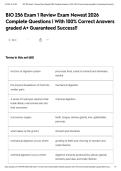
function of digestive system processes food, extracts nutrients and eliminates
residue
the physical breakdown of food into mechanical digestion
smaller parts
A series of hydrolysis reactions that chemical digestion
break dietary macromolecules into
their monomers
6 accessory organs teeth, tongue, salivary glands, liver, gallbladder,
pancreas
what makes up the gi tract stomach and intestines
mechanical digestion occurs where grinding of teeth and churning of stomach and
small intestine
chemical digestion occurs where digestive enzymes produced by salivary glands,
stomach, pancreas, and small intestine
https://quizlet.com/1167079148/bio-256-exam-1-review-exam-newest-2026-complete-questions-with-100-correct-answers-graded-a-guaranteed-succe… 1/7
, 4/13/26, 9:14 AM BIO 256 Exam 1 Review Exam Newest 2026 Complete Questions | With 100% Correct Answers graded A+ Guaranteed Success!! …
most absorption occurs where small intestine
small mucosal projections that villi
increase surface area for absorption
permanent transverse folds in the circular folds
intestinal lining
four layers of the digestive tract mucosa, submucosa, muscularis externa, serosa
(from inner to outer)
the submucosal plexus is located ____ in the submucosa layer
the myenteric plexus is located muscularis externa
between two layers of the
function of submucosal plexus control glandular secretions of mucosa and
movement of muscularis mucosae
function of myenteric plexus controls peristalsis and other contractions of
muscularis externa
what are the three salivary glands parotid, submandibular, sublingual
function of saliva begins starch and fat digestion, inhibits bacterial
growth, binds food together to form bolus,
dissolves molecules to stimulate taste buds
two enzymes in the saliva salivary amylase and lingual lipase
salivary amylase function begins starch digestion and breaks down
polysaccharides
https://quizlet.com/1167079148/bio-256-exam-1-review-exam-newest-2026-complete-questions-with-100-correct-answers-graded-a-guaranteed-succe… 2/7
BIO 256 Exam 1 Review Exam Newest 2026
Complete Questions | With 100% Correct Answers
graded A+ Guaranteed Success!!
Save
Terms in this set (68)
function of digestive system processes food, extracts nutrients and eliminates
residue
the physical breakdown of food into mechanical digestion
smaller parts
A series of hydrolysis reactions that chemical digestion
break dietary macromolecules into
their monomers
6 accessory organs teeth, tongue, salivary glands, liver, gallbladder,
pancreas
what makes up the gi tract stomach and intestines
mechanical digestion occurs where grinding of teeth and churning of stomach and
small intestine
chemical digestion occurs where digestive enzymes produced by salivary glands,
stomach, pancreas, and small intestine
https://quizlet.com/1167079148/bio-256-exam-1-review-exam-newest-2026-complete-questions-with-100-correct-answers-graded-a-guaranteed-succe… 1/7
, 4/13/26, 9:14 AM BIO 256 Exam 1 Review Exam Newest 2026 Complete Questions | With 100% Correct Answers graded A+ Guaranteed Success!! …
most absorption occurs where small intestine
small mucosal projections that villi
increase surface area for absorption
permanent transverse folds in the circular folds
intestinal lining
four layers of the digestive tract mucosa, submucosa, muscularis externa, serosa
(from inner to outer)
the submucosal plexus is located ____ in the submucosa layer
the myenteric plexus is located muscularis externa
between two layers of the
function of submucosal plexus control glandular secretions of mucosa and
movement of muscularis mucosae
function of myenteric plexus controls peristalsis and other contractions of
muscularis externa
what are the three salivary glands parotid, submandibular, sublingual
function of saliva begins starch and fat digestion, inhibits bacterial
growth, binds food together to form bolus,
dissolves molecules to stimulate taste buds
two enzymes in the saliva salivary amylase and lingual lipase
salivary amylase function begins starch digestion and breaks down
polysaccharides
https://quizlet.com/1167079148/bio-256-exam-1-review-exam-newest-2026-complete-questions-with-100-correct-answers-graded-a-guaranteed-succe… 2/7


