

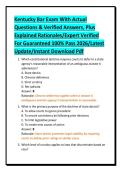
Kentucky Bar Exam With Actual
Questions & Verified Answers, Plus
Explained Rationales/Expert Verified
For Guaranteed 100% Pass 2026/Latest
Update/Instant Download Pdf
1. Which constitutional doctrine requires courts to defer to a state
agency’s reasonable interpretation of an ambiguous statute it
administers?
A. Stare decisis
B. Chevron deference
C. Strict scrutiny
D. Res judicata
Answer: B
Rationale: Chevron deference applies when a statute is
ambiguous and the agency’s interpretation is reasonable.
2. What is the primary purpose of the doctrine of stare decisis?
A. To allow courts to ignore precedent
B. To ensure consistency by following prior decisions
C. To limit legislative power
D. To create new causes of action
Answer: B
Rationale: Stare decisis promotes legal stability by requiring
courts to follow prior rulings in similar cases.
3. Which level of scrutiny applies to laws that discriminate based on
race?
, A. Rational basis
B. Intermediate scrutiny
C. Strict scrutiny
D. Heightened rational basis
Answer: C
Rationale: Race-based classifications must serve a compelling
government interest and be narrowly tailored.
4. Which of the following is required for personal jurisdiction under
minimum contacts?
A. Defendant must reside in the state
B. Defendant must have sufficient contacts with the forum state
C. Plaintiff must be a resident
D. Case must involve federal law
Answer: B
Rationale: Minimum contacts ensure fairness and due process
before a court exercises jurisdiction.
5. What is the main function of the Erie doctrine?
A. To determine federal question jurisdiction
B. To apply federal procedural law in all cases
C. To require federal courts to apply state substantive law in
diversity cases
D. To eliminate jury trials
Answer: C
Rationale: Erie requires federal courts to apply state substantive
law in diversity jurisdiction cases.
6. Which amendment protects against unreasonable searches and
seizures?
A. First Amendment
B. Fourth Amendment
, C. Fifth Amendment
D. Sixth Amendment
Answer: B
Rationale: The Fourth Amendment protects individuals from
unreasonable searches and requires warrants based on probable
cause.
7. What is required for a valid contract?
A. Offer, acceptance, consideration
B. Offer, acceptance, duress
C. Consideration, mistake, fraud
D. Writing, notarization, offer
Answer: A
Rationale: A valid contract requires mutual assent and
consideration.
8. Which contract remedy aims to place the injured party in the
position they would have been in had the contract been
performed?
A. Reliance damages
B. Restitution
C. Expectation damages
D. Punitive damages
Answer: C
Rationale: Expectation damages compensate for the benefit of
the bargain.
9. What is the standard for negligence?
A. Intentional harm
B. Reckless disregard
C. Failure to exercise reasonable care
D. Strict liability
Questions & Verified Answers, Plus
Explained Rationales/Expert Verified
For Guaranteed 100% Pass 2026/Latest
Update/Instant Download Pdf
1. Which constitutional doctrine requires courts to defer to a state
agency’s reasonable interpretation of an ambiguous statute it
administers?
A. Stare decisis
B. Chevron deference
C. Strict scrutiny
D. Res judicata
Answer: B
Rationale: Chevron deference applies when a statute is
ambiguous and the agency’s interpretation is reasonable.
2. What is the primary purpose of the doctrine of stare decisis?
A. To allow courts to ignore precedent
B. To ensure consistency by following prior decisions
C. To limit legislative power
D. To create new causes of action
Answer: B
Rationale: Stare decisis promotes legal stability by requiring
courts to follow prior rulings in similar cases.
3. Which level of scrutiny applies to laws that discriminate based on
race?
, A. Rational basis
B. Intermediate scrutiny
C. Strict scrutiny
D. Heightened rational basis
Answer: C
Rationale: Race-based classifications must serve a compelling
government interest and be narrowly tailored.
4. Which of the following is required for personal jurisdiction under
minimum contacts?
A. Defendant must reside in the state
B. Defendant must have sufficient contacts with the forum state
C. Plaintiff must be a resident
D. Case must involve federal law
Answer: B
Rationale: Minimum contacts ensure fairness and due process
before a court exercises jurisdiction.
5. What is the main function of the Erie doctrine?
A. To determine federal question jurisdiction
B. To apply federal procedural law in all cases
C. To require federal courts to apply state substantive law in
diversity cases
D. To eliminate jury trials
Answer: C
Rationale: Erie requires federal courts to apply state substantive
law in diversity jurisdiction cases.
6. Which amendment protects against unreasonable searches and
seizures?
A. First Amendment
B. Fourth Amendment
, C. Fifth Amendment
D. Sixth Amendment
Answer: B
Rationale: The Fourth Amendment protects individuals from
unreasonable searches and requires warrants based on probable
cause.
7. What is required for a valid contract?
A. Offer, acceptance, consideration
B. Offer, acceptance, duress
C. Consideration, mistake, fraud
D. Writing, notarization, offer
Answer: A
Rationale: A valid contract requires mutual assent and
consideration.
8. Which contract remedy aims to place the injured party in the
position they would have been in had the contract been
performed?
A. Reliance damages
B. Restitution
C. Expectation damages
D. Punitive damages
Answer: C
Rationale: Expectation damages compensate for the benefit of
the bargain.
9. What is the standard for negligence?
A. Intentional harm
B. Reckless disregard
C. Failure to exercise reasonable care
D. Strict liability


