

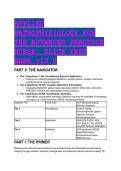
APPLIED
PATHOPHYSIOLOGY FOR
THE ADVANCED PRACTICE
NURSE: ELITE TEST
BANK v10.0
PART 0: THE NAVIGATOR
● Tier 1 (Questions 1–28): Foundational Syntax & Application
○ Testing core pathophysiological definitions, genetic axioms, receptor mechanics,
and the Circle of Caring framework.
● Tier 2 (Questions 29–58): Complex Application & Simulation
○ Integrating 2026/2027 global clinical standards (GOLD, GINA, ADA, ACC/AHA
PREVENT, KDIGO) into intermediate clinical scenarios.
● Tier 3 (Questions 59–88): Grandmaster Synthesis
○ High-stakes, multi-system pathology scenarios requiring the synthesis of competing
concepts (e.g., CKM Syndrome, MODS, Neuroinflammation).
Cognitive Tier Focus Area Key Pathophysiological
Domains Assessed
Tier 1 Foundational Circle of Caring,
Endocannabinoid System,
Hepcidin, Genetics,
Immunosenescence
Tier 2 Application GINA/GOLD 2026, ADA
SGLT2i/GLP-1 RA, KDIGO,
DoxyPEP, MASLD, PREVENT
Tier 3 Synthesis CKM Syndrome, MODS,
Neuroinflammation,
Endometriosis/Cancer,
MDD/HPA Axis
PART I: THE PRIMER
Mastering this elite test bank transforms raw biological data into actionable clinical intuition,
bridging the gap between molecular pathogenesis and advanced practice decision-making. By
,synthesizing 2026 global standards with foundational pathophysiology, the advanced practice
nurse is forged into an elite diagnostic and therapeutic leader.
"Critical Axioms" Cheat Sheet:
● The Circle of Caring Paradigm: Elite APRN practice demands the seamless synthesis
of hard biomedical science with profound humanistic nursing presence; the disease is
treated, but the human is cared for.
● Metabolic-Inflammatory Convergence: Chronic diseases (e.g., MASLD, HFpEF,
Psoriasis) are manifestations of systemic meta-inflammation and
Cardiovascular-Kidney-Metabolic (CKM) syndrome.
● Receptor-Specific Agonism: Pharmacologic precision requires isolating targeted
receptors (e.g., targeting peripheral CB2 for analgesia, inhibiting RANKL to arrest
osteoclastogenesis).
● The 2026 Guideline Imperative: Treat the underlying pathology, not just the symptom
(e.g., GINA Track 1 utilizes anti-inflammatory ICS-formoterol as a reliever; GOLD targets
exacerbation phenotypes with biologics).
PART II: THE ELITE TEST BANK
Tier 1 - Foundational Syntax & Application
Q1: A primary care APRN is applying the Circle of Caring model. This theoretical framework
demands that the APRN FIRST synthesizes which two elements during patient assessment?
Based on the principles of the Circle of Caring, which action is the MOST ACCURATE? A)
Hospital algorithms and insurance formularies B) Physician directives and nursing task lists C)
Biomedical genomic science and the humanistic art of nursing presence D) Population health
statistics and rigid clinical pathways
● The Answer: C (Biomedical genomic science and the humanistic art of nursing presence)
● Distractor Analysis:
○ A is incorrect: The model explicitly rejects administrative reductionism.
○ B is incorrect: Advanced practice requires independent synthesis, not mere task
execution.
○ D is incorrect: While population health is vital, the Circle of Caring centers on
individualized humanistic care.
The Mentor's Analysis: The advanced practice nurse does not merely treat the disease payload;
they treat the human experiencing the disease through a highly scientific lens. When facing
complex patient needs, the immediate priority is integrating science with holistic assessment. By
utilizing authentic presence, you bypass the common trap of biomedical reductionism.
Professional/Academic Intuition: Elite practice is the seamless fusion of hard molecular
science with profound clinical empathy.
Q2: A 35-year-old patient presents with chronic neuropathic pain. Based on the pathophysiology
of the Endocannabinoid System (ECS), targeting which receptor provides the MOST
ACCURATE peripheral analgesic effect without central psychoactivity? A) Central nervous
system CB1 receptors B) Peripheral CB2 receptors on immune cells C) Mu-opioid receptors in
the dorsal horn D) TRPV1 channels in the cerebral cortex
● The Answer: B (Peripheral CB2 receptors on immune cells)
● Distractor Analysis:
○ A is incorrect: Central CB1 activation causes psychoactive neuromodulatory effects.
, ○ C is incorrect: Opioid receptors are separate from the ECS lipid-signaling network.
○ D is incorrect: Targeting cortical channels does not isolate peripheral ECS
analgesia.
The Mentor's Analysis: CB2 receptors are primarily localized on immune cells, regulating local
neurogenic inflammation. When facing neuropathic pain, the immediate priority is modulating
the peripheral immune response. By utilizing CB2 agonism, you bypass the common trap of
central psychoactive side effects. Professional/Academic Intuition: Peripheral CB2 agonism
suppresses inflammatory cytokines without crossing the psychoactive threshold.
Q3: In the pathophysiology of anemia of chronic disease, which protein is PRIMARILY
responsible for the sequestration of iron within macrophages? A) Transferrin B) Ferroportin C)
Hepcidin D) Erythropoietin
● The Answer: C (Hepcidin)
● Distractor Analysis:
○ A is incorrect: Transferrin transports iron; it does not drive sequestration.
○ B is incorrect: Ferroportin is the export channel that is degraded to prevent iron
release.
○ D is incorrect: Erythropoietin stimulates red blood cell production but is blunted
during inflammation.
The Mentor's Analysis: Inflammation triggers hepatic release of hepcidin, which degrades the
iron exporter ferroportin. When facing systemic inflammation, the immediate priority is
understanding the host defense mechanism against pathogens. By utilizing hepcidin assays,
you bypass the common trap of misdiagnosing absolute iron deficiency. Professional/Academic
Intuition: Hepcidin acts as the molecular gatekeeper, hiding iron from extracellular
pathogens during systemic inflammation.
Q4: According to the 2026 MASLD diagnostic criteria, which finding is REQUIRED alongside
hepatic steatosis to confirm the diagnosis? A) Complete absence of alcohol intake B) Elevated
liver transaminases above 300 U/L C) At least one cardiometabolic risk factor D) Histological
evidence of cirrhosis
● The Answer: C (At least one cardiometabolic risk factor)
● Distractor Analysis:
○ A is incorrect: The 2026 update removes the strict exclusion of alcohol, creating the
MetALD category.
○ B is incorrect: MASLD can exist with normal transaminases; enzymes indicate
injury, not baseline steatosis.
○ D is incorrect: Cirrhosis is an end-stage complication, not a diagnostic requirement.
The Mentor's Analysis: MASLD shifts the paradigm from a diagnosis of exclusion to a positive
diagnosis based on metabolic dysfunction. When facing hepatic steatosis, the immediate priority
is assessing cardiometabolic markers. By utilizing positive metabolic criteria, you bypass the
common trap of excluding patients with moderate alcohol use. Professional/Academic Intuition:
Hepatic steatosis plus systemic metabolic dysfunction equates to MASLD.
Q5: Based on the molecular pathophysiology of psoriasis, the targeted inhibition of the
IL-23/IL-17 axis primarily prevents the hyperproliferation of which cell type? A) Plasmacytoid
dendritic cells B) Keratinocytes C) Neutrophils D) Melanocytes
● The Answer: B (Keratinocytes)
● Distractor Analysis:
○ A is incorrect: Dendritic cells initiate the cascade by releasing IL-23; they do not
hyperproliferate to form plaques.
○ C is incorrect: Neutrophils are recruited by IL-17, but epidermal tissue drives the
, plaque.
○ D is incorrect: Melanocytes produce pigment and are not the primary target of Th17
driven hyperproliferation.
The Mentor's Analysis: IL-23 drives Th17 cells to produce IL-17, which directly forces
keratinocytes to rapidly divide. When facing psoriatic plaques, the immediate priority is blocking
this specific cytokine communication. By utilizing IL-23/IL-17 inhibitors, you bypass the common
trap of broad-spectrum immunosuppression. Professional/Academic Intuition: The IL-23/IL-17
axis is the primary inflammatory engine driving epidermal hyperproliferation in psoriasis.
Q6: In postmenopausal osteoporosis, the RANKL/RANK/OPG signaling pathway becomes
dysregulated. Which molecular action DIRECTLY accelerates bone resorption? A)
Overproduction of osteoprotegerin (OPG) B) Inhibition of RANK ligand (RANKL) C) Binding of
RANKL to the RANK receptor on osteoclast precursors D) Sclerostin-mediated osteoblast
activation
● The Answer: C (Binding of RANKL to the RANK receptor on osteoclast precursors)
● Distractor Analysis:
○ A is incorrect: OPG is a decoy receptor that blocks RANKL, preventing resorption.
○ B is incorrect: Inhibiting RANKL (e.g., with denosumab) arrests bone resorption.
○ D is incorrect: Sclerostin inhibits osteoblasts; it does not directly drive
osteoclastogenesis.
The Mentor's Analysis: RANKL is the signal that commands osteoclasts to mature and degrade
bone matrix. When facing menopausal bone loss, the immediate priority is understanding the
loss of OPG buffering. By utilizing RANKL inhibitors, you bypass the common trap of unchecked
osteoclast activation. Professional/Academic Intuition: Estrogen deficiency decreases OPG,
leaving RANKL unchecked to relentlessly activate osteoclasts.
Q7: The 2026 ACC/AHA guidelines replace the Pooled Cohort Equations with the PREVENT
equation. Which novel variables does PREVENT incorporate to calculate CKM risk? A)
C-reactive protein and homocysteine B) Estimated glomerular filtration rate (eGFR) and urinary
albumin-to-creatinine ratio (UACR) C) Coronary artery calcium (CAC) score exclusively D) Left
ventricular ejection fraction (LVEF)
● The Answer: B (Estimated glomerular filtration rate (eGFR) and urinary
albumin-to-creatinine ratio (UACR))
● Distractor Analysis:
○ A is incorrect: These are inflammatory markers, not the primary additions to the
PREVENT tool.
○ C is incorrect: CAC is an adjunct imaging metric.
○ D is incorrect: LVEF is a structural metric used in heart failure, not primary ASCVD
risk screening.
The Mentor's Analysis: The PREVENT equation acknowledges that renal health is inextricably
linked to cardiovascular risk. When facing a primary prevention patient, the immediate priority is
assessing nephrological health alongside lipids. By utilizing eGFR and UACR, you bypass the
common trap of missing silent vascular disease. Professional/Academic Intuition: The kidneys
are the sentinel organs of the cardiovascular system; eGFR and UACR are vital
independent risk predictors.
Q8: A patient is diagnosed with Heart Failure with Preserved Ejection Fraction (HFpEF). At the
cellular level, the myocardium in HFpEF is predominantly characterized by which finding? A)
Eccentric remodeling with massive cardiomyocyte loss B) Concentric cardiomyocyte
hypertrophy driven by systemic microvascular inflammation C) Viral-induced acute cytolytic
necrosis D) Primary amyloid fibril deposition in all cases
PATHOPHYSIOLOGY FOR
THE ADVANCED PRACTICE
NURSE: ELITE TEST
BANK v10.0
PART 0: THE NAVIGATOR
● Tier 1 (Questions 1–28): Foundational Syntax & Application
○ Testing core pathophysiological definitions, genetic axioms, receptor mechanics,
and the Circle of Caring framework.
● Tier 2 (Questions 29–58): Complex Application & Simulation
○ Integrating 2026/2027 global clinical standards (GOLD, GINA, ADA, ACC/AHA
PREVENT, KDIGO) into intermediate clinical scenarios.
● Tier 3 (Questions 59–88): Grandmaster Synthesis
○ High-stakes, multi-system pathology scenarios requiring the synthesis of competing
concepts (e.g., CKM Syndrome, MODS, Neuroinflammation).
Cognitive Tier Focus Area Key Pathophysiological
Domains Assessed
Tier 1 Foundational Circle of Caring,
Endocannabinoid System,
Hepcidin, Genetics,
Immunosenescence
Tier 2 Application GINA/GOLD 2026, ADA
SGLT2i/GLP-1 RA, KDIGO,
DoxyPEP, MASLD, PREVENT
Tier 3 Synthesis CKM Syndrome, MODS,
Neuroinflammation,
Endometriosis/Cancer,
MDD/HPA Axis
PART I: THE PRIMER
Mastering this elite test bank transforms raw biological data into actionable clinical intuition,
bridging the gap between molecular pathogenesis and advanced practice decision-making. By
,synthesizing 2026 global standards with foundational pathophysiology, the advanced practice
nurse is forged into an elite diagnostic and therapeutic leader.
"Critical Axioms" Cheat Sheet:
● The Circle of Caring Paradigm: Elite APRN practice demands the seamless synthesis
of hard biomedical science with profound humanistic nursing presence; the disease is
treated, but the human is cared for.
● Metabolic-Inflammatory Convergence: Chronic diseases (e.g., MASLD, HFpEF,
Psoriasis) are manifestations of systemic meta-inflammation and
Cardiovascular-Kidney-Metabolic (CKM) syndrome.
● Receptor-Specific Agonism: Pharmacologic precision requires isolating targeted
receptors (e.g., targeting peripheral CB2 for analgesia, inhibiting RANKL to arrest
osteoclastogenesis).
● The 2026 Guideline Imperative: Treat the underlying pathology, not just the symptom
(e.g., GINA Track 1 utilizes anti-inflammatory ICS-formoterol as a reliever; GOLD targets
exacerbation phenotypes with biologics).
PART II: THE ELITE TEST BANK
Tier 1 - Foundational Syntax & Application
Q1: A primary care APRN is applying the Circle of Caring model. This theoretical framework
demands that the APRN FIRST synthesizes which two elements during patient assessment?
Based on the principles of the Circle of Caring, which action is the MOST ACCURATE? A)
Hospital algorithms and insurance formularies B) Physician directives and nursing task lists C)
Biomedical genomic science and the humanistic art of nursing presence D) Population health
statistics and rigid clinical pathways
● The Answer: C (Biomedical genomic science and the humanistic art of nursing presence)
● Distractor Analysis:
○ A is incorrect: The model explicitly rejects administrative reductionism.
○ B is incorrect: Advanced practice requires independent synthesis, not mere task
execution.
○ D is incorrect: While population health is vital, the Circle of Caring centers on
individualized humanistic care.
The Mentor's Analysis: The advanced practice nurse does not merely treat the disease payload;
they treat the human experiencing the disease through a highly scientific lens. When facing
complex patient needs, the immediate priority is integrating science with holistic assessment. By
utilizing authentic presence, you bypass the common trap of biomedical reductionism.
Professional/Academic Intuition: Elite practice is the seamless fusion of hard molecular
science with profound clinical empathy.
Q2: A 35-year-old patient presents with chronic neuropathic pain. Based on the pathophysiology
of the Endocannabinoid System (ECS), targeting which receptor provides the MOST
ACCURATE peripheral analgesic effect without central psychoactivity? A) Central nervous
system CB1 receptors B) Peripheral CB2 receptors on immune cells C) Mu-opioid receptors in
the dorsal horn D) TRPV1 channels in the cerebral cortex
● The Answer: B (Peripheral CB2 receptors on immune cells)
● Distractor Analysis:
○ A is incorrect: Central CB1 activation causes psychoactive neuromodulatory effects.
, ○ C is incorrect: Opioid receptors are separate from the ECS lipid-signaling network.
○ D is incorrect: Targeting cortical channels does not isolate peripheral ECS
analgesia.
The Mentor's Analysis: CB2 receptors are primarily localized on immune cells, regulating local
neurogenic inflammation. When facing neuropathic pain, the immediate priority is modulating
the peripheral immune response. By utilizing CB2 agonism, you bypass the common trap of
central psychoactive side effects. Professional/Academic Intuition: Peripheral CB2 agonism
suppresses inflammatory cytokines without crossing the psychoactive threshold.
Q3: In the pathophysiology of anemia of chronic disease, which protein is PRIMARILY
responsible for the sequestration of iron within macrophages? A) Transferrin B) Ferroportin C)
Hepcidin D) Erythropoietin
● The Answer: C (Hepcidin)
● Distractor Analysis:
○ A is incorrect: Transferrin transports iron; it does not drive sequestration.
○ B is incorrect: Ferroportin is the export channel that is degraded to prevent iron
release.
○ D is incorrect: Erythropoietin stimulates red blood cell production but is blunted
during inflammation.
The Mentor's Analysis: Inflammation triggers hepatic release of hepcidin, which degrades the
iron exporter ferroportin. When facing systemic inflammation, the immediate priority is
understanding the host defense mechanism against pathogens. By utilizing hepcidin assays,
you bypass the common trap of misdiagnosing absolute iron deficiency. Professional/Academic
Intuition: Hepcidin acts as the molecular gatekeeper, hiding iron from extracellular
pathogens during systemic inflammation.
Q4: According to the 2026 MASLD diagnostic criteria, which finding is REQUIRED alongside
hepatic steatosis to confirm the diagnosis? A) Complete absence of alcohol intake B) Elevated
liver transaminases above 300 U/L C) At least one cardiometabolic risk factor D) Histological
evidence of cirrhosis
● The Answer: C (At least one cardiometabolic risk factor)
● Distractor Analysis:
○ A is incorrect: The 2026 update removes the strict exclusion of alcohol, creating the
MetALD category.
○ B is incorrect: MASLD can exist with normal transaminases; enzymes indicate
injury, not baseline steatosis.
○ D is incorrect: Cirrhosis is an end-stage complication, not a diagnostic requirement.
The Mentor's Analysis: MASLD shifts the paradigm from a diagnosis of exclusion to a positive
diagnosis based on metabolic dysfunction. When facing hepatic steatosis, the immediate priority
is assessing cardiometabolic markers. By utilizing positive metabolic criteria, you bypass the
common trap of excluding patients with moderate alcohol use. Professional/Academic Intuition:
Hepatic steatosis plus systemic metabolic dysfunction equates to MASLD.
Q5: Based on the molecular pathophysiology of psoriasis, the targeted inhibition of the
IL-23/IL-17 axis primarily prevents the hyperproliferation of which cell type? A) Plasmacytoid
dendritic cells B) Keratinocytes C) Neutrophils D) Melanocytes
● The Answer: B (Keratinocytes)
● Distractor Analysis:
○ A is incorrect: Dendritic cells initiate the cascade by releasing IL-23; they do not
hyperproliferate to form plaques.
○ C is incorrect: Neutrophils are recruited by IL-17, but epidermal tissue drives the
, plaque.
○ D is incorrect: Melanocytes produce pigment and are not the primary target of Th17
driven hyperproliferation.
The Mentor's Analysis: IL-23 drives Th17 cells to produce IL-17, which directly forces
keratinocytes to rapidly divide. When facing psoriatic plaques, the immediate priority is blocking
this specific cytokine communication. By utilizing IL-23/IL-17 inhibitors, you bypass the common
trap of broad-spectrum immunosuppression. Professional/Academic Intuition: The IL-23/IL-17
axis is the primary inflammatory engine driving epidermal hyperproliferation in psoriasis.
Q6: In postmenopausal osteoporosis, the RANKL/RANK/OPG signaling pathway becomes
dysregulated. Which molecular action DIRECTLY accelerates bone resorption? A)
Overproduction of osteoprotegerin (OPG) B) Inhibition of RANK ligand (RANKL) C) Binding of
RANKL to the RANK receptor on osteoclast precursors D) Sclerostin-mediated osteoblast
activation
● The Answer: C (Binding of RANKL to the RANK receptor on osteoclast precursors)
● Distractor Analysis:
○ A is incorrect: OPG is a decoy receptor that blocks RANKL, preventing resorption.
○ B is incorrect: Inhibiting RANKL (e.g., with denosumab) arrests bone resorption.
○ D is incorrect: Sclerostin inhibits osteoblasts; it does not directly drive
osteoclastogenesis.
The Mentor's Analysis: RANKL is the signal that commands osteoclasts to mature and degrade
bone matrix. When facing menopausal bone loss, the immediate priority is understanding the
loss of OPG buffering. By utilizing RANKL inhibitors, you bypass the common trap of unchecked
osteoclast activation. Professional/Academic Intuition: Estrogen deficiency decreases OPG,
leaving RANKL unchecked to relentlessly activate osteoclasts.
Q7: The 2026 ACC/AHA guidelines replace the Pooled Cohort Equations with the PREVENT
equation. Which novel variables does PREVENT incorporate to calculate CKM risk? A)
C-reactive protein and homocysteine B) Estimated glomerular filtration rate (eGFR) and urinary
albumin-to-creatinine ratio (UACR) C) Coronary artery calcium (CAC) score exclusively D) Left
ventricular ejection fraction (LVEF)
● The Answer: B (Estimated glomerular filtration rate (eGFR) and urinary
albumin-to-creatinine ratio (UACR))
● Distractor Analysis:
○ A is incorrect: These are inflammatory markers, not the primary additions to the
PREVENT tool.
○ C is incorrect: CAC is an adjunct imaging metric.
○ D is incorrect: LVEF is a structural metric used in heart failure, not primary ASCVD
risk screening.
The Mentor's Analysis: The PREVENT equation acknowledges that renal health is inextricably
linked to cardiovascular risk. When facing a primary prevention patient, the immediate priority is
assessing nephrological health alongside lipids. By utilizing eGFR and UACR, you bypass the
common trap of missing silent vascular disease. Professional/Academic Intuition: The kidneys
are the sentinel organs of the cardiovascular system; eGFR and UACR are vital
independent risk predictors.
Q8: A patient is diagnosed with Heart Failure with Preserved Ejection Fraction (HFpEF). At the
cellular level, the myocardium in HFpEF is predominantly characterized by which finding? A)
Eccentric remodeling with massive cardiomyocyte loss B) Concentric cardiomyocyte
hypertrophy driven by systemic microvascular inflammation C) Viral-induced acute cytolytic
necrosis D) Primary amyloid fibril deposition in all cases


