
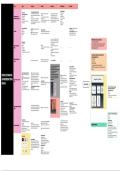
types drugs mechanism duration description clinical picture treatment
Differential Diagnosis:
• Cell-mediated hypersensitivity reaction:
• Most common •Viral exanthemas:
– The drug hapten presented by Langerhans •Begins 7-14 days after the start of anew -Numerous pink papules on the trunk
• Many drugs implicated but: Polymorphus,
cells to T lymphocytes binds to MHC II-peptide medication. -A morbilliform eruption can be the
Exanthematous or -aminopenicillins Eesinophilia drug
complexes. • It can occur a few days after thedrug. has presenting sign of a more serious
-sulfonamides •Toxic shock syndromes,
Morbilliform Eruptions – CD4+ and CD8+ T cells, strongly expressing been discontinued reaction such as toxic epidermal necrolysis,
-cephalosporins •Scarlet fever,
perforin and granzyme, are recruited. • Viral infections may increase the. incidence of hypersensitivity syndrome or serum sickness
-anticonvulsants (>3% of patients) •Measles
Both celltypes have cytotoxic activity leading to morbilliform drugreactions courtesy of andrew samel, MD
-phenobarbital •Kawasaki disease
necrosis of keratinocytes.
•Still's disease
the main offending drugs: -Withdrawing the offending agent usually
Symptoms: fever, myalgias, arthralgias and
penicillin Laboratory evaluation: leads to rapid resolution.
headache
Vasculitis cephalosporin exclude an active urinary sediment, abnormal --------- --------- -Systemic corticosteroids to patients with
Signs: arthritis, peripheral neuropathy,
sulfonamides renal function and gastrointestinal bleeding significant systemic involvement
peripheral edema and tachypnea.
NSAIDs otherwise, they are not indicated.
-One or a few, round, sharply demarcated
erythematous and edematous plaques are
WHO definition of serious side effects:-
offending Drugs: seen, sometimes with a central blister or - if it results in death,existing
-Sulfonamides detached epidermis - requires hospitalizationor prolongation of hospital stay
Fixed Drug Eruption -NSAIDs Lesions: -Lesions favor lips, face, hands, feet and - results in persistent or significant disability or is life
- Barbiturates 1-2 weeks after first exposure & within 24 hours genitalia. ________ _________
(FDE) with subsequent threateningExamples: TEN
-Tetracyclines -Leave a residual post-infammatory brown
-Carbamazepine pigmentation.
-Phenolphthalein(rarely used nowadays) -Subsequent exposures will affect the same
exact site.
-New sites may develop Certain groups of patients are atincreased risk of
developing DrugReactions:
Erythema Multiforme EM is characterized by acute, self-limiting •Women> Men
EM is mostly of infectious origin (HSV) EM Typical Target lesions ____________ __________
versus benig course, which may be recurrent •Old > Young
•Multidrug therapy
•Immunecompromised>Immunecompetent
- SJS is a systemic disease ,Usually 2 or more Treatment of SJS &TEN
mucosal surfaces are Involved (AIDS 10-50xdrug eruption to sulfa-methox-axole-trime-
•Withdraw offending Drug Rapidly
-Cutaneous involvement is variable ranging • Admit to ICU or Burn Unit
thoprim)
from none, 10%, to extensive body •Correct & Monitor fuid and electrolyte
Many Precipitating Factors exist for -NSAIDs, sulfonamides & anticonvulsants are surfacearea involvement imbalances
SEVERE CUTANEOUS SJS: Drugs, Infections, Irradiation, IBD,
Vaccines.
metabolized by liver & skin through similar
mechanisms, generating aromatic drug
- Skin usually shows red macules which
evolve within hours to bullae, and.large
C/P: SJS is usually preceded by a
prodrome of a
•General skilled nursing care & physical
therapy are essential.
SJS occurs 14-56 days after drug intake. areas of skin necrosis and denudation
ADVERSEREACTIONS
*Drugs are the most common causes of metabolites, which form arene oxides. •Additional measures include:
respiratory illness, followed in 1-14 d
Stevens-Johnson syndrome SJS: -Deficiency of epoxide hydrolases results in develop rapidly -caloric replacement,
mucosal erosions and skin eruption.
(SJS) - NSAID most common drugs (esp - accumulation of arene oxides which bind to course prolonged:
•Fever, lymphadenopathy and toxicity -protection from secondary infection,
(SCARs) Ibuprofen- Naproxen).
- Followed by:
Messenger RNA and inhibit cell protein
synthesis
takes 4-6 weeks with significant morbidity and
with mortality of up to 30%
occurs always -good ophthalmologic care,
-and pulmonary toilet (including postural drug reaction
- Anticonvulsants (carbamzepine, -Ab to desmoplakin I and II were detected in drainage).
_Significant overlap with TEN EXISTS Idiosyncratic With PossibleImmunologic
hydantoin, barbiturates), patients with SJS •Systemic Corticosteroids increase risk of MediationGenetic Predisposition &
- Sulfonamides, Penicillins,Tetracyclines desmosomal detachment & cell separation infection, morbidity, mortality & should be ImmunologicInteractions:
AVOIDED. • DRESS
•Intravenous Immunglobullin (IVIG) • TEN/SJS
therapy is helpful at a dose of 3g/kg/course • Drug reactions in the setting of HIVinfection
given in 3-4 days • Drug-induced lupus
clinical picture:
• Poorly delineated erythematous plaques The prognosis of TEN
• Dusky red lesions -is highly correlated with the extent of skin
It is a consequence of extensive keratinocyte
Toxic Epidermal Necrolysis cell death that results in the separation of large • Epidermal detachment - spontaneous or detachment.
TEN occurs within 7-21 d of drug intake. by friction (+ve Nickolsky) •Other bad prognostic fattors:
(TEN) areas of skin at the dermo-epidermal junction,
Age, presence of Uremia,
producing the appearance of scalded skin · Atypical targets
•mucous membranes involvement Hyperglycemia, Tachycardia,
•Clinically patients present by high fever, Acidosis and Malignancy (SCORTEN).
• No Single Test canIdentify theoffending drug:
extreme skin pain, anxiety, and asthenia.
- RAST
- Patch Test
- Prick Test
·Drugs Implicated: Diagnostic Features
•Anti-histone antibodies in up to 95% of
- procainamide (slow acetylators) and The symptoms usually develop more than a 1)Clinical characteristics
cases (not specific) with absent anti-ds-
hydralazine several theories: year after the medication is begun.
DNA antibodies. 2)Literature search
Drug-induced lupus -followed by: Reactive drug metabolites interacting with •The clinical symptoms usually resolve within 4 Diagnostic Features 3)Chronological factors:
•Seroconversion from negativity to
chlorpromazine, isoniazid methyldopa , nuclear histones could act as haptens and may to 6
positivity for ANA alone is not sufficient to • Document all drugs to which thepatient
propylthiouracil, practolol, D- activate the complement cascade weeks, but positivity foWANAmiay persist for 6
discontinue a particular medication which hasbeen exposed and the date ofintroduction
penicillamine, PUVA and minocycline(may to 12 • Date of eruption
is done only if symptoms develop.
have positive ANCA) • Timing of interval following initialadministration
and skin eruption 8-21
Pigmentary changes •response to removal of the suspected agent
Photosensitivity
Hyperpigmantation: •response to re-challenge
Acneiform eruptions ·Enhanced melanin production,
•The major drugs include: Corticosteroids, ·Deposition of drugs or their metabolites
Androgens, OralContraceptives (more often (sometimes complexed with melanin or iron)
those that contain progestins with androgen- .Post-infammatory changes
like effects)Halogenides,Hydantoins & Lithium. ·Major Drugs include:
•Less commonly: Azathioprine, Quinidine, Minocycline,
andwACTH Antimalarials
Amiodarone
·Others: Oral contraceptives, imipramine, and
chemotherapeutic agents, and clofazimine
Differential Diagnosis:
• Cell-mediated hypersensitivity reaction:
• Most common •Viral exanthemas:
– The drug hapten presented by Langerhans •Begins 7-14 days after the start of anew -Numerous pink papules on the trunk
• Many drugs implicated but: Polymorphus,
cells to T lymphocytes binds to MHC II-peptide medication. -A morbilliform eruption can be the
Exanthematous or -aminopenicillins Eesinophilia drug
complexes. • It can occur a few days after thedrug. has presenting sign of a more serious
-sulfonamides •Toxic shock syndromes,
Morbilliform Eruptions – CD4+ and CD8+ T cells, strongly expressing been discontinued reaction such as toxic epidermal necrolysis,
-cephalosporins •Scarlet fever,
perforin and granzyme, are recruited. • Viral infections may increase the. incidence of hypersensitivity syndrome or serum sickness
-anticonvulsants (>3% of patients) •Measles
Both celltypes have cytotoxic activity leading to morbilliform drugreactions courtesy of andrew samel, MD
-phenobarbital •Kawasaki disease
necrosis of keratinocytes.
•Still's disease
the main offending drugs: -Withdrawing the offending agent usually
Symptoms: fever, myalgias, arthralgias and
penicillin Laboratory evaluation: leads to rapid resolution.
headache
Vasculitis cephalosporin exclude an active urinary sediment, abnormal --------- --------- -Systemic corticosteroids to patients with
Signs: arthritis, peripheral neuropathy,
sulfonamides renal function and gastrointestinal bleeding significant systemic involvement
peripheral edema and tachypnea.
NSAIDs otherwise, they are not indicated.
-One or a few, round, sharply demarcated
erythematous and edematous plaques are
WHO definition of serious side effects:-
offending Drugs: seen, sometimes with a central blister or - if it results in death,existing
-Sulfonamides detached epidermis - requires hospitalizationor prolongation of hospital stay
Fixed Drug Eruption -NSAIDs Lesions: -Lesions favor lips, face, hands, feet and - results in persistent or significant disability or is life
- Barbiturates 1-2 weeks after first exposure & within 24 hours genitalia. ________ _________
(FDE) with subsequent threateningExamples: TEN
-Tetracyclines -Leave a residual post-infammatory brown
-Carbamazepine pigmentation.
-Phenolphthalein(rarely used nowadays) -Subsequent exposures will affect the same
exact site.
-New sites may develop Certain groups of patients are atincreased risk of
developing DrugReactions:
Erythema Multiforme EM is characterized by acute, self-limiting •Women> Men
EM is mostly of infectious origin (HSV) EM Typical Target lesions ____________ __________
versus benig course, which may be recurrent •Old > Young
•Multidrug therapy
•Immunecompromised>Immunecompetent
- SJS is a systemic disease ,Usually 2 or more Treatment of SJS &TEN
mucosal surfaces are Involved (AIDS 10-50xdrug eruption to sulfa-methox-axole-trime-
•Withdraw offending Drug Rapidly
-Cutaneous involvement is variable ranging • Admit to ICU or Burn Unit
thoprim)
from none, 10%, to extensive body •Correct & Monitor fuid and electrolyte
Many Precipitating Factors exist for -NSAIDs, sulfonamides & anticonvulsants are surfacearea involvement imbalances
SEVERE CUTANEOUS SJS: Drugs, Infections, Irradiation, IBD,
Vaccines.
metabolized by liver & skin through similar
mechanisms, generating aromatic drug
- Skin usually shows red macules which
evolve within hours to bullae, and.large
C/P: SJS is usually preceded by a
prodrome of a
•General skilled nursing care & physical
therapy are essential.
SJS occurs 14-56 days after drug intake. areas of skin necrosis and denudation
ADVERSEREACTIONS
*Drugs are the most common causes of metabolites, which form arene oxides. •Additional measures include:
respiratory illness, followed in 1-14 d
Stevens-Johnson syndrome SJS: -Deficiency of epoxide hydrolases results in develop rapidly -caloric replacement,
mucosal erosions and skin eruption.
(SJS) - NSAID most common drugs (esp - accumulation of arene oxides which bind to course prolonged:
•Fever, lymphadenopathy and toxicity -protection from secondary infection,
(SCARs) Ibuprofen- Naproxen).
- Followed by:
Messenger RNA and inhibit cell protein
synthesis
takes 4-6 weeks with significant morbidity and
with mortality of up to 30%
occurs always -good ophthalmologic care,
-and pulmonary toilet (including postural drug reaction
- Anticonvulsants (carbamzepine, -Ab to desmoplakin I and II were detected in drainage).
_Significant overlap with TEN EXISTS Idiosyncratic With PossibleImmunologic
hydantoin, barbiturates), patients with SJS •Systemic Corticosteroids increase risk of MediationGenetic Predisposition &
- Sulfonamides, Penicillins,Tetracyclines desmosomal detachment & cell separation infection, morbidity, mortality & should be ImmunologicInteractions:
AVOIDED. • DRESS
•Intravenous Immunglobullin (IVIG) • TEN/SJS
therapy is helpful at a dose of 3g/kg/course • Drug reactions in the setting of HIVinfection
given in 3-4 days • Drug-induced lupus
clinical picture:
• Poorly delineated erythematous plaques The prognosis of TEN
• Dusky red lesions -is highly correlated with the extent of skin
It is a consequence of extensive keratinocyte
Toxic Epidermal Necrolysis cell death that results in the separation of large • Epidermal detachment - spontaneous or detachment.
TEN occurs within 7-21 d of drug intake. by friction (+ve Nickolsky) •Other bad prognostic fattors:
(TEN) areas of skin at the dermo-epidermal junction,
Age, presence of Uremia,
producing the appearance of scalded skin · Atypical targets
•mucous membranes involvement Hyperglycemia, Tachycardia,
•Clinically patients present by high fever, Acidosis and Malignancy (SCORTEN).
• No Single Test canIdentify theoffending drug:
extreme skin pain, anxiety, and asthenia.
- RAST
- Patch Test
- Prick Test
·Drugs Implicated: Diagnostic Features
•Anti-histone antibodies in up to 95% of
- procainamide (slow acetylators) and The symptoms usually develop more than a 1)Clinical characteristics
cases (not specific) with absent anti-ds-
hydralazine several theories: year after the medication is begun.
DNA antibodies. 2)Literature search
Drug-induced lupus -followed by: Reactive drug metabolites interacting with •The clinical symptoms usually resolve within 4 Diagnostic Features 3)Chronological factors:
•Seroconversion from negativity to
chlorpromazine, isoniazid methyldopa , nuclear histones could act as haptens and may to 6
positivity for ANA alone is not sufficient to • Document all drugs to which thepatient
propylthiouracil, practolol, D- activate the complement cascade weeks, but positivity foWANAmiay persist for 6
discontinue a particular medication which hasbeen exposed and the date ofintroduction
penicillamine, PUVA and minocycline(may to 12 • Date of eruption
is done only if symptoms develop.
have positive ANCA) • Timing of interval following initialadministration
and skin eruption 8-21
Pigmentary changes •response to removal of the suspected agent
Photosensitivity
Hyperpigmantation: •response to re-challenge
Acneiform eruptions ·Enhanced melanin production,
•The major drugs include: Corticosteroids, ·Deposition of drugs or their metabolites
Androgens, OralContraceptives (more often (sometimes complexed with melanin or iron)
those that contain progestins with androgen- .Post-infammatory changes
like effects)Halogenides,Hydantoins & Lithium. ·Major Drugs include:
•Less commonly: Azathioprine, Quinidine, Minocycline,
andwACTH Antimalarials
Amiodarone
·Others: Oral contraceptives, imipramine, and
chemotherapeutic agents, and clofazimine


