

Written by students who passed Immediately available after payment Read online or as PDF Wrong document? Swap it for free 4.6 TrustPilot
logo-home
Document preview thumbnail
Preview 1 out of 4 pages
Exam (elaborations)

HSC 220 - EXAM 1 QUESTIONS WITH VERIFIED SOLUTIONS LATEST UPDATE 2026

Document preview thumbnail
Preview 1 out of 4 pages

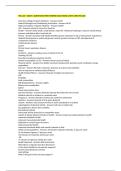
HSC 220 - EXAM 1 QUESTIONS WITH VERIFIED SOLUTIONS LATEST UPDATE 2026 American College of Sports Medicine - Answers ACSM National Strength and Conditioning Association - Answers NCSA National Academy of Sports Medicine - Answers NASM ACE - Answers American Council on Exercise Health - Answers Delay death, avoid disease, enjoy life, withstand challenges, improve systolic blood pressure and lipid profiles, lose body fat Fitness - Answers Continue with health benefits; greater reduction in risk of CVD; greater reduction in diastolic blood pressure; enhanced glucose control; greater increase in CRF; development of components of fitness Cardiovascular disease Cancer Chronic lower respiratory disease Stroke Accidents - Answers Leading causes of death in the US Smoking (18.1%) Poor diet and physical inactivity (15.2%) Alcohol consumption (3.5%) - Answers Actual causes of death Physical activity - Answers Any bodily movement produced by skeletal muscle resulting in energy expenditure Exercise - Answers PA that is voluntary, planned, structured and repetitive Aims to improve or maintain physical fitness Health Related Fitness - Answers Muscular strength and endurance CRF Flexibility body composition Skill Related Fitness - Answers Agility Balance and coordination Speed Power and reaction time exercise intensity - Answers Absolute intensity describes the rate of work Relative intensity is relative to a maximal value Frequency - Answers Number of times per week PA is performed duration - Answers Amount of time spent doing PA volume - Answers Total amount of time or work completed in an activity subcategories of physical activity - Answers Self-care or daily tasks Occupational or leisure-time activities Recreational activity Structured activity (exercise) or competitive sport impact of regular physical activity on health - Answers Improved cardiorespiratory health Improved metabolic health Improved musculoskeletal health Reduction in certain types of cancers Improved mental health Improved functional ability and overall reduction in falls ACSM current guidelines - Answers 30 minutes moderate intensity, 5 days per week Or 20 minutes vigorous, 3 days per week 150 minutes of moderate activity per week OR 75 minutes of vigorous activity per week Health Appraisal - Answers Risk assessment: What illness or injuries does the client have? Is the client suitable for an exercise program? Do they need physician consent? Goal Setting: What is the goal of the exercise program? Why is the client here? preactivity screening - Answers Identify symptoms of chronic diseases that increase the risk of medical events during exercise Identify injuries that may be aggravated or induced by an exercise program Evaluate health status Health status evaluation categories - Answers Medical history review Risk factor assessment Prescribed medications Level of physical activity Establish need for physician consent Administer and evaluate fitness tests Set up exercise prescription Evaluate progress with follow-up tests MR. PLEASE: Medical History Review - Answers Physical Activity Readiness Questionnaire - PAR-Q For use primarily with light to moderate (20-60% VO2max) activity Quick screening; not very detailed Health Status Questionnaire (HSQ) For use with vigorous activity and exercise More in depth Many different forms available Cardiovascular disease Pulmonary disease Metabolic disease - Answers 3 major chronic diseases Angina with exertion - Answers Heart pain that may present in the chest, neck, jaw or arms A tight or constricting feeling in the middle of the chest or shoulders Caused my insufficient blood supply to the heart Pain can subside when exercise stops Dyspnea - Answers Uncomfortable awareness of breathing Considered abnormal when it occurs at an atypical exercise intensity Dizziness or Syncope - Answers Loss of consciousness due to a lack of blood flow to the brain During exercise may be the product of cardiac disorders Palpitation - Answers unpleasant awareness of a forceful or rapid heartbeat Tachycardia - Answers Heart beat -RHR 100bpm Bradycardia - Answers Heart beat -RHR 60bpm ankle edema - Answers swelling around the ankles that can be a sign of congestive heart failure (CHF) intermittent claudication - Answers atherosclerosis of the arteries in the limbs Most common in the lower leg Described as a burning or cramping pain Usually stops within 1 - 2 min of the cessation of exercise MR. PLEASE: Risk Factor Assessment - Answers Involves reviewing section 3 of the HSQ AHA and ACSM advise consent from a physician if 2 or more statements are ticked Be conservative when identifying CHD risk factors low risk - Answers Asymptomatic men and women with ≤ 1 risk factor moderate risk - Answers Asymptomatic men and women with ≥ 2 risk factors high risk - Answers Men and women with known CVD, pulmonary disease or metabolic disorders Symptoms or signs of these disorders MR. PLEASE: Prescribed Medication Review - Answers Become familiar with the purpose of medication. Inquire about timing of medication. Be aware of potential effects on physiological responses to exercises (before, during, and after). Encourage participants to alert you to changes in their medication regimes. Understand that medications control disease; they do not negate their presence. MR. PLEASE: Establish Need for Physician Consent - Answers To engage in activity At moderate intensity At vigorous intensity MD presence during exercise testing Submaximal testing Maximal testing Medical evaluation Before beginning moderate activity Before beginning vigorous activity

Content preview

HSC 220 - EXAM 1 QUESTIONS WITH VERIFIED SOLUTIONS LATEST UPDATE 2026

American College of Sports Medicine - Answers ACSM
National Strength and Conditioning Association - Answers NCSA
National Academy of Sports Medicine - Answers NASM
ACE - Answers American Council on Exercise
Health - Answers Delay death, avoid disease, enjoy life, withstand challenges, improve systolic blood
pressure and lipid profiles, lose body fat
Fitness - Answers Continue with health benefits; greater reduction in risk of CVD; greater reduction in
diastolic blood pressure; enhanced glucose control; greater increase in CRF; development of
components of fitness
Cardiovascular disease
Cancer
Chronic lower respiratory disease
Stroke
Accidents - Answers Leading causes of death in the US
Smoking (18.1%)
Poor diet and physical inactivity (15.2%)
Alcohol consumption (3.5%) - Answers Actual causes of death
Physical activity - Answers Any bodily movement produced by skeletal muscle resulting in energy
expenditure
Exercise - Answers PA that is voluntary, planned, structured and repetitive
Aims to improve or maintain physical fitness
Health Related Fitness - Answers Muscular strength and endurance
CRF
Flexibility
body composition
Skill Related Fitness - Answers Agility
Balance and coordination
Speed
Power and reaction time
exercise intensity - Answers Absolute intensity describes the rate of work
Relative intensity is relative to a maximal value
Frequency - Answers Number of times per week PA is performed
duration - Answers Amount of time spent doing PA
volume - Answers Total amount of time or work completed in an activity
subcategories of physical activity - Answers Self-care or daily tasks
Occupational or leisure-time activities
Recreational activity
Structured activity (exercise) or competitive sport
impact of regular physical activity on health - Answers Improved cardiorespiratory health
Improved metabolic health
Improved musculoskeletal health
Reduction in certain types of cancers
Improved mental health
Improved functional ability and overall reduction in falls
ACSM current guidelines - Answers 30 minutes moderate intensity, 5 days per week
Or 20 minutes vigorous, 3 days per week
150 minutes of moderate activity per week
OR
75 minutes of vigorous activity per week
Health Appraisal - Answers Risk assessment:
What illness or injuries does the client have?
Is the client suitable for an exercise program?
Do they need physician consent?
Goal Setting:
What is the goal of the exercise program?


Document information

Uploaded on
April 3, 2026
Number of pages
4
Written in
2025/2026
Type
Exam (elaborations)
Contains
Questions & answers
$11.49

Wrong document? Swap it for free Within 14 days of purchase and before downloading, you can choose a different document. You can simply spend the amount again.
Written by students who passed
Immediately available after payment
Read online or as PDF

Seller avatar
Reputation scores are based on the amount of documents a seller has sold for a fee and the reviews they have received for those documents. There are three levels: Bronze, Silver and Gold. The better the reputation, the more your can rely on the quality of the sellers work.
joshuawesonga22
3.5
(14)
Sold
121
Followers
2
Items
15171
Last sold
2 days ago


Why students choose Stuvia

Created by fellow students, verified by reviews

Quality you can trust: written by students who passed their tests and reviewed by others who've used these notes.

Didn't get what you expected? Choose another document

No worries! You can instantly pick a different document that better fits what you're looking for.

Pay as you like, start learning right away

No subscription, no commitments. Pay the way you're used to via credit card and download your PDF document instantly.

Student with book image

“Bought, downloaded, and aced it. It really can be that simple.”

Alisha Student

Working on your references?

Create accurate citations in APA, MLA and Harvard with our free citation generator.

Working on your references?

Frequently asked questions
