

2026/2027 NSG552 Psychopharmacology Exam 1 QUESTIONS AND CORRECT ANSWERS (GRADED A+)
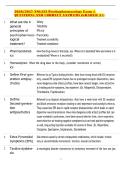
2026/2027 NSG552 Psychopharmacology Exam 1 QUESTIONS AND CORRECT ANSWERS (GRADED A+) 1. What are the 6 general principles of Safety Tolerability Eflcacy psychopharmaco- Practicality logical treatment? 2. Pharmacokinetics Treatment accessibility Treatment compliance How the drug moves in the body. (ex. Where is it absorbed? How and where is it metabolized? Where is it excreted?) 3. Pharmacodynam- What the drug does to the body. (consider mechanism of action) ics 4. Define First-generation antipsychotics 5. Define Second-generation antipsychotics 6. Extra Pyramidal Symptoms (EPS) 7. Tardive dyskinesia Referred to as Typical Antipsychotics. Most have strong bond with D2 receptors only, cause EPS symptoms faster due to prolonged receptor dissociation, have more dangerous side ettect profiles, have been around longer, more ettective at treating positive symptoms, less expensive. (Ex. Haloperidol, Chlorpromazine, Thioridazine, Fluphenazine) Referred to as Atypical Antipsychotics. Most have a weak bond with D2 receptors and block serotonin receptors leading to anti-depressive and anxiolytic ettects. They cause less EPS due to rapid receptor disassociation which leads to rapid dopamine neurotransmission. Have less dangerous side ettect profiles but can cause metabolic syndromes, have been around shorter time, more expensive, more ettective at treating negative symptoms but can treat positive symptoms as well, long-acting injections available for several of these. (Ex. Risperidone, Clozapine, Quetiapine, Aripiprazole, Ziprasidone) Side ettects caused by certain antipsychotic medications, which include: involuntary or uncontrollable movements. tremors. muscle contractions. A neurological disorder characterize by involuntary movement of the face and jaw.
Document information
- Uploaded on
- April 3, 2026
- Number of pages
- 16
- Written in
- 2025/2026
- Type
- Exam (elaborations)
- Contains
- Questions & answers


