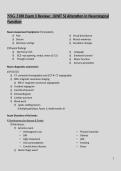
NSG 3180 Exam 3 Review: (UNIT 5) Alteration in Neurological
Function
Neuro Assessment Symptoms: Complaints
Pain Visual disturbance
Seizure Muscle weakness
Dizziness/ vertigo Sensation changes
Physical findings
Alertness/ LOC Language
GCS- eye opening, verbal, motor (3-15) Emotional control
Thought content Motor function
Sensory perception
Neuro diagnostic assessment:
VS & ECG
CT- computed tomography scan CT-A- CT angiography
MRI- magnetic resonance imaging
MR-A- magnetic resonance angiography
Cerebral angiogram
Carotid ultrasound
Echocardiogram
Lumbar puncture
Blood work
Lipids, clotting factors
Antiphospholipid, Factor V, Antithrombin III
Acute Disorders of the brain:
Cerebrovascular disease & Stroke
Risk factors
Ischemic event
• Anticoagulant use • Physical inactivity
• DM • Obesity
• High cholesterol • Afib
• Oral contraceptives • Smoking
• Carotid artery disease • Stress
Hemorrhagic event
1
, • Hypertension
• Anticoagulation therapy
• Obesity
• Excess alcohol intake/ drug use
• Stress
• Trauma
Stroke (CVA)/ TIA findings
Acute/ unilateral
Lethargic
Obtunded
Numbness
Weakness/ hemiparesis
Paralysis/ hemiplegia
Hemianopsia- loss of half of vision field
Agnosia- inability to recognize objects
Dysarthria- difficulty forming words
Apraxia- inability to perform familiar tasks
Ataxia- unsteady gait
Neglect
Aphasia
• Expressive
• Receptive
• Global
Emotional change
Behavioral change
Cognitive change
TIA/RIND
Presents as stroke
• Neurological deficits
Motor/sensory/visual
• Neuro assessments GCS/ symptoms
• Symptoms resolve
1-2 hours
Ischemia, not infarct
• Precursor to ischemic stroke
• Diagnosis
Non-con CT
Carotid US, ECG, CT-A
2
, • Management
Assess (symptoms, full neuro, GCS)
Identify cause (BP, arteries, spasms)
Decrease risk
Manage HTN/ cholesterol/ CAD
Patient education
Ischemia stroke vs. bleeding
Ischemic Stroke
Blockage
Thrombotic/ embolic
Assessment/ nursing
GCS
FAST
NIHSS
Diagnosis
Report any symptoms
LKW or LSN (last know well/ last seen normal)
Non-Con CT
• 30 minutes
Additional testing (MRI, MR-A, CT-A)
Management
Assess/ stabilize*
tPA*- tissue plasminogen activator
Page 2015 chart 67-3
Screening/ inclusion/ exclusion (next slide)
3-4.5 hours of symptom onset
Within 60 minutes of arrival in ED
• Weight based/ 1 min/ 60 min
Manage complications
• Airway/ O2
• Cardiac/ ECG
• (later) immobility
Bowel/ bladder
UTIs, incontinence, stool softeners (Dulcolax)
TPA V. No TPA management
TPA
• BP control (lower)
3
, • Bleeding consideration
• Expectations
• Very frequent VS/ assessment
No tPA/ >24 hours post tPA
• Consider alternative medication therapies
Antiplatelets (ASA, clopidogrel)
Anticoagulants (warfarin, heparin, enoxaparin)
Antihypertensives (MD choice)
Statins (rosuvastatin, atorvastatin)
Nursing interventions for ischemic stroke patient
NIHSS
• Frequent neuro assessments, frequency depends on treatment Swallow evaluation
• TORBSST, Toronto bedside swallowing screening test
Monitor/ assess/ prevent complications
• Exercise, turning, repositioning, mobility, self-care, bowel and bladder, sexual
dysfunction
Maintain medication administration regimen
Consult- nutrition, PT/OT, neurology
Monitor cardiac rhythm & vitals (BP, O2)
• PRN oxygen therapy, BP controlled based on treatments
Patient and family education
Max functional status -> 6 months Nursing diagnosis
Impaired swallowing Impaired urinary elimination
Impaired speech Impaired comfort
Ineffective health maintenance Sexual dysfunction
Risk for impaired skin/ imbalanced nutrition: less Incontinence
than Social- interrupted family process
Self-care deficit Knowledge deficit
Constipation Risk for injury
Ineffective maintenance
4
Function
Neuro Assessment Symptoms: Complaints
Pain Visual disturbance
Seizure Muscle weakness
Dizziness/ vertigo Sensation changes
Physical findings
Alertness/ LOC Language
GCS- eye opening, verbal, motor (3-15) Emotional control
Thought content Motor function
Sensory perception
Neuro diagnostic assessment:
VS & ECG
CT- computed tomography scan CT-A- CT angiography
MRI- magnetic resonance imaging
MR-A- magnetic resonance angiography
Cerebral angiogram
Carotid ultrasound
Echocardiogram
Lumbar puncture
Blood work
Lipids, clotting factors
Antiphospholipid, Factor V, Antithrombin III
Acute Disorders of the brain:
Cerebrovascular disease & Stroke
Risk factors
Ischemic event
• Anticoagulant use • Physical inactivity
• DM • Obesity
• High cholesterol • Afib
• Oral contraceptives • Smoking
• Carotid artery disease • Stress
Hemorrhagic event
1
, • Hypertension
• Anticoagulation therapy
• Obesity
• Excess alcohol intake/ drug use
• Stress
• Trauma
Stroke (CVA)/ TIA findings
Acute/ unilateral
Lethargic
Obtunded
Numbness
Weakness/ hemiparesis
Paralysis/ hemiplegia
Hemianopsia- loss of half of vision field
Agnosia- inability to recognize objects
Dysarthria- difficulty forming words
Apraxia- inability to perform familiar tasks
Ataxia- unsteady gait
Neglect
Aphasia
• Expressive
• Receptive
• Global
Emotional change
Behavioral change
Cognitive change
TIA/RIND
Presents as stroke
• Neurological deficits
Motor/sensory/visual
• Neuro assessments GCS/ symptoms
• Symptoms resolve
1-2 hours
Ischemia, not infarct
• Precursor to ischemic stroke
• Diagnosis
Non-con CT
Carotid US, ECG, CT-A
2
, • Management
Assess (symptoms, full neuro, GCS)
Identify cause (BP, arteries, spasms)
Decrease risk
Manage HTN/ cholesterol/ CAD
Patient education
Ischemia stroke vs. bleeding
Ischemic Stroke
Blockage
Thrombotic/ embolic
Assessment/ nursing
GCS
FAST
NIHSS
Diagnosis
Report any symptoms
LKW or LSN (last know well/ last seen normal)
Non-Con CT
• 30 minutes
Additional testing (MRI, MR-A, CT-A)
Management
Assess/ stabilize*
tPA*- tissue plasminogen activator
Page 2015 chart 67-3
Screening/ inclusion/ exclusion (next slide)
3-4.5 hours of symptom onset
Within 60 minutes of arrival in ED
• Weight based/ 1 min/ 60 min
Manage complications
• Airway/ O2
• Cardiac/ ECG
• (later) immobility
Bowel/ bladder
UTIs, incontinence, stool softeners (Dulcolax)
TPA V. No TPA management
TPA
• BP control (lower)
3
, • Bleeding consideration
• Expectations
• Very frequent VS/ assessment
No tPA/ >24 hours post tPA
• Consider alternative medication therapies
Antiplatelets (ASA, clopidogrel)
Anticoagulants (warfarin, heparin, enoxaparin)
Antihypertensives (MD choice)
Statins (rosuvastatin, atorvastatin)
Nursing interventions for ischemic stroke patient
NIHSS
• Frequent neuro assessments, frequency depends on treatment Swallow evaluation
• TORBSST, Toronto bedside swallowing screening test
Monitor/ assess/ prevent complications
• Exercise, turning, repositioning, mobility, self-care, bowel and bladder, sexual
dysfunction
Maintain medication administration regimen
Consult- nutrition, PT/OT, neurology
Monitor cardiac rhythm & vitals (BP, O2)
• PRN oxygen therapy, BP controlled based on treatments
Patient and family education
Max functional status -> 6 months Nursing diagnosis
Impaired swallowing Impaired urinary elimination
Impaired speech Impaired comfort
Ineffective health maintenance Sexual dysfunction
Risk for impaired skin/ imbalanced nutrition: less Incontinence
than Social- interrupted family process
Self-care deficit Knowledge deficit
Constipation Risk for injury
Ineffective maintenance
4