
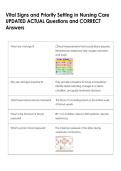
Vital Signs and Priority Setting in Nursing Care
UPDATED ACTUAL Questions and CORRECT
Answers
What are vital signs? Clinical measurements that include blood pressure,
temperature, respiratory rate, oxygen saturation,
and pulse.
Why are vital signs important? They provide a baseline for future comparisons,
identify trends indicating changes in a client's
condition, and guide treatment decisions.
What does blood pressure measure? The force of circulating blood on the interior walls
of blood vessels.
What is the formula for blood BP = CO (cardiac output) x SVR (systemic vascular
pressure? resistance).
What is systolic blood pressure? The maximum pressure in the artery during
ventricular contraction.
, What is diastolic blood pressure? The minimum pressure in the artery when the
ventricle is relaxed.
What is considered ideal blood 120/80 mm Hg.
pressure?
What defines hypertension? Blood pressure above the expected reference
range; stage I HTN is systolic 130-139 mm Hg.
What is a hypertensive crisis? A condition where systolic pressure exceeds 180
mm Hg and/or diastolic exceeds 120 mm Hg.
What are common nursing Treat underlying causes, educate on lifestyle
interventions for hypertension? changes, and provide information about
medications.
What is hypotension? Blood pressure below the expected reference
range, typically SBP < 90 mm Hg and DBP < 60 mm
Hg.
What are signs of hypotension? Dizziness, nausea, blurred vision, increased heart
rate, weak pulse, decreased urine output, pallor,
and fatigue.
What is tachycardia? A heart rate greater than 100 beats per minute.
What can cause tachycardia? Exercise, anxiety, certain medications, caffeine,
fever, and heart abnormalities.
UPDATED ACTUAL Questions and CORRECT
Answers
What are vital signs? Clinical measurements that include blood pressure,
temperature, respiratory rate, oxygen saturation,
and pulse.
Why are vital signs important? They provide a baseline for future comparisons,
identify trends indicating changes in a client's
condition, and guide treatment decisions.
What does blood pressure measure? The force of circulating blood on the interior walls
of blood vessels.
What is the formula for blood BP = CO (cardiac output) x SVR (systemic vascular
pressure? resistance).
What is systolic blood pressure? The maximum pressure in the artery during
ventricular contraction.
, What is diastolic blood pressure? The minimum pressure in the artery when the
ventricle is relaxed.
What is considered ideal blood 120/80 mm Hg.
pressure?
What defines hypertension? Blood pressure above the expected reference
range; stage I HTN is systolic 130-139 mm Hg.
What is a hypertensive crisis? A condition where systolic pressure exceeds 180
mm Hg and/or diastolic exceeds 120 mm Hg.
What are common nursing Treat underlying causes, educate on lifestyle
interventions for hypertension? changes, and provide information about
medications.
What is hypotension? Blood pressure below the expected reference
range, typically SBP < 90 mm Hg and DBP < 60 mm
Hg.
What are signs of hypotension? Dizziness, nausea, blurred vision, increased heart
rate, weak pulse, decreased urine output, pallor,
and fatigue.
What is tachycardia? A heart rate greater than 100 beats per minute.
What can cause tachycardia? Exercise, anxiety, certain medications, caffeine,
fever, and heart abnormalities.


