

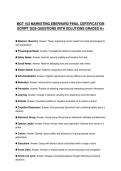
MGT 103 MARKETING EBERHARD FINAL CERTIFICATION
SCRIPT 2026 QUESTIONS WITH SOLUTIONS GRADED A+
● Maslow's Hierarchy. Answer: Theory organizing human needs from basic physiological to
self-actualization
● Physiological Needs. Answer: Foundational needs for food water and shelter
● Safety Needs. Answer: Need for security stability and freedom from fear
● Social Needs. Answer: Need for belonging love and connection with others
● Esteem Needs. Answer: Need for recognition self-esteem and achievement
● Self-Actualization. Answer: Highest need level involving fulfilling one's personal potential
● Motivation. Answer: Internal drive causing a person to take action toward a goal
● Perception. Answer: Process of selecting organizing and interpreting sensory information
● Learning. Answer: Change in behavior resulting from experience and information
● Attitude. Answer: Consistent positive or negative evaluation of a product or brand
● Cognitive Dissonance. Answer: Post-purchase discomfort from conflicting beliefs about a
decision
● Reference Group. Answer: Social group influencing an individual's attitudes and behaviors
● Opinion Leader. Answer: Person whose views carry significant influence over others in a
group
● Culture. Answer: Shared values beliefs and behaviors of a group passed across
generations
● Subculture. Answer: Group with distinct values and beliefs within a larger culture
● Social Class. Answer: Division of society based on income education and occupation
● Family Life Cycle. Answer: Stages a household passes through affecting purchasing
decisions
, ● Role. Answer: Set of activities expected of a person in a given social position
● Personality. Answer: Unique psychological traits consistently influencing behavior
● Self-Concept. Answer: Totality of thoughts and feelings an individual has about
themselves
● Lifestyle. Answer: Person's pattern of living expressed through activities interests and
opinions
● AIO Framework. Answer: Measuring lifestyle through activities interests and opinions
● Values and Lifestyles. Answer: VALS framework segmenting consumers by values and
resources
● Innovators. Answer: VALS segment with high resources and high innovation orientation
● Achievers. Answer: VALS segment motivated by goals and guided by achievement
● Experiencers. Answer: VALS segment motivated by self-expression seeking variety
● Believers. Answer: VALS segment motivated by ideals with traditional conservative values
● Information Processing. Answer: How consumers receive remember and use marketing
messages
● Selective Attention. Answer: Tendency to notice only information that is relevant to one's
needs
● Selective Distortion. Answer: Interpreting information in ways consistent with existing
beliefs
● Selective Retention. Answer: Remembering only information that supports existing
attitudes
● Elaboration Likelihood Model. Answer: Persuasion model with central and peripheral
routes
● Central Route. Answer: Persuasion through careful consideration of logical arguments
● Peripheral Route. Answer: Persuasion through cues like endorser attractiveness
● Message. Answer: Content communicated in a promotional piece
SCRIPT 2026 QUESTIONS WITH SOLUTIONS GRADED A+
● Maslow's Hierarchy. Answer: Theory organizing human needs from basic physiological to
self-actualization
● Physiological Needs. Answer: Foundational needs for food water and shelter
● Safety Needs. Answer: Need for security stability and freedom from fear
● Social Needs. Answer: Need for belonging love and connection with others
● Esteem Needs. Answer: Need for recognition self-esteem and achievement
● Self-Actualization. Answer: Highest need level involving fulfilling one's personal potential
● Motivation. Answer: Internal drive causing a person to take action toward a goal
● Perception. Answer: Process of selecting organizing and interpreting sensory information
● Learning. Answer: Change in behavior resulting from experience and information
● Attitude. Answer: Consistent positive or negative evaluation of a product or brand
● Cognitive Dissonance. Answer: Post-purchase discomfort from conflicting beliefs about a
decision
● Reference Group. Answer: Social group influencing an individual's attitudes and behaviors
● Opinion Leader. Answer: Person whose views carry significant influence over others in a
group
● Culture. Answer: Shared values beliefs and behaviors of a group passed across
generations
● Subculture. Answer: Group with distinct values and beliefs within a larger culture
● Social Class. Answer: Division of society based on income education and occupation
● Family Life Cycle. Answer: Stages a household passes through affecting purchasing
decisions
, ● Role. Answer: Set of activities expected of a person in a given social position
● Personality. Answer: Unique psychological traits consistently influencing behavior
● Self-Concept. Answer: Totality of thoughts and feelings an individual has about
themselves
● Lifestyle. Answer: Person's pattern of living expressed through activities interests and
opinions
● AIO Framework. Answer: Measuring lifestyle through activities interests and opinions
● Values and Lifestyles. Answer: VALS framework segmenting consumers by values and
resources
● Innovators. Answer: VALS segment with high resources and high innovation orientation
● Achievers. Answer: VALS segment motivated by goals and guided by achievement
● Experiencers. Answer: VALS segment motivated by self-expression seeking variety
● Believers. Answer: VALS segment motivated by ideals with traditional conservative values
● Information Processing. Answer: How consumers receive remember and use marketing
messages
● Selective Attention. Answer: Tendency to notice only information that is relevant to one's
needs
● Selective Distortion. Answer: Interpreting information in ways consistent with existing
beliefs
● Selective Retention. Answer: Remembering only information that supports existing
attitudes
● Elaboration Likelihood Model. Answer: Persuasion model with central and peripheral
routes
● Central Route. Answer: Persuasion through careful consideration of logical arguments
● Peripheral Route. Answer: Persuasion through cues like endorser attractiveness
● Message. Answer: Content communicated in a promotional piece


