

15 markers
28 January 2025 11:04
15M Plan Template Explain how market contestability affects
the performance of an industry 15M Plan Explain how the price mechanism allocates resources in a
15
market economy.
Template
Definition of key Contestability is the threat of new entrants
terms into a market. A highly contestable market Definition of key Price mechanism is the process of how prices in a De
is one where there are very low barriers to terms market adjust to allocate scarce resources. te
entry There are a number of functions in the price
mechanism which all contribute to the
1. Point Market contestability likely to lead to lower
allocation.
prices for consumers (allocative efficiency)
• Signal function.
due to greater threat of competition.
• Incentive function
AN (diagram?) • In the case of a monopoly, the firm prior • Rationing function
to increased contestability is restricting • Allocative function
output at Q1 in order to profit maximise
1. Point When there is a shift in demand, the PM resolves
and make supernormal profit.
this disequilibrium leading to the allocation of 1.
• Bad for consumers as due to high
resources.
price-making power firm able to AN
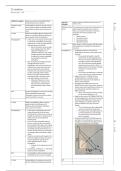
exploit them high prices—> AN (diagram?) • A rightwards shift in D curve leads to
allocative inefficiency. The shaded disequilibrium as there is excess demand for
triangle represents the Harberger the good.
triangle which shows deadweight • The quantity demanded is now Q2
loss arising from allocative wheras firms are still supplying at Q1.
inefficiency. Firms see this excess demand through
• After increased contestability possible shortages, queuees and long waiting
through CMA action such as lists. Excess demand naturally applies
deregulation, due to the firms desire to upward pressure on price as there is a
maintain their market-share they will greater desire for the product meaning
want to disincentivise new entrants. consumers’ reservation prices
Therefore, firm may choose to produce increase.
at sales maximising position where • This is where the PM kicks in to allocate
AR=AC. Q no longer restricted which scarce resources in a market economy.
naturally oversees a reduction in the • Higher prices act as a SIGNAL to firms
price which leads to normal profit. emphasising there is a greater need to
• Allocative efficiency= no more allocate more resources to this market as
exploitation of consumers and there is excess demand.
they are able to consume their • Therefore these higher prices act as an
desired quantity at their desired INCENTIVE to firms to increase their output to
price. achieve more profit maximisation as they can
now sell a greater quantity of goods at a
higher price now.
APP Eg: when deregulation occurred in European
• This is seen through an extension along
airlines making the market more
the S1 curve from point A—>B.
contestable, new low-cost airlines entered
• Higher prices serves a RATIONING FUNCTION
which forced BA to cut prices.
by discouraging some consumers from buying
the good at this higher price as they have a
2. Point Market contestability is likely to lead to lower willingness or ability to pay for the
greater productive efficiency and X- good and therefore are price out of the
efficiency also potentially translating to market.
lower costs for consumers. • This may be because of less disposable
income, less desire for the good etc
AN (diagram?) • In the hopes of protecting their profit • The impact of the rationing function on
margin (somewhat), firms are more consumer behaviour is seen through
incentivised to cut their costs as much as the contraction in the d2 curve from
possible so that they can maximise their point C to point B.
profit as they are loosing profit by • Finally the ALLOCATIVE FUNCTION steps up
reducing price. and leads to the reallocation of resources at
• Firms in a more contestable industry the higher quantity of Q2 and higher price of AP
may not commit to sales max position, P2, restoring equilibrium in the market.
but may profit suffice where not making
full potential of supernormal profit, but
not making normal profit. Still acts as a 2.
function to disincentivise new entrants if AN
not enough supernormal profit is being
made.
• Therefore to protect profit margin, firms
will try to exploit economies of scale as
much as possible to operate at the
lowest possible costs to remain
competitive.
• Produce on the lowest point on AC
curve.
• Furthermore, X-efficiency—> minimising
waste to remain competitive.
APP • Contestability in delivery industry meant
Royal Mail had to cut costs to compete
3. Point Contestability in the long run may result in APP
dynamic-inefficiency leading to potentially
28 January 2025 11:04
15M Plan Template Explain how market contestability affects
the performance of an industry 15M Plan Explain how the price mechanism allocates resources in a
15
market economy.
Template
Definition of key Contestability is the threat of new entrants
terms into a market. A highly contestable market Definition of key Price mechanism is the process of how prices in a De
is one where there are very low barriers to terms market adjust to allocate scarce resources. te
entry There are a number of functions in the price
mechanism which all contribute to the
1. Point Market contestability likely to lead to lower
allocation.
prices for consumers (allocative efficiency)
• Signal function.
due to greater threat of competition.
• Incentive function
AN (diagram?) • In the case of a monopoly, the firm prior • Rationing function
to increased contestability is restricting • Allocative function
output at Q1 in order to profit maximise
1. Point When there is a shift in demand, the PM resolves
and make supernormal profit.
this disequilibrium leading to the allocation of 1.
• Bad for consumers as due to high
resources.
price-making power firm able to AN
exploit them high prices—> AN (diagram?) • A rightwards shift in D curve leads to
allocative inefficiency. The shaded disequilibrium as there is excess demand for
triangle represents the Harberger the good.
triangle which shows deadweight • The quantity demanded is now Q2
loss arising from allocative wheras firms are still supplying at Q1.
inefficiency. Firms see this excess demand through
• After increased contestability possible shortages, queuees and long waiting
through CMA action such as lists. Excess demand naturally applies
deregulation, due to the firms desire to upward pressure on price as there is a
maintain their market-share they will greater desire for the product meaning
want to disincentivise new entrants. consumers’ reservation prices
Therefore, firm may choose to produce increase.
at sales maximising position where • This is where the PM kicks in to allocate
AR=AC. Q no longer restricted which scarce resources in a market economy.
naturally oversees a reduction in the • Higher prices act as a SIGNAL to firms
price which leads to normal profit. emphasising there is a greater need to
• Allocative efficiency= no more allocate more resources to this market as
exploitation of consumers and there is excess demand.
they are able to consume their • Therefore these higher prices act as an
desired quantity at their desired INCENTIVE to firms to increase their output to
price. achieve more profit maximisation as they can
now sell a greater quantity of goods at a
higher price now.
APP Eg: when deregulation occurred in European
• This is seen through an extension along
airlines making the market more
the S1 curve from point A—>B.
contestable, new low-cost airlines entered
• Higher prices serves a RATIONING FUNCTION
which forced BA to cut prices.
by discouraging some consumers from buying
the good at this higher price as they have a
2. Point Market contestability is likely to lead to lower willingness or ability to pay for the
greater productive efficiency and X- good and therefore are price out of the
efficiency also potentially translating to market.
lower costs for consumers. • This may be because of less disposable
income, less desire for the good etc
AN (diagram?) • In the hopes of protecting their profit • The impact of the rationing function on
margin (somewhat), firms are more consumer behaviour is seen through
incentivised to cut their costs as much as the contraction in the d2 curve from
possible so that they can maximise their point C to point B.
profit as they are loosing profit by • Finally the ALLOCATIVE FUNCTION steps up
reducing price. and leads to the reallocation of resources at
• Firms in a more contestable industry the higher quantity of Q2 and higher price of AP
may not commit to sales max position, P2, restoring equilibrium in the market.
but may profit suffice where not making
full potential of supernormal profit, but
not making normal profit. Still acts as a 2.
function to disincentivise new entrants if AN
not enough supernormal profit is being
made.
• Therefore to protect profit margin, firms
will try to exploit economies of scale as
much as possible to operate at the
lowest possible costs to remain
competitive.
• Produce on the lowest point on AC
curve.
• Furthermore, X-efficiency—> minimising
waste to remain competitive.
APP • Contestability in delivery industry meant
Royal Mail had to cut costs to compete
3. Point Contestability in the long run may result in APP
dynamic-inefficiency leading to potentially


