

CONTRACT LAW CASES
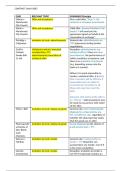
CASE RELEVANT TOPIC SUMMARY/Principle
Gibson v Offer and acceptance Not a valid offer. “May” = No
Manchester certainty or intention to be bound.
City Council
Storer v Offer and acceptance Valid offer- showed intention to be
Manchester bound. “I will send you the
City Council agreement signed on behalf of the
corporation in exchange”.
Patridge v Invitation to treat- advertisements General rule: advertisements are
Crittenden ITT/ statements inviting further
negotiations.
Carlill v Unilateral contract/ executed Exception: advertisements are
Carbolic consideration/ ITT- unilateral offers if there is a clear
Smoke Ball advertisements/revocation of prescribed act, the performance of
Co Ltd unilateral offer which constitutes acceptance, and
there is an intention to be bound
(e.g. depositing money into the
bank as a reward).
Where it is nearly impossible to
revoke a unilateral offer, it is likely
that revocation will be effective if
reasonable steps are taken to
communicate revocation to all
those who may have read the
offer.
Everyone with notice of the offer is
an “offeree”. Valid acceptance may
be made by any person with notice
of the offer.
Fisher v Bell Invitation to treat- display of goods General rule: price-marked goods
displayed in a shop window are
ITT, not offer for sale, regardless of
whether the shop expressly states
that the goods are on offer.
Pharmaceutic Invitation to treat- display of goods Goods displayed on the shelves of
al Society of a self-service store = ITT.
GB v Boots
Cash
Chemists
Spencer v Invitation to treat- tender General rule: inviting parties to
Harding tender = ITT. Requestor can
accept/reject any tender, even if it
is the most competitive.
Harvela Invitation to treat- tender Exception: invitation to tender is
Investments not ITT if it expressly contains an
,CONTRACT LAW CASES
Ltd v Royal undertaking to accept the
Trust Co. Of highest/lowest bid.
Canada
Blackpool & Invitation to treat- tender Exception: invitation to tender could
Fylde Aero give rise to binding contractual
Club Ltd v obligation where (1) the tenders had
Blackpool been solicited from specified parties
Borough who were known to the requesting
Council party; (2) there was an absolute
deadline for submission; (3) the party
requesting tenders had laid down
absolute and non-negotiable
conditions for submission.
Payne v Cave Invitation to treat- General rule: auctioneer’s request
auction/revocation of offer for bids is an ITT.
Offeror may withdraw their offer
at any time before acceptance.
Warlow v Invitation to treat- auction Exception: auctions “without
Harrison reserve”. Must sell to the highest
bidder. May be sued for breach of
contract.
Barry v Invitation to treat- auction Exception: auctions “without
Davies reserve”. Highest bidder is not
entitled to the goods since there is
no bilateral contract for sale.
However, can sue for breach of
contract.
Stevenson Request for further information Asking for further information e.g.
Jacques v delivery terms is not a
McClean counteroffer.
Hyde v Counter-offer Where an offeree makes a
Wrench counteroffer, the original offer is
deemed to have been rejected and
cannot subsequently be accepted.
Mirror image rule.
Tinn v Communication of offer- cross If a prescribed mode of acceptance
Hoffman offer- no less advantageous has not expressly been made
mandatory, another mode of
acceptance which if no less
advantageous to the offeror will
bind them.
Byrne v Van Communication of offer: revocation Postal rule does not apply to
Tienhoven revocation. There needs to be
actual notice i.e. when received by
offeree, not when posted.
,CONTRACT LAW CASES
Dickinson v Indirect communication of Provided the offeror has shown, by
Dodds revocation words or conduct, a clear intention
to revoke their offer and notice has
reached the offeree, the
revocation is effective. Means of
communication do not matter. Can
be communicated by third party.
Great Revocation of a unilateral offer Unilateral offer can be revoked any
Northern time before completion of
Railway required act.
Company v
Witham
Errington v Revocation of unilateral offer Exception: where offeree has
Errington & partly performed the required act
Woods and is willing and able to complete.
Implied obligation not to revoke.
Offeree’s acceptance and
consideration for this implied
promise = by starting to perform
the required act.
Manchester Mode of communication General rule: acceptance may be
Diocesan communicated in any manner
Council v whatsoever.
Commercial
and General Exception: If the offeror prescribes
Investments a mode of acceptance in terms
insisting that only acceptance in
that mode shall be binding.
Adams v Acceptance: postal rule Acceptance takes place the
Lindsell moment the letter of acceptance is
properly posted (put into an
official letter box/into the hands of
a postal operative who is
authorised to receive letters, NOT
just deliver).
Household Acceptance: postal rule Postal rule applies even where
Fire and acceptance is delayed or lost in the
Carriage post.
Accident
Insurance Co.
V Grant
Henthorn v Acceptance: postal rule Must have been contemplated that
Fraser the post would be used to accept
offer. Unreasonable to use post
where there is an implied
condition that prompt acceptance
is required.
, CONTRACT LAW CASES
Holwell Acceptance: postal rule If the offeror ousts the postal rule,
Securities v a letter of acceptance would only
Hughes be effective if and when it is
received. “Notice in writing”
implies that acceptance has to be
received.
Entores v Acceptance: instantaneous means Acceptance takes place at the
Miles Far East moment the acceptance is
Corporation received by the offeror for
instantaneous means.
Where the message of acceptance
has not been received, by no fault
of the offeror, no contract has
been concluded. Does not apply if
offeror does not ask offeree to
repeat when there is poor signal.
Tenax Acceptance: instantaneous means Withdrawal of an offer sent
Steamship Co through a form of instantaneous
v Owners of communication is effective when it
the Motor could have been read by the other
Vessel party, not when it was read i.e.
Brimnes within business hours.
Mondial Acceptance: instantaneous means If acceptance through
Shipping & instantaneous means is received
Chartering BV after office hours, it is deemed
v Astarte received at the start of business
Shipping BV the next day/after the weekend.
Thomas v BPE Objective test (reasonable Postal rule is inapplicable to email
Solicitors bystander) for whether a contract communications i.e. only accepted
has been completed when received.
“Office hours” depends on
particular context of the
communications.
RTS Flexible Certainty To determine whether the parties
Systems Ltd v have reached an agreement on all
Molkerei material terms, the court applies
Alois Muller an objective test, asking whether,
GmbH & in all the circumstances of the
Company KG case, the parties have agreed all
(UK the terms they considered to be a
Production) precondition to creating legal
relations.
CASE RELEVANT TOPIC SUMMARY/Principle
Gibson v Offer and acceptance Not a valid offer. “May” = No
Manchester certainty or intention to be bound.
City Council
Storer v Offer and acceptance Valid offer- showed intention to be
Manchester bound. “I will send you the
City Council agreement signed on behalf of the
corporation in exchange”.
Patridge v Invitation to treat- advertisements General rule: advertisements are
Crittenden ITT/ statements inviting further
negotiations.
Carlill v Unilateral contract/ executed Exception: advertisements are
Carbolic consideration/ ITT- unilateral offers if there is a clear
Smoke Ball advertisements/revocation of prescribed act, the performance of
Co Ltd unilateral offer which constitutes acceptance, and
there is an intention to be bound
(e.g. depositing money into the
bank as a reward).
Where it is nearly impossible to
revoke a unilateral offer, it is likely
that revocation will be effective if
reasonable steps are taken to
communicate revocation to all
those who may have read the
offer.
Everyone with notice of the offer is
an “offeree”. Valid acceptance may
be made by any person with notice
of the offer.
Fisher v Bell Invitation to treat- display of goods General rule: price-marked goods
displayed in a shop window are
ITT, not offer for sale, regardless of
whether the shop expressly states
that the goods are on offer.
Pharmaceutic Invitation to treat- display of goods Goods displayed on the shelves of
al Society of a self-service store = ITT.
GB v Boots
Cash
Chemists
Spencer v Invitation to treat- tender General rule: inviting parties to
Harding tender = ITT. Requestor can
accept/reject any tender, even if it
is the most competitive.
Harvela Invitation to treat- tender Exception: invitation to tender is
Investments not ITT if it expressly contains an
,CONTRACT LAW CASES
Ltd v Royal undertaking to accept the
Trust Co. Of highest/lowest bid.
Canada
Blackpool & Invitation to treat- tender Exception: invitation to tender could
Fylde Aero give rise to binding contractual
Club Ltd v obligation where (1) the tenders had
Blackpool been solicited from specified parties
Borough who were known to the requesting
Council party; (2) there was an absolute
deadline for submission; (3) the party
requesting tenders had laid down
absolute and non-negotiable
conditions for submission.
Payne v Cave Invitation to treat- General rule: auctioneer’s request
auction/revocation of offer for bids is an ITT.
Offeror may withdraw their offer
at any time before acceptance.
Warlow v Invitation to treat- auction Exception: auctions “without
Harrison reserve”. Must sell to the highest
bidder. May be sued for breach of
contract.
Barry v Invitation to treat- auction Exception: auctions “without
Davies reserve”. Highest bidder is not
entitled to the goods since there is
no bilateral contract for sale.
However, can sue for breach of
contract.
Stevenson Request for further information Asking for further information e.g.
Jacques v delivery terms is not a
McClean counteroffer.
Hyde v Counter-offer Where an offeree makes a
Wrench counteroffer, the original offer is
deemed to have been rejected and
cannot subsequently be accepted.
Mirror image rule.
Tinn v Communication of offer- cross If a prescribed mode of acceptance
Hoffman offer- no less advantageous has not expressly been made
mandatory, another mode of
acceptance which if no less
advantageous to the offeror will
bind them.
Byrne v Van Communication of offer: revocation Postal rule does not apply to
Tienhoven revocation. There needs to be
actual notice i.e. when received by
offeree, not when posted.
,CONTRACT LAW CASES
Dickinson v Indirect communication of Provided the offeror has shown, by
Dodds revocation words or conduct, a clear intention
to revoke their offer and notice has
reached the offeree, the
revocation is effective. Means of
communication do not matter. Can
be communicated by third party.
Great Revocation of a unilateral offer Unilateral offer can be revoked any
Northern time before completion of
Railway required act.
Company v
Witham
Errington v Revocation of unilateral offer Exception: where offeree has
Errington & partly performed the required act
Woods and is willing and able to complete.
Implied obligation not to revoke.
Offeree’s acceptance and
consideration for this implied
promise = by starting to perform
the required act.
Manchester Mode of communication General rule: acceptance may be
Diocesan communicated in any manner
Council v whatsoever.
Commercial
and General Exception: If the offeror prescribes
Investments a mode of acceptance in terms
insisting that only acceptance in
that mode shall be binding.
Adams v Acceptance: postal rule Acceptance takes place the
Lindsell moment the letter of acceptance is
properly posted (put into an
official letter box/into the hands of
a postal operative who is
authorised to receive letters, NOT
just deliver).
Household Acceptance: postal rule Postal rule applies even where
Fire and acceptance is delayed or lost in the
Carriage post.
Accident
Insurance Co.
V Grant
Henthorn v Acceptance: postal rule Must have been contemplated that
Fraser the post would be used to accept
offer. Unreasonable to use post
where there is an implied
condition that prompt acceptance
is required.
, CONTRACT LAW CASES
Holwell Acceptance: postal rule If the offeror ousts the postal rule,
Securities v a letter of acceptance would only
Hughes be effective if and when it is
received. “Notice in writing”
implies that acceptance has to be
received.
Entores v Acceptance: instantaneous means Acceptance takes place at the
Miles Far East moment the acceptance is
Corporation received by the offeror for
instantaneous means.
Where the message of acceptance
has not been received, by no fault
of the offeror, no contract has
been concluded. Does not apply if
offeror does not ask offeree to
repeat when there is poor signal.
Tenax Acceptance: instantaneous means Withdrawal of an offer sent
Steamship Co through a form of instantaneous
v Owners of communication is effective when it
the Motor could have been read by the other
Vessel party, not when it was read i.e.
Brimnes within business hours.
Mondial Acceptance: instantaneous means If acceptance through
Shipping & instantaneous means is received
Chartering BV after office hours, it is deemed
v Astarte received at the start of business
Shipping BV the next day/after the weekend.
Thomas v BPE Objective test (reasonable Postal rule is inapplicable to email
Solicitors bystander) for whether a contract communications i.e. only accepted
has been completed when received.
“Office hours” depends on
particular context of the
communications.
RTS Flexible Certainty To determine whether the parties
Systems Ltd v have reached an agreement on all
Molkerei material terms, the court applies
Alois Muller an objective test, asking whether,
GmbH & in all the circumstances of the
Company KG case, the parties have agreed all
(UK the terms they considered to be a
Production) precondition to creating legal
relations.


