
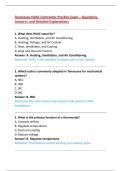
Tennessee HVAC Contractor Practice Exam – Questions,
Answers, and Detailed Explanations
1. What does HVAC stand for?
A. Heating, Ventilation, and Air Conditioning
B. Heating, Voltage, and Air Control
C. Heat, Ventilation, and Cooling
D. Heat and Vacuum Control
Answer: A. Heating, Ventilation, and Air Conditioning
Rationale: HVAC is the standard acronym used in the industry.
2. Which code is commonly adopted in Tennessee for mechanical
systems?
A. NEC
B. IMC
C. IPC
D. IBC
Answer: B. IMC
Rationale: The International Mechanical Code governs HVAC
installations.
3. What is the primary function of a thermostat?
A. Increase airflow
B. Regulate temperature
C. Control humidity
D. Reduce voltage
Answer: B. Regulate temperature
Rationale: Thermostats control heating and cooling cycles.
,4. Which refrigerant has been phased out due to ozone depletion?
A. R-410A
B. R-134a
C. R-22
D. R-32
Answer: C. R-22
Rationale: R-22 is being eliminated under environmental regulations.
5. What is superheat?
A. Temperature below boiling point
B. Heat removed from refrigerant
C. Heat added above boiling point
D. Pressure measurement
Answer: C. Heat added above boiling point
Rationale: Superheat ensures vapor refrigerant enters compressor.
6. Which tool measures electrical current?
A. Voltmeter
B. Ohmmeter
C. Ammeter
D. Hygrometer
Answer: C. Ammeter
Rationale: Ammeters measure current flow.
7. What is the unit of electrical resistance?
A. Volt
B. Amp
C. Ohm
D. Watt
, Answer: C. Ohm
Rationale: Ohms measure resistance.
8. What does SEER measure?
A. Airflow
B. Efficiency
C. Voltage
D. Pressure
Answer: B. Efficiency
Rationale: Seasonal Energy Efficiency Ratio measures cooling
efficiency.
9. Which component compresses refrigerant?
A. Condenser
B. Evaporator
C. Compressor
D. Expansion valve
Answer: C. Compressor
Rationale: The compressor raises refrigerant pressure and
temperature.
10. What type of motor is commonly used in HVAC fans?
A. DC motor
B. Stepper motor
C. PSC motor
D. Servo motor
Answer: C. PSC motor
Rationale: Permanent Split Capacitor motors are widely used.
Answers, and Detailed Explanations
1. What does HVAC stand for?
A. Heating, Ventilation, and Air Conditioning
B. Heating, Voltage, and Air Control
C. Heat, Ventilation, and Cooling
D. Heat and Vacuum Control
Answer: A. Heating, Ventilation, and Air Conditioning
Rationale: HVAC is the standard acronym used in the industry.
2. Which code is commonly adopted in Tennessee for mechanical
systems?
A. NEC
B. IMC
C. IPC
D. IBC
Answer: B. IMC
Rationale: The International Mechanical Code governs HVAC
installations.
3. What is the primary function of a thermostat?
A. Increase airflow
B. Regulate temperature
C. Control humidity
D. Reduce voltage
Answer: B. Regulate temperature
Rationale: Thermostats control heating and cooling cycles.
,4. Which refrigerant has been phased out due to ozone depletion?
A. R-410A
B. R-134a
C. R-22
D. R-32
Answer: C. R-22
Rationale: R-22 is being eliminated under environmental regulations.
5. What is superheat?
A. Temperature below boiling point
B. Heat removed from refrigerant
C. Heat added above boiling point
D. Pressure measurement
Answer: C. Heat added above boiling point
Rationale: Superheat ensures vapor refrigerant enters compressor.
6. Which tool measures electrical current?
A. Voltmeter
B. Ohmmeter
C. Ammeter
D. Hygrometer
Answer: C. Ammeter
Rationale: Ammeters measure current flow.
7. What is the unit of electrical resistance?
A. Volt
B. Amp
C. Ohm
D. Watt
, Answer: C. Ohm
Rationale: Ohms measure resistance.
8. What does SEER measure?
A. Airflow
B. Efficiency
C. Voltage
D. Pressure
Answer: B. Efficiency
Rationale: Seasonal Energy Efficiency Ratio measures cooling
efficiency.
9. Which component compresses refrigerant?
A. Condenser
B. Evaporator
C. Compressor
D. Expansion valve
Answer: C. Compressor
Rationale: The compressor raises refrigerant pressure and
temperature.
10. What type of motor is commonly used in HVAC fans?
A. DC motor
B. Stepper motor
C. PSC motor
D. Servo motor
Answer: C. PSC motor
Rationale: Permanent Split Capacitor motors are widely used.


