

Written by students who passed Immediately available after payment Read online or as PDF Wrong document? Swap it for free 4.6 TrustPilot
logo-home
Document preview thumbnail
Preview 4 out of 35 pages
Summary

Summary Ordering Europe: the New Autonomous Legal Order; European studies

Document preview thumbnail
Preview 4 out of 35 pages

This course adds a legal dimension to previous BA ES courses and exposes students to legal thinking and argumentation. The course introduces students to the definition of law and the legal terminology which are the topics of the first two tutorials. Other lectures and tutorials are devoted to EU institutional law after Lisbon. The legal system founded by the European integration process is unique in its supranational characteristics. The latter are based on competences attributed from the Member States and influenced by special decision-making and legislative processes. The system is built on a legal protection system and legal principles, in the form of direct effect, indirect effect and state liability, governing the application of Union law. The latest changes brought about by Lisbon try to achieve more clarity with regard to competences and policies. As these Treaties merge the classic pillar structure in one single legal personality for the Union, there is a need for a reassessment of the classical division between supranational and intergovernmental structures. In addition, the case law of the European courts plays a central role in developing this special legal order, autonomous from national and international law. Precedent setting cases will be highlighted throughout the course.

Content preview

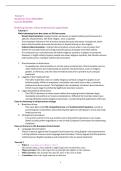
Period 1
Academic Year 2024/2025
Course EUS2008

Ordering Europe: a New Autonomous Legal Order
Tutorial 1:
Main takeaway from the notes on EU law cases:
- Direct discrimination: happens when someone is treated unfairly just because of a
specific characteristic, like their religion, race, or gender
- If an employer refuses to hire a woman simply because she wears a headscarf, that’s
direct discrimination because the decision is based directly on her religion
- Indirect discrimination: indirect discrimination occurs when a rule or policy that
seems fair actually ends up hurting a specific group of people more than others
- If a company has a rule that bans all visible religious symbols, it applies to everyone.
However, it might unfairly impact people who wear religious symbols, like Muslim women
with headscarves, making it indirect discrimination

1. Discrimination vs distinction:
- In equality law, discrimination is not the same as distinction. Discrimination occurs
when distinctions are made based on specific characteristics, such as religion,
gender, or ethnicity, and anti-discrimination laws aim to prevent such unequal
treatment
2. Legality of the headscarf ban:
- The CJEU ruled that a ban on visible religious symbols is legal if it applies to all
beliefs equally. While an employer’s neutrality can justify such a ban, customer
preferences alone cannot. This highlights the complexity of indirect discrimination,
which may be legal if justified by legitimate business reasons
3. Legal and political dimensions:
- The CJEU’s decisions in these cases reflect the ongoing tension between legal
standards and political or moral considerations. Different EU member states have
varying attitudes toward religious expression, complicating the application of EU law
Case on Germany’s infrastructure charge
4. Branches of law:
- This case falls under EU competition law and fundamental freedoms, aimed at
promoting fair competition and protecting the rights of individuals to move and trade
freely across ms
5. Infringement procedure:
- It is rare for one EU ms to sue another due to the political tensions it can create.
States usually prefer negotiation or rely on the European Commission for addressing
violations
Case on France vs the European Commission
6. Language discrimination:
France’s lawsuit against the European Commission for using English-only assessments
in hiring reflects concerns over language discrimination. France argues that this practice
unfairly favours English speakers and violates EU rules on equal treatment

Tutorial 2
A. What is reasoning according to rules?
This means using a clear method to apply legal rules to particular cases.
o Major premise: this is the legal rule or principle that applies to the situation
o Minor premise: this includes the specific facts of the case at hand
o Conclusion: this is the legal outcome or decision


1

, B. What is reasoning according to precedence?
It involves using past court decisions (precedents) to guide the resolution of current cases. The
key element of this reasoning is the ratio decidendi, the main reasoning behind past
decisions. Courts are usually required to follow this, but are not obliged to follow obiter
dicta, which are extra remarks or comments made by the court. Precedents are used to keep
the law consistent and predictable.

C. What is reasoning according to authority?
Involves using official legal sources, such as laws, treaties, and court decisions, to back up
legal arguments. A rule is seen as valid if it comes from a recognised legal source. A source is
considered accepted when it is acknowledged by society and has the authority to create laws
and make legal decisions.

D. What is reasoning according to purpose?
Also known as purposive or teleological reasoning, means understanding and applying legal
rules based on their intended objective. This approach focuses on using the rule in a way that
aligns with the lawmakers’ intentions or achieves the intended outcome, sometimes looking
beyond the exact wording to consider the broader context and purpose.

Legal certainty: laws should be clear, stable, and predictable. This helps people understand
the rules that apply to them, so they can make informed decisions and feel confident about
their rights and responsibilities. It is important for building trust in the legal system and
ensuring everyone is treated fairly.

The nature of legal thinking
Distinctive features of legal reasoning
1. Lawyers often have to follow rules just because they are rules, even if the result isn’t ideal.
2. Legal decisions often rely on past cases and authoritative sources, even over personal
judgment.
The paradox of legal thinking
Thinking like a lawyer means:
1. Realising that the best legal result isn’t always the best overall outcome….
2. Accepting that sometimes allowing a “wrong” answer can serve a larger purpose in law….

Knowledge clip 1:
Why study EU law?
A. Role of Law in the EU:
- Law is a tool for coordinating behaviour among MS, ensuring they act consistently.
- It empowers the EU but can also be used by MS, companies, and individuals to challenge
EU measures.
- Law serves both as an “object” and an “agent” of integration:
• Object: aligns national laws to establish shared European standards.
• Agent: supports economic, political, and social integration within the EU. It
encourages cooperation between ms, helping to build a stronger relationship and
create a united Europe.
What is law?
Definition:
- Law is a set of rules recognised as binding by a particular state or community, either
through formal enactment or custom (Oxford English Dictionary).
What is a legal rule?
- Definition: a legal rule gives a clear guideline for what actions to take, which is different
from stating a purpose.
- Example of purpose: everyone with sufficient political maturity should vote
- Example of rule: everyone over 18 is allowed to vote


2

,Hierarchy of Legal Sources:

- Ranking legal sources:
Legal sources are not equal: they are organized in a hierarchy at both national and EU
levels.
- Examples:
- National level: constitution > legislation > administrative acts
- EU level: EU treaties > EU legislation > delegated acts

- Primary and secondary law:
- Primary: refers to treaties that establish the EU and its institutions, such as the Treaty on
European Union (TEU) and the Treaty on the Functioning of the European Union (TFEU).
- Secondary: consists of legislation created by EU institutions based on primary law.

- Relationship between national and international law:
- Monist systems: in these systems, like the Netherlands, international law automatically
becomes part of national law.
- Dualist systems: in these systems, like Italy, international law must be incorporated into
national law to have effect.

Different Legal Systems and Legal Forms:

Common Law vs. Civil Law:

- Common law: developed in the UK, this system is based mainly on case law, meaning
that past court decisions are the main source of law, instead of written laws. It is
uncodified, there isn’t a single written set of law that covers everything.
- Civil law: originating in continental Europe, this system is codified, meaning laws are
written down and organized into a formal legal code. Judges follow these written laws,
rather than relying on previous court decisions.
• Public vs. private law:
- Public law: governs the relationship between people and the government. It includes
areas like criminal law and administrative law, where the government is directly involved.
- Private law: focuses on legal relationships between individuals or organizations. It
includes areas like contract law and tort law, handling disputes between people or groups
without government involvement.

How to Solve Legal Questions/Problems?

1. Reasoning Like a Lawyer:
o Lawyers often use the IRAC method to solve legal problems:
▪ Issue: Identify the legal question or problem.
▪ Rule: Determine the relevant legal rules.
▪ Application: Apply the rules to the specific facts of the case. (Most
important- most difficult)
▪ Conclusion: Reach a conclusion based on the application. (Don’t forget)
2. Interpreting and Applying the Law:

• Textual interpretation: focuses on the literal meaning of the words in the law. It
looks at the simplest and most direct meaning of the text. If a word has a clear
definition, that’s how the law is understood.
• Schematic interpretation: looks at the structure and context of the law within the
larger system. It examines how the law fits into the bigger picture and how it connects
with other laws to understand its purpose.


3

, • Purposive interpretation: focuses on the law’s purpose. Instead of only looking at
the exact words, it considers what the lawmakers wanted to achieve with the law and
applies it in a way that meets the goal.
• Historical interpretation: looks at the historical background and the intensions of the
lawmakers when the law was created. It helps to understand what the law was
originally meant to do based on the time it was written.


Tutorial 3:

1. What are the values of the EU?
The European Union is founded on several key values, as outlined in Article 2 of the Treaty
on the European Union (TEU):
Freedom, equality, respect for human rights, including the rights of minorities, the rule of law
The Rule of law = important:
o It is linked to democracy and human rights because it makes sure that everyone,
including those in power, follows the law. This prevents abuse of power and
protects people’s rights and freedoms, ensuring fair treatment for all.

• However > these values, while fundamental, are not fully defined legal concepts. >
they serve as guiding principles rather than strict, enforceable laws.
o Therefore, while values like the rule of law are essential to the functioning of
the EU, arguments or policies should not be based solely on these values, as
they lack precise legal definitions

• article 10 of the TEU further emphasizes the democratic foundation of the EU. The
functioning of the Union is based on representative democracy. Article 10.2 states that
citizens are directly represented at the Union level in the EP, which is composed of
members elected by EU citizens.
• Article 3 and 4 of the TEU also provide further context regarding the functioning and
organization of the EU.

2. How does EU accession works > what are the conditions
Accession to the EU is governed by Article 49 of the TEU, which sets out substantive and
procedural conditions for a country to join the EU.

Substantive conditions
To become an EU member, a candidate country must meet 3 main conditions:
1. Only European countries are eligible to apply for EU membership. > the EU is open to
accepting “European countries, it is not explicitly clear which countries to the east of Europe
would be considered eligible. > this raises questions about whether countries like Turkey
(Georgia, Armenia etc.), which is partly in Europe and partly in Asia, are considered
“European” for EU membership.
2. They must respect EU values (article 2): human dignity, freedom, democracy, equality, rule of
law, and respect for human rights, including the rights of minorities.
3. Meet the Copenhagen Criteria:
- Political requirements: stable democratic institutions, respect for human rights, the rule
of law, and the protection of minorities.
- Economic requirements: a functioning market economy and the capacity to cope with
competitive pressures within the EU.
- Legal requirements: must adopt EU laws + regulations + demonstrate the ability to meet
the responsibilities of EU membership. Commitment to goals of political, economic and
monetary union.


4

Table of contents

  1. 01 Hierarchy of Legal Sources: 3
  2. 02 - Ranking legal sources: 3
  3. 03 Legal sources are not equal: they are organized in a hierarchy at both national and EU levels. 3
  4. 04 - Examples: 3
  5. 05 - National level: constitution > legislation > administrative acts 3
  6. 06 - EU level: EU treaties > EU legislation > delegated acts 3
  7. 07 - Primary and secondary law: 3
  8. 08 - Primary: refers to treaties that establish the EU and its institutions, such as the Treaty on European Union (TEU) and the Treaty on the Functioning of the European Union (TFEU). 3
  9. 09 - Secondary: consists of legislation created by EU institutions based on primary law. 3
  10. 10 - Relationship between national and international law: 3
  11. 11 - Monist systems: in these systems, like the Netherlands, international law automatically becomes part of national law. 3
  12. 12 - Dualist systems: in these systems, like Italy, international law must be incorporated into national law to have effect. 3
  13. 13 Different Legal Systems and Legal Forms: 3
  14. 14 How to Solve Legal Questions/Problems? 3
  15. 15 Case 2: 15
  16. 16 - Issue: 15
  17. 17 Can the EU design a course on EU institutions and collaborate with willing ms to implement it? 15
  18. 18 - Rule: 15
  19. 19 o Art 6.E TFEU: the EU has supporting competences in education, culture, and youth. This means the EU can support, coordinate, or supplement ms’ actions, but it cannot harmonize national laws in that area 15
  20. 20 o Art 165 TFEU: provides the legal basis for the EU to act in the field of education, particularly by encouraging cooperation among ms and supporting the development of quality education 15
  21. 21 o Art 5.1 TEU: principle of conferral = the EU can only act within the powers given to it by the ms 15
  22. 22 o Art 5.3 TEU: principle of subsidiary = meaning the EU should only act if objectives cannot be sufficiently achieved by ms alone 15
  23. 23 o Art 5.4 TEU: principle of proportionality = meaning that EU actions must not go beyond what is necessary to achieve the objectives of the treaties 15
  24. 24 - Application: 15
  25. 25 o Education is primarily a national competence, but the EU can play a supportive role. According to art 165 TFEU, the EU can take actions to encourage cooperation among ms in education and promote quality standards, but it cannot harmonize national laws 15
  26. 26 o Subsidiarity: since misinformation about the EU affects democracy and crosses borders, the EU has a legitimate reasons to address it. Education is important for improving citizens’ understanding of EU institutions 15
  27. 27 o Proportionality: the proposed action is balanced, as it respects the ms’ control over education while promoting voluntary cooperation. It doesn’t go beyond the EU’s powers and would help improve education and encourage democratic involvement 15
  28. 28 • Suitability: developing an EU course on institutions could help decrease misinformation making it a good way to improve knowledge and support democracy 15
  29. 29 • Necessity: there aren’t better options to reach this goal. The EU is better suited to promote cooperation and quality education about the EU among ms than if each country acted on its own 15
  30. 30 - Conclusion: 15
  31. 31 Yes, the EU can create a course on EU institutions and work with ms that want to implement it. This follows art 165 TFEU, as it promotes cooperation and quality education without forcing changes to national laws. The principles of subsidiary and propo... 16
  32. 32 Tutorial 9: 20
  33. 33 Summary of Case C-122/17, Smith (ECLI:EU:C:2018:631) 20
  34. 34 - No horizontal direct effect of directives: the case confirmed that directives cannot impose obligations on individuals in disputes between private parties. This principle is highlighted in par. 42-44 of the judgment. The court made it clear that eve... 20
  35. 35 - Harmonious interpretation (indirect effect): national courts must try to interpret their laws in a way that follows EU directives, which is called indirect effect. In para 39-41, the court explains that while national laws should be read to match th... 20
  36. 36 - State liability: it mentions state liability (para 56) as a means for individuals to seek compensation when a ms fails to properly implement a directive. However, this only applies to the state’s actions or failures, not disputes between private ind... 20
  37. 37 - vertical direct effect: allows individuals to use EU law to take legal action against the state or public bodies. This means that if an EU rule has vertical direct effect > people can enforce it against governments agencies, local authorities, or st... 20
  38. 38 - For example, if a country hasn’t correctly implemented an EU directive, a citizen can still go to court and rely on the directive to protect their rights against a state body 20
  39. 39 - Horizontal Direct effect: allows individuals to use EU law against other private parties, like other people or companies. With horizontal direct effect, one private party can rely on EU law in a dispute with another private party. However, not all E... 20
  40. 40 Direct effect of different EU legal instruments 20
  41. 41 - Treaty provisions: treaty rules can be enforced vertically and horizontally. This means individuals can use them in disputes with either the government or other private parties. 20
  42. 42 - Regulations: EU regulations automatically apply in all ms without needing national laws to implement them. Because of this, they can be enforced both vertically and horizontally. 20
  43. 43 - Directives: directives are instructions for ms to achieve certain goals and usually need to be implemented through national laws. They can be enforced vertically if the country hasn’t implemented them properly. However, they usually cannot be enforc... 20
  44. 44 Conditions for direct effect of directives 20
  45. 45 - The directive must be written in a way that is easy to understand and leaves no doubt about what it requires. It should clearly outline rights or obligations. 20
  46. 46 - Ms have a set time to turn a directive into national law. If this time has passed and they haven’t done it, individuals can use the directive directly in court. 21
  47. 47 - If a ms has not put the directive into national laws, has done it incorrectly, or is not applying it, individuals can rely on the directive in legal matters. 21
  48. 48 - Directives can be enforced mainly in situations where individuals are dealing with the government or public authorities (this is called a “vertical” relationship”). For example, if someone wants to enforce a right against a government body that hasn... 21
  49. 49 Workaround for horizontal effect of directives 21
  50. 50 3 ways individuals can still enforce their rights under EU directives, even when the directives doesn’t have ”hde”, which means it can’t be directly applied in disputes between private individuals (like between 2 companies or individuals) 21
  51. 51 1. Broad interpretation of state: means that when courts decide who is responsible for following and applying a directive, they don’t only look at the government itself. They also consider other organizations that are controlled or influenced by the g... 21
  52. 52 2. Indirect effect: means that even when people can’t directly use a directive in court cases between private parties, nc must still interpret their own laws in a way that matches the goal of the directive. this way, people can still benefit from the ... 21
  53. 53 3. State liability: if a ms fails to properly implement a directive (for example, if it misses the deadline for implements it incorrectly), individuals who suffer harm because of this failure can sue the state. This gives people a way to seek compensa... 21
  54. 54 Indirect effect 21
  55. 55 A principle in EU law that asks national courts to interpret their own country’s laws in a way that follows the purpose of EU directives, even if the directive doesn’t have direct effect. This means that even when people can’t directly rely on a direc... 21
  56. 56 - Courts in each country must interpret their laws to reflect the aims of the EU directive as much as possible 21
  57. 57 - Indirect effect only comes into play after the deadline for putting the directive into national law has passed 21
  58. 58 - if national law is clear and says something different from the directive, the court can’t change the meaning of national law to fit the directive. For example, if a directive says workers should get 70% of their salary during paternity leave but na... 21
  59. 59 Tutorial 10: 24
  60. 60 1. Case 1: 24
  61. 61 To answer whether Thomas Tesla can invoke the Directive 2019/1158 against his employer… 24
  62. 62 - Issue: the issue is whether Thomas Tesla can claim the additional 10% of his salary that he did not receive during his paternity leave, as per directive 2019/1158, and whether he can invoke the directive against his employer, TenneT, which is a stat... 24
  63. 63 - Rule: 24
  64. 64 • There are 2 primary legal doctrines that apply here: indirect effect and direct effect 24
  65. 65 1. Indirect effect: 24
  66. 66 - Indirect effect means that nc must try to interpret their country’s laws in a way that aligns with EU law (as in the CJEU’s von Colson case). This rule only applies after the deadline for the country to adopt the directive has passed (as explained i... 24
  67. 67 - However, indirect effect is not possible if: 24
  68. 68 1. There is no national law that can be interpreted to match the EU law (CJEU, Faccini, Dori, Pfeiffer). 24
  69. 69 2. The interpretation would be against the clear wording of the national law (contra legem). For example, if the national law says 60%, but EU law requires 70%, it wouldn’t be possible to change the national law to fit the directive. 24
  70. 70 2. Direct effect: 24
  71. 71 - Direct effect lets people use rules from a directive in their country’s court, but only if certain conditions are met (CJEU, Van Duyn, Ratti). 24
  72. 72 1. The provision must be clear/ precise, and unconditional 24
  73. 73 2. The transposition deadline must have passed 24
  74. 74 3. There must be non-, partial, or incorrect transposition of the directive 24
  75. 75 4. It applies only in a vertical conflict, meaning it can only be invoked against the state or state-controlled bodies (CJEU, Marshall, Foster) 24
  76. 76 - When the employer is state-owned or controlled by the state, the company can be seen as part of the state/ “emanation of the state”, meaning direct effect applies (CJEU, Foster). This includes companies that provide a public service, are controlled ... 24
  77. 77 - Application: 24
  78. 78 1. Indirect effect: since Dutch law still says paternity leave pay is 60%, changing it to 70% to match the directive would go against the clear wording of the law (contra legem). Because of this, indirect effect likely doesn’t apply here 24
  79. 79 2. Direct effect: 24
  80. 80 - Clear and precise provision: the provision in art 8.2 of the directive which requires paternity leave pay to be equivalent to sick leave pay (70%), is clear and unconditional 24
  81. 81 - Transposition deadline: the deadline for the Dutch government to implement the directive was August 2022, and we are now in 2024, meaning the deadline has lapsed 25
  82. 82 - Incorrect transposition: the Dutch government did not fully implement the directive because the national law still has paternity leave pay is only 60%, even though the directive requires it to be 70%. This is an example of incorrect transposition. 25
  83. 83 - Vertical conflict: Thomas works for TenneT, a state-owned company responsible for the national grid, which is considered an emanation of the state. Under foster, TenneT qualifies because: 25
  84. 84 1. It provides public service (energy supply) 25
  85. 85 2. It is under state control (state-owned) > this means that you can verticalise 25
  86. 86 3. it exercises special powers (e.g., managing the national grid and checking energy meters). Given this, direct effect applies, and thomas can invoke the directive against TenneT. 25
  87. 87 - Conclusion: 25
  88. 88 Thomas can likely claim the additional 10% of his salary under direct effect of directive 2019/1158 because: 25
  89. 89 1. The directive is clear and unconditional 25
  90. 90 2. The dutch government missed the transposition deadline 25
  91. 91 3. TenneT, as a state-owned entity, is an emanation of the state. Therefore, thomas can invoke the directive directly against his employer and claim the 70% paternity leave payment 25
  92. 92 Parental leave – Thomas Tesla vs Essent and potential state liability 25
  93. 93 - Issue: 25
  94. 94 • Can thomas rely on directive 2019/1158 to claim parental leave payment from his employer, Essent, a private company? 25
  95. 95 • can thomas sue the dutch state for its failure to properly implement the directive under state liability? 25
  96. 96 - Rule: 25
  97. 97 • No horizontal direct effect of directives: 25
  98. 98 Directives do not have horizontal direct effect, meaning individuals cannot directly use a directive in disputes against other private parties (like a private employer). This principle is established in Faccini Dori, which clarifies that directives on... 25
  99. 99 - Thomas cannot rely on the directive to claim payment from Essent because it only obligates the Netherlands (state) to ensure parental leave rights, not private companies 25
  100. 100 • State liability: 25
  101. 101 - According to the Francovich and Brasserie du pecheur rulings, individuals can claim damages from the state for failure to correctly implement EU directives if 3 conditions are met: 25
  102. 102 1. The directive must confer rights on individuals 25
  103. 103 2. There must be a serious breach by the ms 25
  104. 104 3. There must be a direct causal link between the breach and the damage suffered 25
  105. 105 - Application: 25
  106. 106 • No horizontal direct effect against Essent: 25
  107. 107 - Thomas cannot claim his parental leave payment from Essent because directive 2019/1158 does not have horizontal direct effect. The directive place obligations on the Dutch state, not private companies like Essent 25
  108. 108 - Since there is no equivalent dutch law providing paid parental leave, indirect effect (which allows courts to interpret national law in line with EU directives) also doesn’t apply here. The directive itself cannot be enforced directly against his em... 25
  109. 109 • State liability against the Netherlands: 25
  110. 110 - Condition 1: confers rights on individuals: 25
  111. 111 o Yes, the directive confers rights on individuals. Article 5.1 of the directive clearly grants the right to parental leave, and article 8.3 sets out the obligation for ms to define payment in a way that encourages both parents to take leave. Therefor... 26
  112. 112 - Condition 2: serious breach: 26
  113. 113 o Yes, the Netherlands failed to properly implement the directive, as it forgot to define payment for parental leave, violating the directive’s obligation. According to dillenkofer, a non-transposition of a directive is considered a serious breach. In... 26
  114. 114 - Condition 3: causal link: 26
  115. 115 o Yes, there is a direct causal link between the breach and Thomas’s damage. If the Netherlands had implemented the directive correctly, thomas would have received payment for his parental leave. The lack of implementation caused his financial loss 26
  116. 116 - Conclusion: 26
  117. 117 1. No claim against Essent, Thomas cannot claim payment from Essent because directive 2019/1158 does not have horizontal direct effect, meaning he cannot use the directive to impose obligations on a private company. Essent, as a private entity, is not... 26
  118. 118 2. State liability claim against the Netherlands: thomas can likely succeed in a state liability claim. The francovich criteria are met: the directive confers rights on individuals, the Netherlands serious breached its obligations by failing to implem... 26
  119. 119 Tutorial 11: 26
  120. 120 - Direct actions against EU institutions 26
  121. 121 1. annulment procedure (art 263 TFEU) 26
  122. 122 this procedure allows individuals and ms to challenge the legality of EU acts. This is important for keeping checks and balances on EU institutions and making sure they follow the law. 26
  123. 123 - When to bring a case: you must start the action within 2 months of when the act is published, when the plaintiff is notified, or when the plaintiff finds out about the act. 26
  124. 124 • The CJEU looks at laws made by EU institutions, such as the Council, Commission, and European Central Bank, that affect other people or organizations. However, it cannot review actions taken by individual ms or the main EU laws. 26
  125. 125 • Ground for review: the CJEU can annul (cancel) acts for several reasons: 26
  126. 126 o Lack of authority 26
  127. 127 o Breaking important procedures (like not allowing someone to be heard) 26
  128. 128 o Violating the treaties or related laws 26
  129. 129 o Misusing powers 26
  130. 130 • Standing to bring a case: 3 types of applicants: 26
  131. 131 o Privileged applicants: always have the right to bring a case (ms, and the EP) 26
  132. 132 o Semi-privileged applicants: can bring a case if their rights are affected (European Central Bank) 26
  133. 133 o Non-privileged applicants: must meet strict rules and prove they are directly and individually affected, which can be difficult because the definition of “individual concern” is often narrow 26
  134. 134 - Examples of standing: 27
  135. 135 Refers to the rights of individuals or organizations to challenge EU decisions in court. a party doesn’t have to be the official recipient of a decision to have standing: they only need to prove that the decision significantly impacts their interests 27
  136. 136 - Legal challenges: 27
  137. 137 Standing for non-privileged applicants in the EU is challenging due to strict rules. An example is the plaumann v. Commission case, where plaumann an importer of Clementines attempted to challenge a commission decision on custom duties. The court said... 27
  138. 138 2. Actions for failure to act (art 265 TFEU) 27
  139. 139 This action lets people challenge EU institutions that do not meet their duty to act. This rule is important to make sure that EU bodies fulfill their responsibilities and do not ignore them 27
  140. 140 - Procedure: to start a case, the institution must first be asked to act. If it doesn’t respond within 2 months, you can take further action within another 2 months. This process highlights the importance of holding EU institutions accountable for the... 27
  141. 141 - Standing: like in the annulment procedure, only certain groups (privileged applicants) automatically have the right to bring a case. Non-privileged applicants must show that they are directly and individually affected by the decisions to have standing 27
  142. 142 3. Actions for damages (art 268 and 340 TFEU) 27
  143. 143 This legal option lets individuals ask for compensation for damages caused by the actions or inactions of EU institutions 27
  144. 144 - Liability of EU institutions: the EU as a whole can be held responsible for its actions, but individual institutions cannot be sued on their own. This setup highlights that all EU institutions share the responsibility for following the law 27
  145. 145 - Conditions for liability: the requirement for proving non-contractual liability include: 27
  146. 146 o A violation of a right granted by EU law 27
  147. 147 o A serious enough violation of that right 27
  148. 148 o A direct connection between the violation and the damages suffered 27
  149. 149 The preliminary reference procedure 27
  150. 150 - Overview and importance: 27
  151. 151 = this procedure allows nc in ms to seek guidance from the CJEU on how to interpret EU law. When a nc faces a case that involved EU law and needs clarification, it can refer the question to the CJEU. The CJEU then provides a ruling, which helps ensure... 27
  152. 152 - Article 267 TFEU: 27
  153. 153 o Creates a legal process called the preliminary reference procedure in the EU > it helps define and develop EU law 27
  154. 154 o The CJEU stated in a document (opinion 2/13) that the preliminary reference procedure is crucial to the EU legal system. It is called the “keystone” 27
  155. 155 - CJEU’s jurisdiction (art 267 TFEU) 27
  156. 156 The CJEU has the power to give preliminary rulings on: 27
  157. 157 • The interpretation of EU treaties 27
  158. 158 • The legality and meaning of actions taken by EU institutions 27
  159. 159 - Nc can ask for these ruling when they need clarification to make their decisions. If a nc’s decision cannot be appealed further under national law, it must refer the case to the CJEU 27
  160. 160 - determining what counts as a court or tribunal (Syfait) 28
  161. 161 An organization must possess several essential characteristics to qualify as a court or tribunal: 28
  162. 162 - created by law: it must be established through legal provisions 28
  163. 163 - Operate permanently: it should function continuously 28
  164. 164 - Compulsory authority: it must have the power to make binding decisions 28
  165. 165 - Independence: it must operate independently from government control 28
  166. 166 ➢ Independence is very important for making sure the judicial process is fair. If a court is not independent enough, it cannot ask the CJEU for clarification through the preliminary ruling process, because biased decisions could weaken the rule of law 28
  167. 167 - Obligations of nc’s 28
  168. 168 Nc have certain responsibilities when it comes to the preliminary reference procedure. They can ask the CJEU for clarification on EU law when needed, especially if there are no other legal options available to resolve this issue. It’s important to not... 28
  169. 169 - Exceptions to the Duty to refer 28
  170. 170 ➢ This explains exceptions to the general rule that nc must refer questions about EU law to the CJEU. These exceptions let courts skip unnecessary referrals when the legal issues have already been resolved. 28
  171. 171 1. Acte eclaire: 28
  172. 172 - This exception applies when the CJEU has already addressed a specific legal issue in previous rulings. If the legal question has been clearly resolved by the CJEU in the past, the nc does not need to refer it again, as the issue has already been cla... 28
  173. 173 2. Acte clair: 28
  174. 174 - This exception applies when the correct application of EU law is so obvious that there is no reasonable doubt about it. In such cases, the nc may choose not to refer the question to the CJEU because the law is clear enough that further clarification... 28
  175. 175 - Consequences of a preliminary ruling 28
  176. 176 When the CJEU makes a preliminary ruling, all state bodies in EU ms must follow it. If the ruling shows that EU law has been violated, the ms must fix those violations and remove any harmful effects. This requirement helps ensure that EU law is applie... 28
  177. 177 Direct actions against member states 28
  178. 178 - Infringement procedure: article 258 TFEU 28
  179. 179 The commission serves as the guardian of EU treaties, utilizing the infringement procedure to ensure that ms fulfill their obligations under EU law. Since its establishment in 1958, this process has resulted in over 3,000 decisions 28
  180. 180 - Challenge actions: 28
  181. 181 Ms can challenge actions taken in the infringement process, including those that are not legally binding. 28
  182. 182 - Stages of the infringement procedure: 28
  183. 183 o Stage 1: identification of potential infringements and a formal notice requesting information 28
  184. 184 o Stage 2: involves the commission sending a reasoned opinion if the ms does not comply with the initial notice 28
  185. 185 o Stage 3: if the ms still does not comply, the commission can bring the case to the CJEU 28
  186. 186 - Defenses against infringement: 28
  187. 187 Some excuses will not be accepted when a ms is accused of breaking EU law. For example, saying that other ms’s also break the law or that internal problems stopped compliance will not work as valid defenses. The only acceptable reasons are to prove th... 28
  188. 188 - Financial penalties (article 260 TFEU): 29
  189. 189 The CJEU can impose money penalties on ms that do not follow its decisions. These penalties can be a one-time payment or daily fines. Article 260.3 especially addresses cases where a ms fails to report the actions it has taken to implement a directive... 29
  190. 190 - Ms vs ms (article 259 TFEU): 29
  191. 191 Ms can bring cases against each other. However, they must first bring it to the commission, which will provide a reasoned opinion within 3 months 29
  192. 192 Case 1: 29
  193. 193 Issue: does the Netherlands have standing to bring a legal case against the European Commission for failing to enforce EU law, specifically under articles 258 and 260 TFEU 29
  194. 194 Rule: 29
  195. 195 - Under article 265 TFEU, if EU institutions fail to act, ms have the right to bring an action against them. The Netherlands, as a ms, qualifies as a privileged applicant under article 263, which means it can always bring cases before the CJEU. 29
  196. 196 - However, the commission has a lot of discretion under article 258 and 260 TFEU, which limits the options for legal action concerning enforcement decisions 29
  197. 197 Application: 29
  198. 198 - The Netherlands can bring a case because it is a ms. However, the CJEU usually gives the commission a lot of freedom in how it handles infringement procedures. So, even if the Netherlands claims that the Commission is not doing its job, the CJEU is ... 29
  199. 199 Conclusion: 29
  200. 200 The Netherlands has the right to bring this case to the CJEU, but the chances of winning are low because the commission has a lot of freedom under article 258 and 260 TFEU. If the CJEU rules against the Netherlands, it could explore other options, lik... 29
  201. 201 Case 2: 29
  202. 202 Issue: can the Netherlands take legal action against the European Commission for failing to issue another implementing decision extending the derogation for Dutch Farmers under the nitrates directive? 29
  203. 203 Rule: 29
  204. 204 Ms’s can take action against the commission under article 265 TFEU if the commission does not fulfill its obligations. However, the commission has a lot of freedom under EU law when it comes to making these implementing decisions 29
  205. 205 Application: 29
  206. 206 The Netherlands can take legal action because it has the right to do so as a ms. However, the CJEU is likely to respect the commission’s discretion regarding these implementing decisions, especially if the commission provides good reasons for not exte... 29
  207. 207 Conclusion: 29
  208. 208 The Netherlands can take legal action, but it chances of winning are low because the commission has a lot of freedom in making implementing decisions 29
  209. 209 Tutorial 12 29
  210. 210 Case 1: misleading price announcements 30
  211. 211 - Issue: can the court of Maastricht send a preliminary reference? 30
  212. 212 - Rules: 30
  213. 213 • Article 267.1 TFEU: allows national courts to seek preliminary rulings from the CJEU regarding (a) the interpretation of the treaties and (b) the validity and interpretation of acts 30
  214. 214 • Syfait: defines what defines a court or tribunal : 30
  215. 215 - Independence: the body must be independent from the government and other branches, ensuring it can make decisions without outside influence 30
  216. 216 - Permanent: it should be a permanent institution, meaning it exists continuously rather than being temporary or created for a single case 30
  217. 217 - Competence: the court or tribunal needs to have the authority to make decisions on the issues brought to it, including and interpreting EU law 30
  218. 218 - Fair process: it must provide fair trial guarantees, ensuring that the rights of all parties involved are respected 30
  219. 219 - Jurisdiction: the institution must have the power to handle cases that involve EU law 30
  220. 220 • Akkerberg Fransson : establishes the necessity of a preliminary question 30
  221. 221 1. The the nc has doubts about EU law related to a case it is handling 30
  222. 222 2. The question must be directly related to the case and necessary for the court to make a decision 30
  223. 223 3. Referring question to the CJEU helps ensure that EU law is applied uniformly across all ms 30
  224. 224 - Application: 30
  225. 225 - The claims refers to the interpretation and validity of the EU directive, meeting the criteria of article 267.1.A 30
  226. 226 - The court of Maastricht qualifies as a court under the Syfait definition 30
  227. 227 - The court believes that the question is important and not just a guess or unrelated, which follows the guidelines set by the akkerberg Fransson case 30
  228. 228 - Conclusion: 30
  229. 229 - There is nothing that stops the the court of Maastricht from sending a preliminary question 30
  230. 230 Issue 2: does the court have a choice or an obligation to send a preliminary reference, given that Bernard cannot appeal the decision 30
  231. 231 - Rule: article 267.3 TFEU: states that a court or tribunal of a ms against whose decision there is no judicial remedy under national law must submit a preliminary ruling 30
  232. 232 - The reason is that if a lower court misunderstands EU law, its decision can be appealed. However, this is not possible for a court of last instance 30
  233. 233 - Application: 30
  234. 234 - In this case, there is no way to appeal because Bernard’s claim is less then 1750,- 30
  235. 235 - Conclusion: 30
  236. 236 - In general, there is a requirement to send a preliminary question according to article 267.3 30
  237. 237 Issue 3: has the CJEU already dealt with an identical question, and does this preclude the civil court from sending another preliminary reference? 30
  238. 238 - Rules: 30
  239. 239 - CILFIT: introduces the concepts of acte eclaire (previous decisions have dealt with the point of law) and act eclair (the correct application of EU law is obvious) 30
  240. 240 - Application: 30
  241. 241 - The CJEU has already dealt with a very similar question 30
  242. 242 - Acte eclaire applies, which means the court doesn’t have to refer the question, but it can still choose to do so 30
  243. 243 - Conclusion: 31
  244. 244 - The court does not have an obligation to send a preliminary reference due to acte eclaire but retains the option do to so 31
  245. 245 Issue 4: does the court’s doubt about the validity of article 2 allow it to refrain from sending a preliminary reference? 31
  246. 246 - Rules: 31
  247. 247 - Foto frost: states that all national courts are obliged to refer questions to the CJEU when the validity of EU law is in doubt 31
  248. 248 - Application: 31
  249. 249 - The validity of EU law is indeed in question, invoking the foto frost obligation 31
  250. 250 - Conclusion: 31
  251. 251 - Since the validity of EU law is concerned, the court is obliged to send a preliminary reference 31
  252. 252 Case 2: Mr. X 31
  253. 253 Issue 1: was the German constitutional court allowed to refuse to send a preliminary question in Mr. X’s case? 31
  254. 254 - Rule: 31
  255. 255 - Article 267 TFEU: preliminary question 31
  256. 256 - Syfait: defines what defines a court or tribunal 31
  257. 257 - Akkerberg Fransson : establishes the necessity of a preliminary question 31
    1. Issue 2: Can Germany be held liable for the consequences of the German Constitutional Court’s decision? 31
  258. 258 Tutorial 13: 32
  259. 259 Fundamental rights: 32
  260. 260 Historical context: 32
  261. 261 - The original treaties, such as the 1957 Rome treaties, lacked specific human rights protections, which raised concerns since EU law is intended to have supremacy over national laws, including constitutional rights 32
  262. 262 - The internationale handelsgesellschaft case revealed a conflict between EU law and the human rights protected by the German constitution 32
  263. 263 - In response, the German constitutional court issued the solange I ruling, stating that if the EU did not provide human rights protections equivalent to those in the German constitution, German law would take precedence in conflicts. 32
  264. 264 - This ruling challenged the supremacy of EU law to safeguard Germany’s constitutional rights from being overriden by EU regulations lacking adequate protections. It served as a warning: Germany would not accept the supremacy of EU law unless the EU s... 32
  265. 265 Important cases: 32
  266. 266 - In the stauder case, the CJEU decided that fundamental rights are a key part of EU law. This case was the starting point for the EU’s recognition of human rights as an important part of it’s legal system 32
  267. 267 - In the internationale handelsgesellschaft case, the CJEU ruled that the protection of rights must match the Constitutional traditions of EU ms. This means that EU law should respect the values and human rights protections found in the constitutions ... 32
  268. 268 - In the nold case, the CJEU confirmed that international human rights treaties, like the European convention on human rights (ECHR), provide important guidance for EU law. Even though the EU is not officially a member of the ECHR, the ideas from thes... 32
  269. 269 • Court of justice convinced national courts, like Germany’s, that the EU was doing enough to protect human rights. In the Solange II ruling, the German Constitutional court said it would stop challenging EU law as long as the EU continued to protect ... 32
  270. 270 The charter of fundamental rights 32
  271. 271 - The EU charter of Fundamental rights, introduced in 2000, acts like the EU’s version of a “Bill of Rights.” It includes rights found in both national constitutions and international human rights treaties like the European Convention on Human Rights ... 32
  272. 272 - The charter became legally binding in 2009 with the Treaty of Lisbon, giving it the same legal power as other EU law. This means that both EU institutions and ms must follow the charter when applying or enforcing EU law 33
  273. 273 Article 6 TEU 33
  274. 274 - Article 6 of the TEU makes sure that the EU charter of Fundamental rights doesn’t give the EU any extra powers. The charter’s rights must follow the general rules of EU law and human rights agreements, like the ECHR 33
  275. 275 - It also says that the EU is supposed to officially join the ECHR, but there have been some problems and delays in doing so. While the EU respects the ECHR’s principles, it hasn’t yet become a full member of that agreement 33
  276. 276 Article 51 33
  277. 277 - Binding nature: the charter is legally binding on EU institutions and ms, but only under specific circumstances 33
  278. 278 - Implementation of EU law: the main point is that the Charter applies when EU institutions and ms are “putting EU law into action.” This means that the rights and principles in the Charter must be followed when they are doing their jobs or responsibi... 33
  279. 279 - 3 key scenario’s for compliance: 33
  280. 280 - Direct implementation: when ms are putting EU law directly into practice, they must adhere to the rights and principles set out in the charter 33
  281. 281 - Derogation from EU law: when EU ms make exceptions to EU law > it means they are temporarily not following certain EU rules. However, even in these cases, they still have to follow the Charter of Fundamental Rights of the EU. This means that ms must... 33
  282. 282 - Specific obligations imposed by EU law: even when EU law requires ms to meet certain responsibilities, they also have to follow the rights and principles of the Charter. This means that even while they are doing their just – like protecting specific... 33
  283. 283 Article 52 33
  284. 284 - This article explains the guidelines for restricting the rights in the Charter 33
  285. 285 - Limiting charter rights: while rights can be restricted, those restrictions cannot take away the basic meaning of the rights. In other words, the essential nature of each right must still be honored, even if it is limited 33
  286. 286 - Principles of proportionality: the principle of proportionality, which help determine how rights can be limited. This principle states that any restrictions on a right should be reasonable and fair. When a right is limited, the restriction should be... 33
  287. 287 - Objectives of general interests or protecting rights of others: limitations on rights are only allowed if they serve a public good (like public safety, health, or welfare) or if they protect the rights of other individuals. For instance, a person’s ... 33
  288. 288 Case 1: wonderland is for everyone 33
  289. 289 - Issue: is the charter of fundamental rights of the EU applicable in the case concerning the Hungarian law banning LGBTQ+ depictions in books, and how does this influence the interpretation of article 16 of the services directive? 33
  290. 290 - Rule: 33
  291. 291 • Charter applicability: article 51 of the Charter states that the charter is binding on EU institutions and ms only when they are implementing EU law. It applies in scenarios such as: 33
  292. 292 - When ms are transposing EU directives 33
  293. 293 - When ms derogate from EU law 33
  294. 294 - When specific obligations are imposed by EU law 34
  295. 295 • Relevant articles of the services directive: article 16.1 prohibits ms from imposing discriminatory requirements regarding access to services 34
  296. 296 Application: 34
  297. 297 - Charter applicability: In this case, Hungary’s law appears to infringe on article 1,7,11, and 21 of the charter by discriminating against individuals based on sexual orientation. Since the law directly affects access to services and is related to a... 34
  298. 298 - Infringement of article 16 of the services directive: 34
  299. 299 o Non discrimination: the Hungarian law imposes disclaimers that effectively limit children’s access to LGBTQ+ content, which can be seen as a discriminatory requirement based on sexual orientation 34
  300. 300 o Justification: Hungary’s reasons for arguing that the Charter of Fundamental right of the EU should not apply are not convincing. They do not provide a valid excuse for not following the charter, nor do they show that Hungary is meeting its responsi... 34
  301. 301 Conclusion: 34
  302. 302 In conclusion, the charter is applicable in this situation because Hungary’s law infringes upon the rights protected by both the Charter and the services directive. This infringement reinforces the argument that a violation of the services directive a... 34
  303. 303 Case 2: Stumpenhausen and Grimmelman 34
  304. 304 - Issue: can the applicants challenge the publication of their personal data under the Charter of Fundamental rights, and which rights might be violated 34
  305. 305 - Rule: 34
  306. 306 o Charter rights: article 7 (respect for private and family life) and article 8 (protection of personal data) may be relevant 34
  307. 307 o Limitations of charter rights: article 52 states that limitations on charter rights must be provided by law, respect the essence of the rights, be appropriate, necessary and proportional 34
  308. 308 Application: 34
  309. 309 - Legal basis: the requirement to publish personal data is set out by specific EU regulations, which means it is based on EU law. This legal foundation gives the necessary authority for publishing information and supports transparency and accountabili... 34
  310. 310 - Respecting essence: the rule about publishing personal data respects the core rights protected by the Charter. This is because the law allows data to be published only under certain conditions, ensuring that the main aspects of individuals’ rights t... 34
  311. 311 - Appropriateness: publishing personal data is appropriate because it helps increase transparency about how EU funds are used. By making this information available, it aims to build public trust and allows citizens to see how money is spent, promoting... 34
  312. 312 - Necessity: the publication of personal data is necessary because there are no less intrusive options that would achieve the same goal of transparency. Other alternative, like anonymising or redacting data, might not provide enough information about ... 34
  313. 313 - Proportionality: lastly, the measure is proportional, meaning it strikes a balance between the need for transparency and individuals’ rights to privacy. The limitations aim to reduce any negative impact on personal privacy while still ensuring that ... 34

Document information

Study
Uploaded on
March 18, 2026
Number of pages
35
Written in
2024/2025
Type
Summary
$4.44

Wrong document? Swap it for free Within 14 days of purchase and before downloading, you can choose a different document. You can simply spend the amount again.
Written by students who passed
Immediately available after payment
Read online or as PDF

Sold
13
Followers
7
Items
6
Last sold
5 months ago


Why students choose Stuvia

Created by fellow students, verified by reviews

Quality you can trust: written by students who passed their tests and reviewed by others who've used these notes.

Didn't get what you expected? Choose another document

No worries! You can instantly pick a different document that better fits what you're looking for.

Pay as you like, start learning right away

No subscription, no commitments. Pay the way you're used to via credit card and download your PDF document instantly.

Student with book image

“Bought, downloaded, and aced it. It really can be that simple.”

Alisha Student

Working on your references?

Create accurate citations in APA, MLA and Harvard with our free citation generator.

Working on your references?

Frequently asked questions

