

Written by students who passed Immediately available after payment Read online or as PDF Wrong document? Swap it for free 4.6 TrustPilot
logo-home
Document preview thumbnail
Preview 4 out of 151 pages
Exam (elaborations)

PN HESI Pharmacology Exam 2026 Review Test Bank | 180 Questions with Correct Answers & Detailed Rationales | Evolve HESI PN Pharmacology Review - Complete A+ Guide

Document preview thumbnail
Preview 4 out of 151 pages

Ace your PN HESI Pharmacology Exam with this comprehensive 2026 review test bank featuring 180 authentic practice questions with correct answers and detailed rationales. Specifically designed for Practical Nursing (PN) students preparing for the Evolve HESI PN Pharmacology exam, this complete study guide covers all essential pharmacology topics with evidence-based rationales. What's Included: 180 realistic HESI-style practice questions Detailed rationales for every correct and incorrect answer 13 comprehensive sections covering all PN pharmacology topics Updated for 2026 HESI testing cycles NCLEX-PN aligned content Evidence-based rationales reflecting current nursing practice Complete table of contents for easy navigation Topics Covered: Section 1: Medication Administration & Safety (Questions 1-20) Rights of medication administration (6 rights) IM injection sites (ventrogluteal, dorsogluteal, deltoid, vastus lateralis, rectus femoris) Subcutaneous injection technique (45 vs 90 degree angles) Intradermal injection sites (inner forearm for TB testing) Ear medication instillation (pull up and back for adults) Eye medication administration (inner canthus pressure) Transdermal patch application (rotation sites) Insulin mixing (clear before cloudy - regular before NPH) Narcotic administration (two-nurse verification, wasting) IV push medication safety Patient-controlled analgesia (PCA) pump management Medication refusal protocol Ointment application technique Pediatric and geriatric considerations Section 2: Cardiovascular Medications (Questions 21-40) Digoxin (Lanoxin) - apical pulse monitoring, toxicity signs (nausea, vomiting, yellow vision), hypokalemia risk Furosemide (Lasix) - potassium monitoring, ototoxicity, IV push rate (20 mg/min) Lisinopril (ACE inhibitor) - cough side effect, angioedema emergency Metoprolol (beta-blocker) - asthma caution, beta-1 selective Atorvastatin (Lipitor) - liver function monitoring, myopathy Nitroglycerin - sublingual administration (every 5 min x3), headache management, storage, transdermal patch Amlodipine (Norvasc) - peripheral edema side effect Warfarin (Coumadin) - INR monitoring (2-3), vitamin K interaction, bleeding precautions Heparin - aPTT monitoring, HIT (heparin-induced thrombocytopenia) Spironolactone (Aldactone) - potassium-sparing, hyperkalemia risk Hydrochlorothiazide - hypokalemia, thiazide diuretic Clopidogrel (Plavix) - dual antiplatelet therapy, stent precautions Hydralazine - lupus-like syndrome Verapamil - constipation side effect Amiodarone - ventricular dysrhythmias, pulmonary toxicity monitoring Section 3: Respiratory Medications (Questions 41-50) Albuterol (Proventil) - beta-2 agonist, tremors, spacer use, rescue inhaler Metered-dose inhaler (MDI) technique - shake, exhale, inhale slowly, breath hold Ipratropium (Atrovent) - anticholinergic, blurred vision caution Tiotropium (Spiriva) - once daily maintenance for COPD Montelukast (Singulair) - evening dosing, leukotriene antagonist Beclomethasone (QVAR) - inhaled corticosteroid, rinse mouth to prevent thrush Theophylline - narrow therapeutic index (10-20), toxicity signs (nausea, tachycardia) Peak flow meter monitoring for asthma Rescue inhaler overuse (poorly controlled asthma indicator) Section 4: Endocrine Medications - Diabetes & Thyroid (Questions 51-65) Metformin (Glucophage) - take with meals (GI upset), hold for contrast dye (48 hours), lactic acidosis risk Insulin types: Rapid-acting (Lispro/Humalog) - onset 15 min, give before/after meals Short-acting (Regular) - onset 30 min, peak 2-4 hours Intermediate-acting (NPH) - cloudy, roll don't shake Long-acting (Glargine/Lantus) - clear, once daily, no peak Insulin mixing - regular (clear) first, then NPH (cloudy) Hypoglycemia signs - shakiness, diaphoresis, confusion NPO patient insulin management Levothyroxine (Synthroid) - empty stomach 30-60 min before breakfast PTU (propylthiouracil) - inhibits thyroid hormone synthesis Exenatide (Byetta) - GLP-1 agonist, before meals Section 5: Neurological & Psychiatric Medications (Questions 66-85) Phenytoin (Dilantin) - gingival hyperplasia, therapeutic level 10-20, good oral hygiene Carbamazepine (Tegretol) - bone marrow suppression, monitor CBC Haloperidol (Haldol) - extrapyramidal symptoms (EPS), dystonia (acute), tardive dyskinesia (long-term) Anticholinergic medications for EPS (benztropine, diphenhydramine) SSRIs (sertraline/Zoloft) - serotonin syndrome with triptans Clozapine (Clozaril) - agranulocytosis risk, orthostatic hypotension Lithium - therapeutic level 0.6-1.2, sodium intake, toxicity signs (nausea, vomiting, ataxia, blurred vision) MAOIs - tyramine-free diet (aged cheese, cured meats, red wine) Topiramate (Topamax) - don't crush tablets Carbidopa-levodopa - dark urine/sweat (harmless) Donepezil (Aricept) - Alzheimer's, increases acetylcholine Valproic acid (Depakote) - hepatotoxicity, thrombocytopenia Risperidone (Risperdal) - metabolic syndrome, weight gain Benzodiazepines - dependence risk, no alcohol Buspirone (BuSpar) - takes 2-4 weeks, non-addictive Section 6: Pain Management & Antidotes (Questions 86-100) Opioid administration - respiratory rate priority (12 withhold) Naloxone (Narcan) - opioid antidote, rapid administration causes withdrawal (nausea, vomiting, tremors) Acetaminophen toxicity - N-acetylcysteine (Mucomyst) Opioid constipation prevention - fluids, fiber, stool softeners Opioid tolerance vs addiction Gabapentin (Neurontin) - neuropathic pain Fentanyl patch - avoid heat (increased absorption), change q72h, never cut Sumatriptan (Imitrex) - take at first migraine sign, serotonin agonist Protamine sulfate - heparin antidote Vitamin K - warfarin antidote Digoxin immune Fab (Digibind) - digoxin antidote Section 7: Antibiotics & Anti-infectives (Questions 101-115) Ciprofloxacin (Cipro) - avoid dairy (calcium), photosensitivity Cephalosporins - 3rd generation for meningitis (CNS penetration) Clindamycin - narrow therapeutic index, peak/trough monitoring Vancomycin - red man syndrome (slow infusion) Sulfa antibiotics (Bactrim) - sulfa allergy, Stevens-Johnson syndrome Tetracycline - avoid dairy, photosensitivity H. pylori treatment - clarithromycin + omeprazole + metronidazole Acetaminophen hepatotoxicity - avoid in liver disease Gentamicin (aminoglycoside) - nephrotoxic, ototoxic, monitor peak/trough Isoniazid (INH) - hepatotoxicity, give pyridoxine (B6) Rifampin - orange body fluids, CYP450 inducer Acyclovir (Zovirax) - herpes, reduces shedding, doesn't cure Fluconazole (Diflucan) - hepatotoxicity, monitor LFTs Amoxicillin - complete full course Section 8: Gastrointestinal Medications (Questions 116-130) Lactulose - hepatic encephalopathy, decreases ammonia, 2-3 soft stools Omeprazole (Prilosec) - PPI, take 30-60 min before meals Esomeprazole (Nexium) - same time daily, before meals Psyllium (Metamucil) - bulk-forming laxative, adequate water, 12-72 hours Ondansetron (Zofran) - 5-HT3 antagonist for nausea Docusate (Colace) - stool softener, surfactant Loperamide (Imodium) - not for bloody diarrhea/fever Metoclopramide (Reglan) - tardive dyskinesia risk, short-term use Sulfasalazine - orange urine, ulcerative colitis Antacids - separate 1-2 hours from other meds Bisacodyl (Dulcolax) - stimulant laxative, 15-60 min Pancreatic enzymes - take with meals Section 9: Diuretics & Renal Medications (Questions 131-140) Furosemide (Lasix) - hypokalemia, ototoxicity (tinnitus), IV push rate (20 mg/min) Hydrochlorothiazide (HCTZ) - hypokalemia, thiazide Isotonic IV fluids - 0.9% NS, LR (same concentration as plasma) Hypotonic IV fluids - 0.45% NS (rehydrate cells) Hypertonic IV fluids - 3% saline (reduce cerebral edema) Kayexalate - hyperkalemia treatment Spironolactone - potassium-sparing, avoid potassium-rich foods Section 10: Anticoagulants & Hematological Agents (Questions 141-150) Warfarin (Coumadin) - INR monitoring, consistent vitamin K intake, bleeding precautions Heparin - aPTT monitoring, HIT Enoxaparin (Lovenox) - subcutaneous, don't expel air bubble, don't rub tPA - intracranial hemorrhage risk (sudden severe headache) Apixaban (Eliquis) - DOAC, no INR monitoring, consistent dosing Section 11: Women's Health & Prenatal Medications (Questions 151-160) RhoGAM - Rh-negative at 28 weeks and within 72 hours postpartum Insulin in pregnancy - needs change (increase 2nd/3rd trimester) Betamethasone - fetal lung maturity (preterm labor) Misoprostol (Cytotec) - postpartum hemorrhage, uterine contraction Ibuprofen breastfeeding - compatible Oral contraceptives - DVT contraindication, rifampin interaction Oxytocin (Pitocin) - uterine hyperstimulation (stop if contractions 90 sec) Magnesium sulfate - toxicity signs (respiratory depression, absent reflexes), calcium gluconate antidote Section 12: Antidotes & Emergency Medications (Questions 161-170) Naloxone (Narcan) - opioid overdose N-acetylcysteine (Mucomyst) - acetaminophen toxicity Flumazenil (Romazicon) - benzodiazepine overdose Protamine sulfate - heparin overdose Vitamin K - warfarin overdose Digoxin immune Fab (Digibind) - digoxin toxicity Calcium gluconate - magnesium sulfate toxicity Epinephrine IM - anaphylaxis first-line Blood transfusion reactions - fever, chills, urticaria, stop infusion Section 13: Geriatric Pharmacology Considerations (Questions 171-180) Polypharmacy - medication reconciliation Beers Criteria - potentially inappropriate meds in elderly Eszopiclone (Lunesta) - lower doses in elderly (fall risk) Digoxin toxicity - anorexia, nausea, visual changes Orthostatic hypotension - rise slowly, fall precautions Warfarin - increased bleeding risk in elderly Metformin - monitor renal function (lactic acidosis risk) NSAIDs - GI bleeding, renal impairment in elderly Benzodiazepines - fall risk, cognitive impairment Antipsychotics in dementia - black box warning (CVA, mortality) Perfect For: PN HESI Pharmacology Exam preparation Practical Nursing (PN/LPN) students Evolve HESI PN review NCLEX-PN pharmacology review Nursing pharmacology courses Medication administration exams Dosage calculation review

Content preview

1|Page


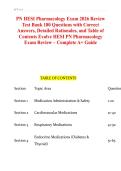
PN HESI Pharmacology Exam 2026 Review
Test Bank 180 Questions with Correct
Answers, Detailed Rationales, and Table of
Contents Evolve HESI PN Pharmacology
Exam Review – Complete A+ Guide


TABLE OF CONTENTS

Section Topic Area Question


Section 1 Medication Administration & Safety 1-20


Section 2 Cardiovascular Medications 21-40


Section 3 Respiratory Medications 41-50


Endocrine Medications (Diabetes &
Section 4 51-65
Thyroid)

,2|Page


Section Topic Area Question


Section 5 Neurological & Psychiatric Medications 66-85


Section 6 Pain Management & Antidotes 86-100


Section 7 Antibiotics & Anti-infectives 101-115


Section 8 Gastrointestinal Medications 116-130


Section 9 Diuretics & Renal Medications 131-140


Section
Anticoagulants & Hematological Agents 141-150
10


Section 11 Women's Health & Prenatal Medications 151-160


Section 12 Antidotes & Emergency Medications 161-170


Section 13 Geriatric Pharmacology Considerations 171-180

,3|Page


SECTION 1: MEDICATION ADMINISTRATION & SAFETY


QUESTION 1

How do you safely prepare medication?

A. Prepare in a busy area to save time
B. Have good lighting and work alone, checking the
medication label three times
C. Transfer medications to unlabeled bottles for
convenience
D. Prepare medications for multiple patients at once

Answer: B. Have good lighting and work alone, checking
the medication label three times

Rationale: Safe medication preparation requires good
lighting, working alone without distractions, and
checking the medication label three times: when
removing it from the drawer, before dispensing, and
when replacing the container . Never use unlabeled

, 4|Page


bottles, never transfer medications to other
containers, and always check expiration dates .


QUESTION 2

How would you administer medication via the
intramuscular (IM) route?

A. Inject at a 15-degree angle using a ½-inch needle
B. Inject at a 90-degree angle using the Z-track method
C. Inject at a 45-degree angle into fatty tissue
D. Inject intradermally and raise a wheal

Answer: B. Inject at a 90-degree angle using the Z-track
method

Rationale: IM injections are administered at a 90-
degree angle. The Z-track method is recommended to
prevent medication leakage into subcutaneous tissue
and to minimize irritation . The ventrogluteal site is
preferred for adults due to its distance from major
nerves and blood vessels .


Document information

Uploaded on
March 17, 2026
Number of pages
151
Written in
2025/2026
Type
Exam (elaborations)
Contains
Questions & answers
$28.49

Wrong document? Swap it for free Within 14 days of purchase and before downloading, you can choose a different document. You can simply spend the amount again.
Written by students who passed
Immediately available after payment
Read online or as PDF

Seller avatar
Reputation scores are based on the amount of documents a seller has sold for a fee and the reviews they have received for those documents. There are three levels: Bronze, Silver and Gold. The better the reputation, the more your can rely on the quality of the sellers work.
PremiumExamBank
4.8
(1053)
Sold
405
Followers
69
Items
6451
Last sold
16 hours ago


Why students choose Stuvia

Created by fellow students, verified by reviews

Quality you can trust: written by students who passed their tests and reviewed by others who've used these notes.

Didn't get what you expected? Choose another document

No worries! You can instantly pick a different document that better fits what you're looking for.

Pay as you like, start learning right away

No subscription, no commitments. Pay the way you're used to via credit card and download your PDF document instantly.

Student with book image

“Bought, downloaded, and aced it. It really can be that simple.”

Alisha Student

Working on your references?

Create accurate citations in APA, MLA and Harvard with our free citation generator.

Working on your references?

Frequently asked questions
