NUR 170 Exam 4 Review
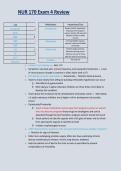
Lab Value Medication Importance/Use
Creatinine 0.5-1.2 Dutasteride Benign prostatic hyperplasia-
Keep away from pregnant
BUN 10-20 women, Monitor BP, take with
full glass of water, Irritates
WBC 5-10 mm mucosa
RBC 4.2-6.1 Tolteradine Increase bladder capacity,
suppress involuntary bladder
Hgb 12-18 contraction
PLT 150-400 Etanercept Used for plague psoriasis,
Black box warning-serious
PT 11-12.5 infection risk esp. for those
with TB, notify of sore throat
aPTT 30-40
Lindaine For head lice
Albumin 3.5-5
o Urinary Tract Infection: o AKA: UTI
o Symptoms: low back pain, urinary frequency, and suprapubic tenderness o Level
of consciousness change is common in older adults with a UTI
o BPH-Benign prostatic hyperplasia o Dutasteride o Monitor blood pressure
o Teach to move slowly from sitting to standing-orthostatic hypotension can occur
Side effects of gynecomastia
Men taking a 5-alpha-reductase inhibitor are three times more likely to
develop this condition
o Teach about the increased risk for development of prostate cancer o Men taking
a 5-alpha-reductase inhibitor are at higher risk for development of prostate
cancer
o Dutasteride/Finasteride
Teach to keep medications stored away from pregnant women or women
who may become pregnant-these drugs are teratogenic and can be
absorbed through the skin therefore, pregnant women should not touch
Teach patients to take the capsule with a full glass of water and to refrain
from opening the capsule to sprinkle on food
Irritates oropharyngeal mucosa
o TURP (Transurethral resection of the prostate)-CBI (continuous bladder irrigation)
o Monitor for signs of infection
o Older men undergoing prostate surgery often also have underlying chronic
disease (cardiovascular disease, chronic lung disease, diabetes)
o Help the patient out of bed to the chair as soon as permitted to prevent
complications of immobility
, NUR 170 Exam 4 Review
o Provide assistance, especially for patients with underlying changes in the
musculosketal system (decreased range of motion, stiffness in joints) o These
patients are at high risk for falls
o Assess the patient’s pain every 2 to 4 hours and intervene as needed to control
pain
o Provide a safe environment for the patient
o Anticipate a temporary change in mental status for the older patient in the
immediate postoperative period as a result of the anesthetics and unfamiliar
surroundings- reorient the patient regularly
o Keep the catheter and tubes secure
o Maintain the rate of the continuous bladder irrigation to ensure clear urine
without clots and bleeding
o Use normal saline solution (isotonic) for the intermittent bladder irrigation unless
otherwise prescribed
o Monitor and document the color, consistency, and amount of urine output o
Check the drainage tubing frequently for external obstructions (kinks) and
internal obstruction (blood clots, decreased output)
o Assess the patient for reports of severe bladder spasms with decreased urinary
output, which may indicate obstruction
o If the urinary catheter is obstructed, irrigate it per agency or surgeon protocol o
Notify the surgeon immediately if the obstruction does not resolve by hand
irrigation or if the urinary return looks like ketchup (burgundy colored urine in
the drainage bag) CALL HCP.
o BUN: 10-20
o Creatinine: 0.5-1.2 (the whole level-if you wanna know male versus female-look
it up)
If running lab work and BUN shows 12 and Creatinine shows 0.8: You are
good to go, continue prepping patient for surgery, if the lab values are
abnormal-call HCP
o Incontinence/Foley care o Tolterodine: TT can’t pee!!
o Suppress involuntary bladder contraction and increase bladder capacity
o Monitor the patient closely for signs of infection. o Foley home care:
o Wash away from urethra with soap and water o Clean everyday o No baths
o Older men undergoing prostate surgery often also have underlying chronic
diseases (cardiovascular disease, chronic lung disease, diabetes)
o Help the patient out of the bed to the chair as soon as permitted to prevent
complications of immobility.
Lab Value Medication Importance/Use
Creatinine 0.5-1.2 Dutasteride Benign prostatic hyperplasia-
Keep away from pregnant
BUN 10-20 women, Monitor BP, take with
full glass of water, Irritates
WBC 5-10 mm mucosa
RBC 4.2-6.1 Tolteradine Increase bladder capacity,
suppress involuntary bladder
Hgb 12-18 contraction
PLT 150-400 Etanercept Used for plague psoriasis,
Black box warning-serious
PT 11-12.5 infection risk esp. for those
with TB, notify of sore throat
aPTT 30-40
Lindaine For head lice
Albumin 3.5-5
o Urinary Tract Infection: o AKA: UTI
o Symptoms: low back pain, urinary frequency, and suprapubic tenderness o Level
of consciousness change is common in older adults with a UTI
o BPH-Benign prostatic hyperplasia o Dutasteride o Monitor blood pressure
o Teach to move slowly from sitting to standing-orthostatic hypotension can occur
Side effects of gynecomastia
Men taking a 5-alpha-reductase inhibitor are three times more likely to
develop this condition
o Teach about the increased risk for development of prostate cancer o Men taking
a 5-alpha-reductase inhibitor are at higher risk for development of prostate
cancer
o Dutasteride/Finasteride
Teach to keep medications stored away from pregnant women or women
who may become pregnant-these drugs are teratogenic and can be
absorbed through the skin therefore, pregnant women should not touch
Teach patients to take the capsule with a full glass of water and to refrain
from opening the capsule to sprinkle on food
Irritates oropharyngeal mucosa
o TURP (Transurethral resection of the prostate)-CBI (continuous bladder irrigation)
o Monitor for signs of infection
o Older men undergoing prostate surgery often also have underlying chronic
disease (cardiovascular disease, chronic lung disease, diabetes)
o Help the patient out of bed to the chair as soon as permitted to prevent
complications of immobility
, NUR 170 Exam 4 Review
o Provide assistance, especially for patients with underlying changes in the
musculosketal system (decreased range of motion, stiffness in joints) o These
patients are at high risk for falls
o Assess the patient’s pain every 2 to 4 hours and intervene as needed to control
pain
o Provide a safe environment for the patient
o Anticipate a temporary change in mental status for the older patient in the
immediate postoperative period as a result of the anesthetics and unfamiliar
surroundings- reorient the patient regularly
o Keep the catheter and tubes secure
o Maintain the rate of the continuous bladder irrigation to ensure clear urine
without clots and bleeding
o Use normal saline solution (isotonic) for the intermittent bladder irrigation unless
otherwise prescribed
o Monitor and document the color, consistency, and amount of urine output o
Check the drainage tubing frequently for external obstructions (kinks) and
internal obstruction (blood clots, decreased output)
o Assess the patient for reports of severe bladder spasms with decreased urinary
output, which may indicate obstruction
o If the urinary catheter is obstructed, irrigate it per agency or surgeon protocol o
Notify the surgeon immediately if the obstruction does not resolve by hand
irrigation or if the urinary return looks like ketchup (burgundy colored urine in
the drainage bag) CALL HCP.
o BUN: 10-20
o Creatinine: 0.5-1.2 (the whole level-if you wanna know male versus female-look
it up)
If running lab work and BUN shows 12 and Creatinine shows 0.8: You are
good to go, continue prepping patient for surgery, if the lab values are
abnormal-call HCP
o Incontinence/Foley care o Tolterodine: TT can’t pee!!
o Suppress involuntary bladder contraction and increase bladder capacity
o Monitor the patient closely for signs of infection. o Foley home care:
o Wash away from urethra with soap and water o Clean everyday o No baths
o Older men undergoing prostate surgery often also have underlying chronic
diseases (cardiovascular disease, chronic lung disease, diabetes)
o Help the patient out of the bed to the chair as soon as permitted to prevent
complications of immobility.