

Written by students who passed Immediately available after payment Read online or as PDF Wrong document? Swap it for free 4.6 TrustPilot
logo-home
Document preview thumbnail
Preview 4 out of 34 pages
Exam (elaborations)

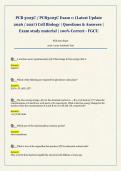
PCB 3023C / PCB3023C Exam 1: (Latest Update 2026 / 2027) Cell Biology | Questions & Answers | Exam study material | 100% Correct - FGCU

Document preview thumbnail
Preview 4 out of 34 pages

PCB 3023C / PCB3023C Exam 1: (Latest Update 2026 / 2027) Cell Biology | Questions & Answers | Exam study material | 100% Correct - FGCU PCB 3023 Exam 2026 / 2027 Academic Year Q: A reaction occurs spontaneously only if the change in free energy (ΔG) is Answer: negative Q: Which of the following are required for glycolysis to take place? Answer: NAD+, Pi, ADP, ATP Q: The free-energy change, ΔG, for the chemical reaction A → B is 0 kJ/mole at 37°C when the concentrations of A and B are 10 M and 0.1 M, respectively. What is the free-energy change for the reaction when the concentrations of A and B are 0.01 M and 1 M, respectively? Answer: +23.76 kJ/mole Q: Which part of the mitochondrion contains porins? Answer: outer membrane Q: What is true of the organelles that produce ATP in eukaryotic animal cells? Answer: They evolved from bacteria engulfed by ancestral cells billions of years ago. Q: Which of the following is true for eukaryotic cells? Answer: - Fats are converted to acetyl CoA in the mitochondria; sugars are converted to acetyl CoA in the cytosol - Sugars are converted to acetyl CoA, but fats are not - Fats are converted to acetyl CoA, but sugars are not - Sugars and fats are both converted to acetyl CoA in the mitochondria - Sugars are converted to acetyl CoA in the mitochondria; fats are converted to acetyl CoA in the cytosol Sugars and fats are both converted to acetyl CoA in the mitochondria. Q: For some biosynthetic reactions, such as the synthesis of nucleic acids, the energy supplied by the hydrolysis of ATP to ADP and Pi is insufficient to drive the reaction forward. How can such reactions occur inside cells? Answer: ATP is hydrolyzed to AMP and Pi in two successive hydrolysis reactions. Q: Which of the following statements are true of mitochondria? Answer: - In plant cells, they are replaced by chloroplasts - Inside a cell, they are mobile, constantly changing shape and position - They contain an outer membrane, an inner membrane, and two internal compartments - They are similar in size and shape to bacteria - They contain their own DNA and RNA - Inside a cell, they are mobile, constantly changing shape and position - They contain an outer membrane, an inner membrane, and two internal compartments - They are similar in size and shape to bacteria - They contain their own DNA and RNA Q: The synthesis of ATP in glycolysis occurs by which process? Answer: substrate-level phosphorylation Q: True or false, or impossible to determine? Answer: Because living cells generate order by surviving, growing, and forming complex communities, they defy the second law of thermodynamics. false Q: Protons are pumped across the mitochondrial inner membrane as electrons are transferred through the mitochondrial electron transport chain. Which of the following statements about proton pumping are correct? Answer: A. Protons are pumped into the matrix of the mitochondria. B. The pH inside the mitochondrial matrix is higher than in the intermembrane space. C. The mitochondria use the proton gradient to synthesize ATP. D. The NADH dehydrogenase, cytochrome b-c1, and cytochrome oxidase complexes all pump protons across the membrane. B, C, D Q: Antimycin A is a piscicide (fish poison) used to manage fisheries and kill invasive species. Antimycin A blocks the transfer of electrons through the cytochrome b-c1 complex. What components of the electron transport chain are bound to high-energy electrons after treating a mitochondrion with antimycin A? Answer: NADH and the NADH dehydrogenase complex are bound to high-energy electrons while O2 and the cytochrome c oxidase complex are not. Q: Different molecules diffuse through the cytosol at different speeds. Which series represents the correct order in which molecules will diffuse from the fastest to the slowest? Answer: tyrosine, ribosome, CO2, succinate dehydrogenase CO2, tyrosine, succinate dehydrogenase, ribosome Q: Which of the following can not be synthesized from intermediates formed during glycolysis and the citric acid cycle in human cells? Answer: amino acids, lipids, nucleotides, cholesterol, vitamin C vitamin C Q: The electron-transport chain in mitochondria accepts high-energy electrons directly from which molecule? Answer: NADH Q: Is the following statement true or false based on chemical and biological reactions? Energetically favorable reactions are those that create disorder by decreasing the free energy of the system to which they belong. Answer: true, for all reactions biological and chemical Q: Which of the following statements regarding NADPH and NADH is true? Answer: NADPH and NADH are used in separate biochemical pathways in cells Q: True or false: The mass of the living cell cannot be greater than the amount of matter that is absorbed by the cell. Answer: true Q: The NADH generated during glycolysis and the citric acid cycle feeds its high-energy electrons to which of the following? Answer: ADP, electron transport chain, citric acid cycle, FAD, H2O the electron transport chain Q: Some types of bacteria can survive under both aerobic and anaerobic conditions. Regardless of whether oxygen is present, these cells maintain a proton gradient across the plasma membrane to drive ATP synthesis and the import of nutrients. Under aerobic conditions, an H+ gradient across the plasma membrane is produced by the transfer of electrons along the respiratory chain. When oxygen is present, what would be expected to occur in the plasma membrane of these bacteria? Answer: Protons flow into the bacterial cell through ATP synthase, generating ATP. Q: In the first reaction of glycolysis (the pathway that begins the oxidative breakdown of sugars), the enzyme hexokinase uses ATP to catalyze the phosphorylation of glucose to glucose 6-phosphate and ADP. The ΔG° of this reaction is a favorable -16.7 kJ/mole.Another sometimes active enzyme, called glucose 6-phosphatase, effectively "reverses" this reaction, hydrolyzing glucose 6-phosphate back to glucose and releasing a phosphate. The ΔG° of this reaction is -13.8 kJ/mole.Based on these values, what is the ΔG° for the hydrolysis of ATP: ATP + H2O → ADP + Pi? Answer: -30.5 kJ/mole Q: To explore how yeast cells metabolize glucose, investigators use a DNA microarray to examine the effect the sugar has on the expression of a variety of genes. Cultured yeast cells are supplemented with high concentrations of glucose. mRNAs are extracted from the cells, converted into cDNAs, and labeled with a fluorescent marker. The samples are then hybridized to a DNA microarray that includes probes representing yeast genes.Shown here is a data set representing genes involved in ribosome biogenesis and electron transport. Red indicates that supplementing the growth medium with glucose has increased the expression of the genes, whereas green indicates that the added glucose has decreased gene expression. Based on this data, what can be concluded about how yeast cells behave when grown in the presence of high concentrations of glucose? Answer: Yeast cells exposed to high concentrations of glucose grow by fermentation. Q: In the absence of oxygen, in cells that cannot carry out fermentation, glycolysis would halt at which step? Answer: The oxidation of glyceraldehyde 3-phosphate to 1,3-bisphosphoglycerate Q: Most of the energy released by oxidizing glucose is saved in the high-energy bonds of what molecules? Answer: ATP and other activated carriers Q: Consider two molecules that associate with each other through hydrogen bonds. How tightly will the two molecules bind as the equilibrium constant, K, becomes larger for this association? Answer: They will bind more tightly. Q: True or false: The free-energy change (ΔG) and the standard free-energy change (ΔG°) of a reaction differ in that ΔG depends on the concentrations of the molecules in the reaction, whereas for Answer: ΔG°, these concentrations are set to fixed values. True Q: For many anaerobic microorganisms, which metabolic pathway is the principal source of ATP? Answer: glycolysis Q: In what ways can mitochondria adapt to the changing needs of a cell? Answer: They can change their location. They can change their number. They can change their shape. Q: Which of these glycolytic reactions is catalyzed by a kinase? Answer: 1,3-bisphosphoglycerate → 3-phosphoglycerate glucose → glucose 6-phosphate fructose 6-phosphate → fructose 1,6-bisphosphate Q: Where does the oxidative (oxygen-dependent) stage of the breakdown of food molecules occur in a eukaryotic cell? Answer: mitochondrion Q: Which statement about polymers is true? Answer: Polymer synthesis requires an input of free energy and involves the release of water. Q: Which statement about enzymes is not true? A. An enzyme can force an energetically unfavorable reaction to take place inside the cell. B. Enzymes can speed up energetically favorable reactions. C. Enzymes can help build large polymers. D. Enzymes reduce the activation energy required to initiate a spontaneous reaction. Answer: An enzyme can force an energetically unfavorable reaction to take place inside the cell. Q: In mitochondria, what is the final electron acceptor in the electron-transport chain? Answer: oxygen (O2) Q: Which energy conversion characterizes photosynthesis? Answer: electromagnetic (light) energy → chemical bond energy Q: What is true of mobile electron carriers? Answer: They ferry electrons between one respiratory complex and the next Q: The movement of electrons through the electron-transport chain in mitochondria does which of the following? Answer: pumps protons out of the mitochondrial matrix Q: True or false: Activated carriers that transfer methyl, carboxyl, and glucose groups for the purpose of biosynthesis are typically generated in reactions coupled to ATP hydrolysis. Answer: True Q: Useful energy is obtained by cells when sugars derived from food are broken down by which processes? Answer: glycolysis, the citric acid cycle, and oxidative phosphorylation Q: Which of the following drives the production of ATP from ADP and Pi by ATP synthase? A. A proton gradient B. A Na+ gradient C. Phosphorylation Answer: proton gradient Q: From one glucose molecule, how much net energy (in the form of ATP and NADH) is produced during glycolysis? Answer: 2 ATP, 2 NADH (key word, NET energy) - 2 ATP is consumed in phase 1, 2 ATP is produced in phase 2 - 2 NADH is produced in phase 2 Which activated carrier contains a high-energy bond whose hydrolysis releases a large amount of free energy? Answer: ATP Antibiotics should inhibit bacterial cell growth without generating side effects in the human patient, but that is not always the case. Some antibiotics that inhibit bacterial protein synthesis by binding to bacterial ribosomes induce negative side effects in patients. What is the most likely cause of these side effects? Answer: The antibiotics interfere with mitochondrial ribosomes. Which carrier is in its activated state as used in the cell? Answer: NADH Which is true about electrons as they move through the electron-transport chain? Answer: Electrons start out at very high energy and lose energy at each transfer step along the electron-transport chain. Which reaction releases the most energy? Answer: transfer of phosphate group from ATP to glucose - hydrolysis of ATP to ADP - hydrolysis of 1,3-bisphosphoglycerate to 3-phosphoglycerate - hydrolysis of glucose 6-phosphate to glucose - hydrolysis of ADP to AMP hydrolysis of 1,3-bisphosphoglycerate to 3-phosphoglycerate Which of the following statements about NADPH and/or NADH is not true? NADPH is an activated carrier molecule that is used primarily by plants. Consider the reaction A + B → AB. How is the equilibrium constant expressed for this reaction with two substrates and a single product? K = [AB] / [A][B] True or false: In cells, small molecules can diffuse over short distances quickly. true Approximately how many molecules of ATP can be produced in mitochondria from the complete oxidation of a single glucose molecule? 30 To explore how yeast cells metabolize glucose, investigators use a DNA microarray to examine the effect the sugar has on the expression of a variety of genes. Cultured yeast cells are supplemented with high concentrations of glucose. mRNAs are extracted from the cells, converted into cDNAs, and labeled with a fluorescent marker. The samples are then hybridized to a DNA microarray that includes probes representing yeast genes.Shown here is a data set representing genes involved in ribosome biogenesis and electron transport. Red indicates that supplementing the growth medium with glucose has increased the expression of the genes, whereas green indicates that the added glucose has decreased gene expression. Based on this data, what can be concluded about how yeast cells behave when grown in the presence of high concentrations of glucose? Yeast cells exposed to high concentrations of glucose grow by fermentation. In an animal cell, where are the proteins of the electron-transport chain located? inner mitochondrial membrane When protons move down their electrochemical gradient into the mitochondrial matrix, what do they do? produce ATP True or false: The free-energy change (ΔG) and the standard free-energy change (ΔG°) of a reaction differ in that ΔG depends on the concentrations of the molecules in the reaction, whereas for ΔG°, these concentrations are set to fixed values. true Which of the following describes a breakdown process in which enzymes degrade complex molecules into simpler ones? catabolism In the electron-transport chain, as electrons move along a series of carriers, they release energy that is used to do what? pump protons across a membrane What is true of the phosphorylation of glucose in step 1 of glycolysis? It traps the sugar inside the cell. Reactions that use energy to drive the synthesis of molecules inside the cell are most specifically considered anabolic Which of these processes require a membrane? *generation of ATP by photosynthesis in bacteria *generation of energy by mitochondria *generation of ATP by photosynthesis in plants *generation of ATP by oxidative phosphorylation What is the difference between NAD+ and NADH? NADH carries an extra proton and two high-energy electrons. You have joined a lab that studies the metabolic pathway shown below. Just recently, an inhibitor for one of the enzymes, enzyme 3, has become available and the head of the lab wants you to use this inhibitor to determine whether the pathway is linear (as shown) or circular, with another enzyme (not shown) converting F back to A. You have access to all the molecules. What result suggests that the pathway may be circular rather than linear? Inhibition of enzyme 3 and addition of extra metabolite D leads to buildup of C. What are the end products of glycolysis? *NADH *ATP *pyruvate The citric acid cycle converts the carbon atoms in acetyl CoA to which of the following? CO2 True or false, or impossible to determine?Because living cells generate order by surviving, growing, and forming complex communities, they defy the second law of thermodynamics. false What happens when ATP synthase operates "in reverse" and pumps H+ across a membrane against its electrochemical proton gradient? ATP is hydrolyzed to form ADP and Pi. Which of the following processes generates the largest number of ATP molecules? electron transport chain Which of the following organisms have mitochondria in their cells? *protozoa *yeasts *animals *plants When fatty acids are oxidized to produce acetyl CoA, each cycle of the reaction removes how many carbon atoms from the fatty acid molecule? 2 Which of the following represents energy in its most disordered form? heat energy What does it mean for a bond to be "high energy," such as the bonds between phosphate groups in ATP? The hydrolysis of the bond is energetically favorable. Under anaerobic conditions, which metabolic pathway regenerates the supply of NAD+ needed for glycolysis? fermentation In the second step of glycolysis (the pathway that begins the oxidative breakdown of sugars), the enzyme phosphoglucose isomerase converts glucose 6-phosphate to fructose 6-phosphate. The equilibrium constant, K, for this reaction is 0.36. If ΔG° = -5.94 ×× log K, which conclusion can be made about this reaction? The ΔG° is positive, but in a cell that is burning sugars, the reaction can still proceed in the forward direction. The electron-transport chain pumps protons in which direction? from the matrix to the intermembrane space Two molecules will bind to each other by means of noncovalent bonds if the ΔG° of the interaction is which of the following? negative (the free energy of the product is less than the sum of the free energies of the unbound partners) Which of the following are consumed as fuel within mitochondria? *amino acids *acetyl CoA *fatty acids *pyruvate In step 6 of glycolysis, glyceraldehyde 3-phosphate, which has one phosphate group, is converted into 1,3-bisphosphoglycerate, which has two. Where does the extra phosphate group come from? inorganic phosphate What is cell biology? the study of the cell structure, dynamics, and functions At what levels do cell biologist study? at microscopic and molecular levels Around what concept does cell biology revolves around? the concept that cells are the fundamental units of life What are the two basic cell types? prokaryotes and eukaryotes What's the primary difference between eukaryotes and prokaryotes? an eukaryotic cell has a nucleus that contains most of its DNA, a prokaryote does not Dr. Carl Woese revealed that prokaryotes can be divided into two sub-classes (archae and bacteria) on the basis of molecular information Distinctive characteristics of a plant cell 1. cell wall 2. chloroplast 3. vacuole Can animals cells carry out photosynthesis? yes What is the major site for ATP production in eukaryotic cells? mitochondria Where does transcription occur in a eukaryotic cell? nucleus Protein synthesis takes place in the 1. mitochondria 2. ER 3. cytosol The major function of the lysosome is degradation of macromolecules and organelles Most common elements in living systems 1. hydrogen 2. oxygen 3. carbon 4. nitrogen Types of bonds 1. ionic 2. covalent Ionic bonds ___________ electrons transfer Covalent bonds _____________ electrons share Energy is ___________________ when a bond forms released Energy is ___________________ when a bond breaks absorbed Types of covalent bonds 1. single 2. double 3. triple (T/F) Covalent bonds be non-polar as well as polar true When are polar covalent bonds formed? when shared electrons are divided unequally between atoms The strength of a bond, covalent or ionic, depends on 1. types of atoms involved in the bond 2. the environment Acids decrease pH by increasing the level of H+ Bases increase pH by releasing OH- thereby decreasing the level of H+ Energy carriers molecules whose hydrolysis releases "useful" energy Examples of energy carries 1. NADPH 2. NADH 3. Acetyl CoA 4. ATP 4 major families of small organic molecules 1. sugars 2. fatty acids 3. amino acids 4. nucleotides 4 major macromolecules 1. polysaccharides, glycogen, and starch (from sugars) 2. fats and membranes lipids (from fatty acids) 3. proteins (from amino acids) 4. nucleic acids (from nucleotides) Monosaccharides most basic form of carbohydrates; simplest sugar Glucose and fructose are _____________ isomers Function of sugars 1. production and storage of energy 2. cell walls (cellulose) 3. extracellular matrix 4. DNA/RNA 5. linked to proteins All macromolecules are made via ____________ dehydration reaction Disaccharide two monosaccharides linked by covalent bonds Glycosidic bond bond between to sugars Sucrose a product of glucose and fructose Polysaccharide multiple monosaccharides linked by covalent bonds Glycogen polysaccharide in animals used for storing sugar Starch polysaccharide in plants used for storing sugar What's the difference between glycogen and starch? glycogen is more branched than starch A nucleotide consists of 1. nitrogen-containing base 2. a five-carbon sugar 3. one or more phosphate groups Bases in nucleotides 1. Pyrimidines (hexagon shape) 2. Purine (hexagon + pentagon shape) Pyrimidines a. Thymine (T) b. Uracil (U) c. Cytosine (C) Purine a. Adenine (A) b. Guanine (G) Sugars in nucleotides 1. ribose (OH and H on 2'C) 2. deoxyribose (2 H on 2'C) (T/F) Ribose and deoxyribose are hexose sugars false; they are pentose Phosphates in nucleotides 1. AMP 2. ADP 3. ATP To what do the phosphate(s) attach to in a nucleotide? to the 5'C of the sugar Function of nucleotides 1. DNA (A, G, C, T) 2. RNA (A, G, C, U) 3. Carriers of chemicl energy (ATP, GTP, etc) 4. Signaling molecules 5. Coenzymes Phosphodiester bond bonds between nucleotides (T/F) Bonds strengths are identical in vacuum and in water false (T/F) Under physiological conditions, covalent bonds can be used to keep molecules together true (T/F) While covalent bonds can be polar and non-polar, ionic bonds are always polar true What advantage does SDS PAGE have over nondenaturing PAGE? SDS PAGE can provide a rough estimate of peptide mass, which nondenaturing PAGE does not (T/F) Fatty acids are amphiphilic true (T/F) Fatty acids' hydrocarbon tails can comprise of multiple double bonds true (T/F) Cholesterol is an example of a fatty acid false; an example of an steroid (T/F) A water molecule contains two hydrogen bonds false; it normally ranges from 2.4 to 3.6 Can a hydrogen bond involve non-polar covalent bonds? yes, but the hydrogen bond will break Hydrophilic solute compensates for the loss in water-water interaction Hydrophobic solute does not compensate for loss in water-water interactions Are fatty acids water-soluble? most are not water-soluble Prominent lipid types 1. triacyglycerols 2. phospholipids Triacyglycerols 3 fatty acid chains linked together by a glycerol Phospholipids 2 fatty acid chains linked to glycerol with a head that contains a phosphate group Polymerization occurs via __________________ dehydration Fats and oils are _____________ triacyglycerols The main difference between fats and oils is that fats are solid at room temperature while oils are solid What governs the solid/liquid state of lipid at physiological temperature? the number of unsaturated bonds in the fatty acid's tail; a lipid with many tail "kinks" is less likely to form a solid Functions of fatty acids 1. Tryaglycerols: store energy a. about 2x more energy than sugars by weight 2. Phospholipids: cell membranes What's the general formula for an amino acid? 1. an amino group 2. a side chain 3. an alpha carbon 4. a carboxyl group What's the function of an amino acid's side chain? to dictate function (T/F) A side chain labeled as nonpolar implies that it cannot form hydrogen bonds false; it only means that the hydrogen bonds it forms are weak The charge state of an amino acid depends on 1. its pKa 2. the pH of the environment At a physiological pH of 7.4, histidine (H) is ____________ neutral The pKa of an amino acid is determined by 1. the atom that binds to the hydrogen 2. the environment of the -X-H bond Peptide bond a bond between amino acids Steps to the overall process of protein structure determination 1. extraction 2. sequencing 3. visualization Extraction tecniques 1. Electrophoresis a.PAGE b. iso-electric focusing 2. Column chromatography a. gel-filtration chromatography b. ion-exchange chromatography c. affinity chromatography Electrophoresis: PAGE 1. Native PAGE (aka. non-denaturing PAGE): depends on the shape and charge of the protein 2. Non-native PAGE: depends on the charge of the protein 3. SDS PAGE: depends on the mass/length of the protein Sequencing methods 1. Edman degradation 2. Mass spectromery Edman degradation - tags the N-terminal of the protein - identify the targeted end using chromatography - 100% accurate but exahuastive Mass spectrometry - uses mass/charge ratio for separation - very fast, highly accurate, and requires a small sample Visualization techniques 1. NMR spectroscopy 2. X-ray diffraction NMR Spectroscopy - protein must be soluble - protein size is limited to 50kD - can capture dynamics - no packing artifacts X-ray diffraction - protein must crystallize - protein can be big - gives only a static picture - prone to crystal packing artifacts The shape of a protein is specified by 1. amino acid sequence 2. environment (T/F) A protein adopts a conformation that minimizes the free energy of the system true Free energy the amount of energy available for useful work Gibbs definition of energy G = H - TS H is enthalpy T is temperature S is entropy Enthalpy formula H = U +PV U is internal energy (aka. an avg. of tthe sum of all interaction energies) P is pressure V is volume Entropy a measure of system multiplicity (T/F) Entropy means disorder false; it can only be visualized in terms of disorder Entropy is a ____________ variable state What's the most relevant electrodynamics force to cells? van der Walls force What determines the free energy of the system? - interactions between amino acids - interactions between amino acids and solvent - interactions between solvent molecules - temperature How can proteins be denatured? - change in amino acid composition - change in the environment - temperature - solvent conditions - Urea - SDS - change ionic concentration - beta-mercaptoethanol - change in pH ** and many more** Chaperones heat shock proteins that help fold proteins Levels of protein structure 1. primary (amino acid sequence) 2. secondary (alpha helix and beta sheets) 3. tertiary (3D structure protein with a polypeptide) 4. quaternary (3D structure of a protein with more than one polypeptide) (T/F) All protein interactions are stabilized by wan der Wall interactions true Domain proteins units that fold independently into a compact and stable structure in most cases are associated with a function Intrinsically disordered proteins functions - scaffolding - signaling - gene regulation What's on of the strongest attributes Intrinsically disordered proteins posses? they can adopt multiple different 3D structures based on their binding partner Protein function 1. structure (eg. collagen) 2. motor (eg. kinesin) 3. transport (eg. potassium channel) 4. storage (eg. ferritin) 5. hormonal (eg. insulin) 6. immune (eg. immunoglobulin) 7. enzymes (eg. trypsin) **and many more** What's a common feature of all protein function? all proteins bind to other molecules The two most important aspects of protein binding are _____________________ and __________________________ 1. binding strength/affinity 2. specificity Binding strength/ affinity tells us how strongly a protein binds to its ligand The dissociation constant of a reaction (Kd) is calculated by dividing the concentrations of the reactants by the concentration of the products The association constant of a reaction (Ka) is calculated by dividing the concentrations of the products by the concentration of the reactants The smaller the Kd the _____________ the affinity higher Specificity informs us of how a protein binds to one ligand relative to another What is the molecular basis for specificity? varies on a case-by-case basis The activity of a protein can be regulated at the _________________, ________________________, and __________________ levels 1. transcriptional 2. translational 3. post-translational Allosteric regulation protein binds to an active enzyme to free the active sites Non-allosteric regulation protein binds to an inactive enzyme to keep it from working The activity of a protein depends ultimately on the collective effect of all regulatory interactions/modifications Energetics tells how much energy is being used and released Kinetics tells the rate of the reaction An exergonic reaction 1. has a negative delta G 2. products have a lower free energy than reactants An endergonic reaction 1. has a positive delta G 2. reactants have a lower free energy than products Standard free energy (G0) free energy that accompanies the formation of 1M of a compound from its constituent element under standard conditions The performance of an enzyme depends on how fast it processes its substrate Proteins A, B and C bind to each other to form a complex, ABC. Under equilibrium the concentrations of A, B, C and ABC are 10-2 M. The dissociation constant and the standard free energy of this association reaction at T=300 K are, respectively ... The binding of an enzyme to its substrate releases 4 kcal/mol of free energy. An Arg-to-Ala mutation in the active site of the enzyme results in a loss of one salt bridge between the enzyme and the substrate. While this alters the binding enthalpy by 2 kcal/mol, it leaves the entropy unchanged. The free energy change associated with the binding of the mutant enzyme with its substrate is ... Prokaryotes derive energy from 1. Reactions involving organic substances 2. Recations involving inorganic substances 3. Sunlight The propieties of an atom depend on 1. Atomic number 2. Atomic mass What is a simple genome and which type of cell has one? Codes for fewer proteins then a complex genome, prokaryotes Plant cell walls were.... Reacquired after eukaryotes lost cell walls when they diverged from prokaryotes Genes Regions of DNA transcribed into any type of RNA Is RNA or DNA evolutionarily older and how does this affect the bases? RNA, uracil used first until evolution selected variation of DNA molecule containing thymine What are the types of proteins that define an organism? Enzymes, machines and switches, structural What are RNPs? Examples Ribonucleoproteins, ribosomes in all cells and telomerase + spliceosome in eukaryotes Regulation of gene expression in prokaryotes vs eukaryotes More control in eukaryotes allows for cells to differentiate by expressing different regions of the DNA in different cells Homeostatic disequilibrium Constant state of cell that requires a lot of energy to maintain How to organisms get carbon and nitrogen? CO2 fixed by phototrophs using sunlight and stored in carbohydrate molecule, N2 converted to ammonia by bacteria Why are carbohydrates important? Energy from sunlight used to break CO2 ends up in covalent bond of carbohydrate. The molecule serves as a high energy source of carbon that releases energy when carbon is removed Why are organisms so complex now? evolution stumbled upon things that made doing basic things easier - extra proteins etc Mycoplasma genitalium 477 proteins needed for life Homologs two or more genes descended from the same common ancestral gene, gene families, can describe genes or proteins Orthologs Genes in two separate species that derive from the same ancestral gene in the last common ancestor of those two species Paralogs Related genes that have resulted from a gene duplication event within a single genome Gene Family creation Duplication, intragenic mutation, segment shuffling, horizontal transfer Intragenic Mutation errors during replication may result in slightly new sequences Segment shuffling accidental breaks in two or more gene regions are mis-repaired such that a new, hybrid gene sequence results Horizontal transfer examples Viruses, acquisition of environmental DNA, sexual reproduction, vertical transfers How did accidental acquisition of nuclear envelope cause the rest of the characteristics of a eukaryotic cell? In prokaryotes a larger genome would interfere with cell processes. the nucleus allowed DNA to increase in size - made more proteins - cell got bigger - genome could get even bigger. Packaging methods were needed bc of large genome - chromosome structure Why did cytoskeleton develop? Large cell needed support (internal membranes defining organelles). Without cell wall could engage in phagocytosis. Plants reaquired cell wall as they transitioned to land growth mitochondria and chloroplasts Symbiotic association with engulfed bacteria. possess their own genome, replicate by fission, surrounded by double membrane - membrane remnant from their plasma membrane + membrane of cell that engulfed them How did eukaryotes become multicellular ? Large genome with non coding regions allows for regulated expression of genes. Different genes are expressed in different cells allowing them to perform different functions. Covalent bonds electrons shared between two atoms strong, stable, long-lasting # of covalent bonds an atom can form depends on # of electrons in its outer shell Covalent bonds of less stable molecules are a form of stored chemical energy Strong base strong partial negative (to grab hydrogen) Strong acid Strong partial positive on hydrogen Ionic bonds Fully charged ions attracted Very strong Flexible Polar solvents liquid at normal atmospheric temperature and pressure. Disrupt ionic bonds - in cells only found deep in central regions of large molecules - insulated from aqueous environment Van der waals forces attraction between the fluctuating electron clouds of two polar molecules individually very weak but significant in numbers unaffected by polar molecules van der Waals radii minimum distance allowed between two atoms determined by dimensions of electron clouds Electrostatic interactions Ionic bonds, interactions between polar molecules, van der waals attractions what constitutes the greatest fraction of a cells mass? WATER Why is carbon important in cells? 4 missing electrons in outer shell = 4 covalent bonds, forms chains and rings = organic molecules What other element has 4 missing valence electrons? Silicon What 4 small organic molecules form the basis for most reactions in the cell? Amino acids, sugars, nucleotides, lipids Catabolism Metabolic pathways that break down molecules, releasing energy. Anabolism Metabolic pathways that construct molecules, requiring energy. Metabolism Catabolism + Anabolism second law of thermodynamics the entropy (disorder) of the universe is always increasing How do cells use energy to create localized order? Energy from sun or food is channeled into bonds - less organized- energy lost as heat - entropy within the cell decreases - entropy of the universal system increases Photosynthesis Photon energy + CO2 + H2O (stable) - free C O H (unstable) - CH2O + O2 + heat energy (in between) Phototrophic energy flow Synthesize carbohydrates - degrade into more stable forms (store some freed bond energy, release the rest as heat) - use smaller molecule to build macromolecules with stored bond energy Organotrophic energy flow Ingest carbs, degrade into stable forms, build macromolecules Respiration C or H atoms of large molecules oxidize to their lowest energy states (CO2 H2O) Oxidation Loss of electrons - becomes more positive - decreasing number of C-H bonds Reduction Gain of electrons - more negative - increasing number of C-H bonds energetically favorable Product bonds possess less energy than reactants, spontaneous, generally oxidations are energetically unfavorable Product bonds possess more energy than reactants, generally reductions are Gibbs free energy (G) Delta G = net change in free energy between reactants and products negative = products have less energy, catabolism, favorable Positive = products have more energy, energy must be put in, unfavorable, anabolism Are product with higher or lower energy less organized? Lower energy Favorable reactions increase ________ of the system Disorder/entropy - release heat which increases random thermal motion - result in less ordered structures How do enzymes speed up chemical reactions? By lowering the activation energy, bring reactants into proper orientation, stabilize intermediates What two functions do enzymes perform in unfavorable reactions? Lower activation energy, couple unfavorable reaction to a favorable one Activated carrier Molecule used by enzymes to couple unfavorable reactions to favorable ones, high energy bond at one end Synthesis of CH2O Stable low energy CO2 and H2O - photon energy to break into atoms - allow to return to stable forms but stop half way - carbohydrates (CH2O) - photon energy now in covalent bonds C and H lowest energy state CO2 / H2O in presence of O2, in its absence pyruvate The synthesis of CH2O is Favorable and spontaneous Proteins such as ________________ control __________ Machines switches and enzymes, metabolism Protein structure Unique chain of amino acids single covalent bond connects amino acids that is flexible and somewhat rotational determined by interactions between side chains, side chains and peptide bond, two or more bonds, side chains and water final protein shape Lowest possible energy, maintained by weak forces, involves molecular chaperones Interactions between amino acids Van der waals radius, electrostatic, hydrophobic, covalent disulfide (cys) alpha helix and beta sheet Hydrogen bonds between NH of one peptide bond and C=O of another Domain structure Independent of 4 structural levels, stable regions in single protein, often associated with specific function quaternary structure examples Ribosomes / spliceosome (protein + RNA), membranes (proteins + lipids) Held together primarily by weak noncovalent bonds Protein binding Surface chemistry, bind to ligand/substrate by forming weak noncovalent bonds, high specificity/affinity Ligand binding Binding site, binding alters chemistry leading to conformational change Conformational changes may result in Creation of a new binding site, destruction of original binding side, interior of proteins often maintains core structure Enzymes _______ and _________ reaction intermediates Bind to and stabilize Acid catalysis Electrons move away from C leaving it with a partial positive charge - susceptible to attack by electronegative O of water Base Catalysis Base attracts water H+ - electrons move closer to O - water becomes better attacking molecule Lysozyme Cuts polysaccharide component of bacterial cell walls, catalyze hydrolysis of glycosidic bond between sugars (favorable but has high AE) Lysozyme activity Binds polysaccharide in elongated groove with noncovalent bonds causes sugar monomer to bend acidic Glu on enzyme donates H to anomeric oxygen O pulls electrons from C on sugar 1 C acquires partial pos charge Neg Asp on enzyme attacks C on sugar 1 forming covalent bond Covalent bond between sugars broken Neg Glu pulls off H from water OH- attacks partial pos C Displaces Asp Sugars released Nonprotein parts of enzymes Small molecule or metal atoms that assist with catalytic function, inorganic = cofactors, organic = coenzyme (vitamins) Molecular tunnels Physical pathways that connect active sites to prevent intermediates from encountering the cytoskeleton (isolates highly reactive intermediates and prevents diffusion out of cell) How quickly does a protein in a cell spin? 1,000,000 times a second Control of protein function Rate of synthesis and degradation, segregation or compartmentalization How does altering electrochemical environment control protein function? Conformational change, alteration of function Ligand mediated feedback regulation Final or intermediate product of enzyme contributes to overall reaction outcome and controls one or more enzymes involved negative feedback Product acts as ligand that binds to inhibit enzyme towards the beginning of chain Negative Feedback concentration relationship Concentration of product lysine increases - more likely to collide - less enzyme activity (and reverse) Positive feedback regulation Accumulation of substrate activates enzymes Ex. Increase in ADP increases conversion of ADP to ATP Allosteric enzymes Must have at least 2 binding sites Substrate binding site (active) Regulatory molecule binding site (regulatory) No energy input - spontaneous Collision causes ligand and protein to detach Allosteric transition Binding of regulatory molecule causes enzyme shape change - active site changes Protein phosphorylation Covalent addition of Phosphate atom to aa side chains Strong stable long lasting High energy - requires energy to make - requires enzyme Protein kinases Phosphorylates - can be activating or deactivating Phosphate from ATP P only added to Ser Thr Tyr Protein phosphatases Dephosphorylate ATPase Proteins that get energy from ATP to do energetically unfavorable things GTP binding proteins - GTPases Binding site for whole GTP Hydrolysis of GTP to GDP causes conformational change 3 shapes - nothing, GTP bound (active), GDP bound (inactive, not rephosphorylated to GTP) In practice almost always have one bound GTPase activating protein (GAP) GAP activates hydrolysis of GTP - GDP Part of binding enzyme or outside enzyme GTP to GDP is inactivating the GTPase Guanine nucleotide exchange factor (GEF) Pushes GDP off GTPase Activation of GTPase Physical obstruction Proteins use structure to block reactions from occurring Enzyme catalysts can do all of the following except Make an unfavorable reaction favorable Motor proteins Muscle contraction Crawling and swimming Chromosomal segregation Organelle movement Move enzymes along DNA strand during replication Transport pumps Proteins in membrane that undergo conformational changes to move molecules across membrane Often couples to ATP binding and hydrolysis - ATPase Synthetases Take energy stored in a gradient to generate high energy bond such as ATP ATP synthetase energy in form of proton gradient protons flow through synthase synthase spins mechanical energy used to synthesize ATP from ADP + Pi Protein machines Linked sets of proteins (10+) Series of conformational changes Control elaborate and complex cellular processes Eukaryotic nucleus Double membrane Separates chromosomes and related process from rest of cell Eukaryotic and Prokaryotic DNA Double helix Prokaryotic DNA One circular molecule, no true chromosome structure Eukaryotic DNA Multiple linear molecules Packaged into chromosomes nucleosomes "30 nm" fiber interphase chromatin fiber mitotic chromatin fiber Eukaryotic regions of DNA No coding regulatory region Non coding non regulatory regions (spacers?) Protein coding genes 5 % total genome 80% genome transcribed into non-mRNAs Prokaryotic regions of DNA Almost 100% mRNA, rRNA, and tRNA Almost no non coding regions One chromosome One double stranded DNA molecule during interphase or two sister chromatids immediately following S phase Levels of packaging DNA Beads on string - nucleosome 30nm chromatin fiber of nucleosomes 300nm loops 700nm swirls of loops 1400nm mitotic chromosome (X) Nucleosomes DNA double wound twice around his tone Attached by H bonds Histones 8 proteins - 2 of each kind Chromatin fiber (30nm fiber) Folded strings of nucleosomes Interactions between N terminals of adjacent histones H1 and nonhistone DNA binding proteins attach to region between nucleosomes to reinforce Chromatin variation Chromosome structure varies by region Unlike prokaryotic cells eukaryotic cells Process his tone genes Euchromatin Regions in chromosome when fibers are less condensed - 90% genes Heterochromatin Regions in chromosome where fibers are highly condensed Few genes - resistant to transcription by not completely exempt Concentrated in centromeres and telomeres Chromatin remodeling complexes ATP driven protein complexes Acetylation of lysine on histone N tails Leads to decondensation / loose packaging Methylation of lysine on histone tails mono-, di-, and tri- leads to further condensation, tight packaging Phosphorylation of serine additional condensation during mitosis and meiosis Variant histones Synthesized throughout interphase (normal ones only during S) Insert into existing chromatin Histone code combinations of modifications which appear to convey specific meanings determine chromatin packaging patterns - affect gene expression patterns Epigenetic inheritance Variable features of chromatin structure inherited, based on protein structure not DNA sequence

Content preview

PCB 3023C / PCB3023C Exam 1: (Latest Update
) Cell Biology | Questions & Answers |
Exam study material | 100% Correct - FGCU

PCB 3023 Exam
Academic Year


Q: A reaction occurs spontaneously only if the change in free energy (ΔG) is

Answer:
negative


Q: Which of the following are required for glycolysis to take place?

Answer:
NAD+, Pi, ADP, ATP


Q: The free-energy change, ΔG, for the chemical reaction A → B is 0 kJ/mole at 37°C when the
concentrations of A and B are 10 M and 0.1 M, respectively. What is the free-energy change for the
reaction when the concentrations of A and B are 0.01 M and 1 M, respectively?

Answer:
+23.76 kJ/mole


Q: Which part of the mitochondrion contains porins?

Answer:
outer membrane


Q: What is true of the organelles that produce ATP in eukaryotic animal cells?

Answer:
They evolved from bacteria engulfed by ancestral cells billions of years ago.

,Q: Which of the following is true for eukaryotic cells?

Answer:
- Fats are converted to acetyl CoA in the mitochondria; sugars are converted to acetyl CoA in the cytosol
- Sugars are converted to acetyl CoA, but fats are not
- Fats are converted to acetyl CoA, but sugars are not
- Sugars and fats are both converted to acetyl CoA in the mitochondria
- Sugars are converted to acetyl CoA in the mitochondria; fats are converted to acetyl CoA in the cytosol
Sugars and fats are both converted to acetyl CoA in the mitochondria.


Q: For some biosynthetic reactions, such as the synthesis of nucleic acids, the energy supplied by the
hydrolysis of ATP to ADP and Pi is insufficient to drive the reaction forward. How can such reactions
occur inside cells?

Answer:
ATP is hydrolyzed to AMP and Pi in two successive hydrolysis reactions.


Q: Which of the following statements are true of mitochondria?

Answer:
- In plant cells, they are replaced by chloroplasts
- Inside a cell, they are mobile, constantly changing shape and position
- They contain an outer membrane, an inner membrane, and two internal compartments
- They are similar in size and shape to bacteria
- They contain their own DNA and RNA
- Inside a cell, they are mobile, constantly changing shape and position
- They contain an outer membrane, an inner membrane, and two internal compartments
- They are similar in size and shape to bacteria
- They contain their own DNA and RNA


Q: The synthesis of ATP in glycolysis occurs by which process?

Answer:
substrate-level phosphorylation


Q: True or false, or impossible to determine?

Answer:
Because living cells generate order by surviving, growing, and forming complex communities, they defy
the second law of thermodynamics.
false

,Q: Protons are pumped across the mitochondrial inner membrane as electrons are transferred
through the mitochondrial electron transport chain. Which of the following statements about proton
pumping are correct?

Answer:
A. Protons are pumped into the matrix of the mitochondria.
B. The pH inside the mitochondrial matrix is higher than in the intermembrane space.
C. The mitochondria use the proton gradient to synthesize ATP.
D. The NADH dehydrogenase, cytochrome b-c1, and cytochrome oxidase complexes all pump protons
across the membrane.
B, C, D


Q: Antimycin A is a piscicide (fish poison) used to manage fisheries and kill invasive species.
Antimycin A blocks the transfer of electrons through the cytochrome b-c1 complex. What components
of the electron transport chain are bound to high-energy electrons after treating a mitochondrion with
antimycin A?

Answer:
NADH and the NADH dehydrogenase complex are bound to high-energy electrons while O2 and the
cytochrome c oxidase complex are not.


Q: Different molecules diffuse through the cytosol at different speeds. Which series represents the
correct order in which molecules will diffuse from the fastest to the slowest?

Answer:
tyrosine, ribosome, CO2, succinate dehydrogenase
CO2, tyrosine, succinate dehydrogenase, ribosome


Q: Which of the following can not be synthesized from intermediates formed during glycolysis and
the citric acid cycle in human cells?

Answer:
amino acids, lipids, nucleotides, cholesterol, vitamin C
vitamin C


Q: The electron-transport chain in mitochondria accepts high-energy electrons directly from which
molecule?

Answer:
NADH

, Q: Is the following statement true or false based on chemical and biological reactions?
Energetically favorable reactions are those that create disorder by decreasing the free energy of the
system to which they belong.

Answer:
true, for all reactions biological and chemical


Q: Which of the following statements regarding NADPH and NADH is true?

Answer:
NADPH and NADH are used in separate biochemical pathways in cells


Q: True or false: The mass of the living cell cannot be greater than the amount of matter that is
absorbed by the cell.

Answer:
true


Q: The NADH generated during glycolysis and the citric acid cycle feeds its high-energy electrons to
which of the following?

Answer:
ADP, electron transport chain, citric acid cycle, FAD, H2O
the electron transport chain


Q: Some types of bacteria can survive under both aerobic and anaerobic conditions. Regardless of
whether oxygen is present, these cells maintain a proton gradient across the plasma membrane to drive
ATP synthesis and the import of nutrients. Under aerobic conditions, an H+ gradient across the plasma
membrane is produced by the transfer of electrons along the respiratory chain. When oxygen is present,
what would be expected to occur in the plasma membrane of these bacteria?

Answer:
Protons flow into the bacterial cell through ATP synthase, generating ATP.

Document information

Uploaded on
March 10, 2026
Number of pages
34
Written in
2025/2026
Type
Exam (elaborations)
Contains
Questions & answers
$8.99

Wrong document? Swap it for free Within 14 days of purchase and before downloading, you can choose a different document. You can simply spend the amount again.
Written by students who passed
Immediately available after payment
Read online or as PDF

Seller avatar
Reputation scores are based on the amount of documents a seller has sold for a fee and the reviews they have received for those documents. There are three levels: Bronze, Silver and Gold. The better the reputation, the more your can rely on the quality of the sellers work.
EliteStudyPro
4.0
(702)
Sold
3604
Followers
2870
Items
9383
Last sold
2 hours ago


Why students choose Stuvia

Created by fellow students, verified by reviews

Quality you can trust: written by students who passed their tests and reviewed by others who've used these notes.

Didn't get what you expected? Choose another document

No worries! You can instantly pick a different document that better fits what you're looking for.

Pay as you like, start learning right away

No subscription, no commitments. Pay the way you're used to via credit card and download your PDF document instantly.

Student with book image

“Bought, downloaded, and aced it. It really can be that simple.”

Alisha Student

Working on your references?

Create accurate citations in APA, MLA and Harvard with our free citation generator.

Working on your references?

Frequently asked questions
