

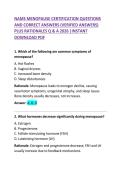
NAMS MENOPAUSE CERTIFICATION QUESTIONS
AND CORRECT ANSWERS (VERIFIED ANSWERS)
PLUS RATIONALES Q & A 2026 |INSTANT
DOWNLOAD PDF
1. Which of the following are common symptoms of
menopause?
A. Hot flashes
B. Vaginal dryness
C. Increased bone density
D. Sleep disturbances
Rationale: Menopause leads to estrogen decline, causing
vasomotor symptoms, urogenital atrophy, and sleep issues.
Bone density usually decreases, not increases.
Answer: A, B, D
2. What hormones decrease significantly during menopause?
A. Estrogen
B. Progesterone
C. Follicle-stimulating hormone (FSH)
D. Luteinizing hormone (LH)
Rationale: Estrogen and progesterone decrease; FSH and LH
usually increase due to feedback mechanisms.
,Answer: A, B
3. Which conditions are associated with postmenopausal
estrogen deficiency?
A. Osteoporosis
B. Cardiovascular disease
C. Endometrial hyperplasia
D. Urinary incontinence
Rationale: Estrogen protects bone and cardiovascular health;
its deficiency increases osteoporosis and heart disease risk.
Endometrial hyperplasia is usually related to unopposed
estrogen therapy.
Answer: A, B, D
4. Which lifestyle modifications are recommended to manage
menopausal symptoms?
A. Regular weight-bearing exercise
B. Smoking cessation
C. High-sugar diet
D. Limiting alcohol intake
Rationale: Exercise maintains bone and cardiovascular health;
smoking and excessive alcohol worsen symptoms. Diet should
be balanced, not high in sugar.
Answer: A, B, D
,5. Which of the following therapies are considered for
vasomotor symptoms?
A. Hormone therapy (HT)
B. Cognitive behavioral therapy (CBT)
C. Topical estrogen cream
D. Bisphosphonates
Rationale: HT is first-line for moderate/severe vasomotor
symptoms. CBT can help with symptom perception. Topical
estrogen is mainly for genitourinary symptoms;
bisphosphonates treat osteoporosis.
Answer: A, B
6. Which of these statements about hormone therapy are
correct?
A. Estrogen-only therapy is suitable for women with a uterus
B. Combined estrogen-progestogen therapy reduces
endometrial cancer risk
C. HT is contraindicated in women with active breast cancer
D. Long-term use is always safe for all women
Rationale: Estrogen-only therapy is for women without a
uterus. Combined therapy prevents endometrial hyperplasia.
HT is contraindicated in certain cancers; risks must be
individualized.
, Answer: B, C
7. Common psychological symptoms during menopause
include:
A. Anxiety
B. Depression
C. Memory changes
D. Increased aggression
Rationale: Hormonal fluctuations can affect mood and
cognition, but aggression is not a typical symptom.
Answer: A, B, C
8. Which laboratory tests are useful for confirming
menopause in symptomatic women over age 45?
A. FSH
B. Estradiol
C. Thyroid function tests
D. Prolactin
Rationale: FSH levels rise post-menopause; estradiol declines.
Thyroid/prolactin tests are done if symptoms suggest another
condition.
Answer: A, B
AND CORRECT ANSWERS (VERIFIED ANSWERS)
PLUS RATIONALES Q & A 2026 |INSTANT
DOWNLOAD PDF
1. Which of the following are common symptoms of
menopause?
A. Hot flashes
B. Vaginal dryness
C. Increased bone density
D. Sleep disturbances
Rationale: Menopause leads to estrogen decline, causing
vasomotor symptoms, urogenital atrophy, and sleep issues.
Bone density usually decreases, not increases.
Answer: A, B, D
2. What hormones decrease significantly during menopause?
A. Estrogen
B. Progesterone
C. Follicle-stimulating hormone (FSH)
D. Luteinizing hormone (LH)
Rationale: Estrogen and progesterone decrease; FSH and LH
usually increase due to feedback mechanisms.
,Answer: A, B
3. Which conditions are associated with postmenopausal
estrogen deficiency?
A. Osteoporosis
B. Cardiovascular disease
C. Endometrial hyperplasia
D. Urinary incontinence
Rationale: Estrogen protects bone and cardiovascular health;
its deficiency increases osteoporosis and heart disease risk.
Endometrial hyperplasia is usually related to unopposed
estrogen therapy.
Answer: A, B, D
4. Which lifestyle modifications are recommended to manage
menopausal symptoms?
A. Regular weight-bearing exercise
B. Smoking cessation
C. High-sugar diet
D. Limiting alcohol intake
Rationale: Exercise maintains bone and cardiovascular health;
smoking and excessive alcohol worsen symptoms. Diet should
be balanced, not high in sugar.
Answer: A, B, D
,5. Which of the following therapies are considered for
vasomotor symptoms?
A. Hormone therapy (HT)
B. Cognitive behavioral therapy (CBT)
C. Topical estrogen cream
D. Bisphosphonates
Rationale: HT is first-line for moderate/severe vasomotor
symptoms. CBT can help with symptom perception. Topical
estrogen is mainly for genitourinary symptoms;
bisphosphonates treat osteoporosis.
Answer: A, B
6. Which of these statements about hormone therapy are
correct?
A. Estrogen-only therapy is suitable for women with a uterus
B. Combined estrogen-progestogen therapy reduces
endometrial cancer risk
C. HT is contraindicated in women with active breast cancer
D. Long-term use is always safe for all women
Rationale: Estrogen-only therapy is for women without a
uterus. Combined therapy prevents endometrial hyperplasia.
HT is contraindicated in certain cancers; risks must be
individualized.
, Answer: B, C
7. Common psychological symptoms during menopause
include:
A. Anxiety
B. Depression
C. Memory changes
D. Increased aggression
Rationale: Hormonal fluctuations can affect mood and
cognition, but aggression is not a typical symptom.
Answer: A, B, C
8. Which laboratory tests are useful for confirming
menopause in symptomatic women over age 45?
A. FSH
B. Estradiol
C. Thyroid function tests
D. Prolactin
Rationale: FSH levels rise post-menopause; estradiol declines.
Thyroid/prolactin tests are done if symptoms suggest another
condition.
Answer: A, B


