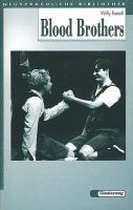
Blood Brothers is a play that touches on many sensitive topics such as drug addiction, infidelity,
poverty and inequality in social class. It’s driving force is the stark difference in how both Mickey and
Edward, although twins, live extremely different lives because of their class, but live and die in the
same way.
One way Russell depicts social class in Blood Brothers is by constantly using Mickey and Edward as
microcosms of Liverpudlian Society in the 1960s. In the 1960s, there was a significant rise in poverty,
therefore upper and working class had extremely different lives. One way this is shown is when
Mickey and Edward first meet, and Mickey rudely says ‘gis a sweet.’, demanding Edward to give him a
sweet, and Edward replies ‘all right’, and Mickey is shocked. This demonstrates how even as children
class dictates how lavish their lives are. Another key takeaway is how the way both of the boys speak
juxtaposes each other, with Mickey being rather rude and informal, whereas Edward is polite and
proper. Another example of this is when Edward returns from university later on in the play, Mickey is
upset that he lost his job, and Edward simply states ‘why is a job so important? If I couldn’t get a job
I’d just say sod it and draw the dole, live like a bohemian and tilt my hat at the world and say screw
you’, to which Mickey replies, ‘you don’t understand anythin’ do ya? I don’t wear a hat I can tilt at the
world.’ This shows us how oblivious Edward is to how Mickey truly lives because he has no worries.
The use of the noun ‘hat’ here is a metaphor to symbolise the idea of social class, saying how if
Edward were to draw the dole, he would not be looked down on as much as Mickey, seeing as they
are in different situations. As evident, the way they speak has not changed yet, which cyclically
structures the story, symbolising how things will always be the same for both Mickey and Edward
because of their class differences. Russell has done this to give the audience an idea of how life was
in Liverpool in the 1960s, highlighting the differences between class.
Another way Russell depicts social class is through the character of Linda. She is Mickey and Edwards’
friend, and then later became Mickey’s wife. Whilst Mickey is struggling with his drug addiction after
prison, Linda asks Edward for help; she gets a house, a job for Mickey and gets their issues in order.
She has an argument with Mickey pleading with him to stop the drugs, where Linda is left shocked
after telling Mickey that ‘[she needs] him and [she loves] him, but not when they [the drugs] are
inside of [him]’, and Mickey replies, ‘that’s why I take them, to be invisible, now give them to me.’
The adjective ‘invisible’ indicates that Mickey is in a cycle of self-hatred, where he is doing anything
to simply fade away. After this argument, Linda calls Edward for comfort and they end up kissing,
with Mrs Lyons seeing. Russell has done this to show how people tend to preference upper class over
lower class, and to signify the struggles that the lower class must face. Linda ultimately cheats on
Mickey with Edward because Mickey is struggling too much, and is not providing for her, both simply
outcomes of his society rather than his character.
Additionally, Russell also depicts social class by using emotive language to show jealousy which
Mickey holds towards Edward. This is shown after Mrs Johnstone tells him that him and Edward are
twins, just before he is about to shoot, thinking that it will calm him down. However, it did the
contrary and enraged him. He screams at his mother ‘You! Why did you give me away… I could have
been… I could have been him!’ The stutter and the repetition of the phrase could have been
emphasises Mickey’s anger at how his life could have been so different. After he says the noun ‘him’,
he shoots Edward, which exaggerates just how much he is jealous of him, as he shoots him at the
idea of possibly having his life, if his mum gave him away instead. Russel has done this to explore the
complexity of the relationship between upper and lower class, and how envy and hatred are
common emotions to feel towards the upper class.
poverty and inequality in social class. It’s driving force is the stark difference in how both Mickey and
Edward, although twins, live extremely different lives because of their class, but live and die in the
same way.
One way Russell depicts social class in Blood Brothers is by constantly using Mickey and Edward as
microcosms of Liverpudlian Society in the 1960s. In the 1960s, there was a significant rise in poverty,
therefore upper and working class had extremely different lives. One way this is shown is when
Mickey and Edward first meet, and Mickey rudely says ‘gis a sweet.’, demanding Edward to give him a
sweet, and Edward replies ‘all right’, and Mickey is shocked. This demonstrates how even as children
class dictates how lavish their lives are. Another key takeaway is how the way both of the boys speak
juxtaposes each other, with Mickey being rather rude and informal, whereas Edward is polite and
proper. Another example of this is when Edward returns from university later on in the play, Mickey is
upset that he lost his job, and Edward simply states ‘why is a job so important? If I couldn’t get a job
I’d just say sod it and draw the dole, live like a bohemian and tilt my hat at the world and say screw
you’, to which Mickey replies, ‘you don’t understand anythin’ do ya? I don’t wear a hat I can tilt at the
world.’ This shows us how oblivious Edward is to how Mickey truly lives because he has no worries.
The use of the noun ‘hat’ here is a metaphor to symbolise the idea of social class, saying how if
Edward were to draw the dole, he would not be looked down on as much as Mickey, seeing as they
are in different situations. As evident, the way they speak has not changed yet, which cyclically
structures the story, symbolising how things will always be the same for both Mickey and Edward
because of their class differences. Russell has done this to give the audience an idea of how life was
in Liverpool in the 1960s, highlighting the differences between class.
Another way Russell depicts social class is through the character of Linda. She is Mickey and Edwards’
friend, and then later became Mickey’s wife. Whilst Mickey is struggling with his drug addiction after
prison, Linda asks Edward for help; she gets a house, a job for Mickey and gets their issues in order.
She has an argument with Mickey pleading with him to stop the drugs, where Linda is left shocked
after telling Mickey that ‘[she needs] him and [she loves] him, but not when they [the drugs] are
inside of [him]’, and Mickey replies, ‘that’s why I take them, to be invisible, now give them to me.’
The adjective ‘invisible’ indicates that Mickey is in a cycle of self-hatred, where he is doing anything
to simply fade away. After this argument, Linda calls Edward for comfort and they end up kissing,
with Mrs Lyons seeing. Russell has done this to show how people tend to preference upper class over
lower class, and to signify the struggles that the lower class must face. Linda ultimately cheats on
Mickey with Edward because Mickey is struggling too much, and is not providing for her, both simply
outcomes of his society rather than his character.
Additionally, Russell also depicts social class by using emotive language to show jealousy which
Mickey holds towards Edward. This is shown after Mrs Johnstone tells him that him and Edward are
twins, just before he is about to shoot, thinking that it will calm him down. However, it did the
contrary and enraged him. He screams at his mother ‘You! Why did you give me away… I could have
been… I could have been him!’ The stutter and the repetition of the phrase could have been
emphasises Mickey’s anger at how his life could have been so different. After he says the noun ‘him’,
he shoots Edward, which exaggerates just how much he is jealous of him, as he shoots him at the
idea of possibly having his life, if his mum gave him away instead. Russel has done this to explore the
complexity of the relationship between upper and lower class, and how envy and hatred are
common emotions to feel towards the upper class.