PEDIATRIC NURSING
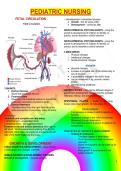
FETAL CIRCULATION – interdependent, interrelated process
● Growth - first 20 years of life
● Development - continues after
DEVELOPMENTAL PSYCHOLOGISTS – study the
growth & development of children to identify, to
predict, and to describe a child’s behavior
DEVELOPMENTAL PSYCHOLOGISTS – study the
growth & development of children to identify, to
predict, and to describe a child’s behavior
3 MAIN AREAS
1. Physical changes
2. Intellectual changes
3. Social-emotional changes
GROWTH
● physical changes
● increase in physical size of the whole body or
any of its parts
● a quantitative change in the child’s body
● can be measured in kg, pounds, meters,
inches
● minimal during adulthood
3 SHUNTS:
1. Ductus Venosus GROWTH RATES – vary during different stages of
- Shunt that bypasses the liver growth and development; rapid during the prenatal,
2. Foramen Ovale neonatal, infancy, and adolescent stages
- Opening in the interatrial septum to bypass the
pulmonary circulation (connect ra to la) EPIPHYSEAL PLATES – found in our long
3. Ductus Arteriosus bones; slow down growth: 18; fully stops: 25
- Transfers blood from the right ventricle to the
aorta.(connection of pulmonary artery to aorta) DEVELOPMENT
- A progressive increase in skill & capacity of
Additional: function.
Umbilical cord contains vein and artery - Qualitative change in the child’s functioning
1 Umbilical vein - oxygenated blood - Measured through observation.
2 Umbilical artery - deoxygenated blood - The capacity & skill of a person to adapt to the
Foramen ovale and ductus arteriosus allow right to environment.
left shunt. Which means blood entering from the the
right side of the heart can easily be shunted to the left PRINCIPLES OF GROWTH & DEVELOPMENT
side of the heart bypassing the lungs. 1. Gradual & continuous
- Changes happen in small steps
- Good development does not reverse
overnight
GROWTH & DEVELOPMENT - Some development can be made up for
CHILD GROWTH & DEVELOPMENT – study of how in later years.
a child grows and changes overtime - Poor growth & development is not
easily reversed
HUMAN GROWTH & DEVELOPMENT THEORIES
Growth & development – dynamic process
1
, PEDIATRIC NURSING
2. Constant
- unchanging aspects of a person’s development THEORISTS IN CHILD
- Heredity does not change and the environment DEVELOPMENT
tends to remain constant SIGMUND FREUD: “PSYCHOSEXUAL
ADHD–Attention Deficit and Hyperactivity Disorder DEVELOPMENTAL THEORY”
- Austrian neurologist
3. Happen in sequence steps - Founder of psychoanalysis–a clinical method
- The order is predictable for evaluating & treating pathologies seen as
originating from conflicts in the psyche, through
4. Have interrelated parts dialogue between patient and & psychoanalyst,
- May talk about the areas and the distinctive theory of mind and human
separately, but in reality they are agency derived from it.
related - Suggests that human behavior is influenced by
unconscious memories, thoughts, and urges.
5. Proceed in regular related directions - Psyche comprises 3 aspects:
- Cephalo-caudal (head-to-toe) - Id (entirely unconscious)
- Proximodistal (center of the body to - Ego (operates in the conscious mind)
peripheral) - Superego (operates both unconsciously
- General to specific & consciously)
- Believed that personality develops through a
FACTORS INFLUENCING GROWTH & series of childhood stages during which the
DEVELOPMENT pleasure-seeking energies of the id become
1. Hereditary focused on certain erogenous areas
- Genes
- Hair color & other body features PSYCHOSEXUAL DEVELOPMENTAL THEORY
- One of the best known, but also one of the
2. Environmental factors most controversial
- Conditions - Personality mostly established at the age of 5
- Experiences - Early experiences play a large role in
● External Environment personality development
○ Socio-economic status - Personality develops through series of
○ Child nutrition childhood stages
○ Climate & season
○ Child’s ordinal position in PSYCHOSEXUAL ENERGY / LIBIDO – the driving
the family force behind behavior
○ Number of siblings NARCISSISM – focus on self
○ Family structures
(single/extended) 5 STAGES OF PSYCHOSEXUAL THEORY:
● Internal Environment 1. ORAL STAGE (1 - 1½)
○ Intelligence Erogenous zone: Mouth
○ Hormonal influence Greatest need: security
○ Emotions Greatest fear: anger, anxiety
Pleasure: sucking, eating, swallowing
STAGES OF GROWTH & DEVELOPMENT - Insecurity in parting with breast milk or
1. PRENATAL (conception to birth) bottle may lead to fixation
2. INFANCY (birth to 12 months) - Tension is relieved by sucking which
3. EARLY Childhood (1 to 6 y/o) is independent of hunger satisfaction
4. MIDDLE Childhood (6 to 12 y/o)
5. Late Childhood (12 to 19 y/o) 2. ANAL PHASE (1½ - 3 )
Primary source of pleasure: Elimination/retention
Erogenous zone: Anus
- Toilet training period
2
FETAL CIRCULATION – interdependent, interrelated process
● Growth - first 20 years of life
● Development - continues after
DEVELOPMENTAL PSYCHOLOGISTS – study the
growth & development of children to identify, to
predict, and to describe a child’s behavior
DEVELOPMENTAL PSYCHOLOGISTS – study the
growth & development of children to identify, to
predict, and to describe a child’s behavior
3 MAIN AREAS
1. Physical changes
2. Intellectual changes
3. Social-emotional changes
GROWTH
● physical changes
● increase in physical size of the whole body or
any of its parts
● a quantitative change in the child’s body
● can be measured in kg, pounds, meters,
inches
● minimal during adulthood
3 SHUNTS:
1. Ductus Venosus GROWTH RATES – vary during different stages of
- Shunt that bypasses the liver growth and development; rapid during the prenatal,
2. Foramen Ovale neonatal, infancy, and adolescent stages
- Opening in the interatrial septum to bypass the
pulmonary circulation (connect ra to la) EPIPHYSEAL PLATES – found in our long
3. Ductus Arteriosus bones; slow down growth: 18; fully stops: 25
- Transfers blood from the right ventricle to the
aorta.(connection of pulmonary artery to aorta) DEVELOPMENT
- A progressive increase in skill & capacity of
Additional: function.
Umbilical cord contains vein and artery - Qualitative change in the child’s functioning
1 Umbilical vein - oxygenated blood - Measured through observation.
2 Umbilical artery - deoxygenated blood - The capacity & skill of a person to adapt to the
Foramen ovale and ductus arteriosus allow right to environment.
left shunt. Which means blood entering from the the
right side of the heart can easily be shunted to the left PRINCIPLES OF GROWTH & DEVELOPMENT
side of the heart bypassing the lungs. 1. Gradual & continuous
- Changes happen in small steps
- Good development does not reverse
overnight
GROWTH & DEVELOPMENT - Some development can be made up for
CHILD GROWTH & DEVELOPMENT – study of how in later years.
a child grows and changes overtime - Poor growth & development is not
easily reversed
HUMAN GROWTH & DEVELOPMENT THEORIES
Growth & development – dynamic process
1
, PEDIATRIC NURSING
2. Constant
- unchanging aspects of a person’s development THEORISTS IN CHILD
- Heredity does not change and the environment DEVELOPMENT
tends to remain constant SIGMUND FREUD: “PSYCHOSEXUAL
ADHD–Attention Deficit and Hyperactivity Disorder DEVELOPMENTAL THEORY”
- Austrian neurologist
3. Happen in sequence steps - Founder of psychoanalysis–a clinical method
- The order is predictable for evaluating & treating pathologies seen as
originating from conflicts in the psyche, through
4. Have interrelated parts dialogue between patient and & psychoanalyst,
- May talk about the areas and the distinctive theory of mind and human
separately, but in reality they are agency derived from it.
related - Suggests that human behavior is influenced by
unconscious memories, thoughts, and urges.
5. Proceed in regular related directions - Psyche comprises 3 aspects:
- Cephalo-caudal (head-to-toe) - Id (entirely unconscious)
- Proximodistal (center of the body to - Ego (operates in the conscious mind)
peripheral) - Superego (operates both unconsciously
- General to specific & consciously)
- Believed that personality develops through a
FACTORS INFLUENCING GROWTH & series of childhood stages during which the
DEVELOPMENT pleasure-seeking energies of the id become
1. Hereditary focused on certain erogenous areas
- Genes
- Hair color & other body features PSYCHOSEXUAL DEVELOPMENTAL THEORY
- One of the best known, but also one of the
2. Environmental factors most controversial
- Conditions - Personality mostly established at the age of 5
- Experiences - Early experiences play a large role in
● External Environment personality development
○ Socio-economic status - Personality develops through series of
○ Child nutrition childhood stages
○ Climate & season
○ Child’s ordinal position in PSYCHOSEXUAL ENERGY / LIBIDO – the driving
the family force behind behavior
○ Number of siblings NARCISSISM – focus on self
○ Family structures
(single/extended) 5 STAGES OF PSYCHOSEXUAL THEORY:
● Internal Environment 1. ORAL STAGE (1 - 1½)
○ Intelligence Erogenous zone: Mouth
○ Hormonal influence Greatest need: security
○ Emotions Greatest fear: anger, anxiety
Pleasure: sucking, eating, swallowing
STAGES OF GROWTH & DEVELOPMENT - Insecurity in parting with breast milk or
1. PRENATAL (conception to birth) bottle may lead to fixation
2. INFANCY (birth to 12 months) - Tension is relieved by sucking which
3. EARLY Childhood (1 to 6 y/o) is independent of hunger satisfaction
4. MIDDLE Childhood (6 to 12 y/o)
5. Late Childhood (12 to 19 y/o) 2. ANAL PHASE (1½ - 3 )
Primary source of pleasure: Elimination/retention
Erogenous zone: Anus
- Toilet training period
2