

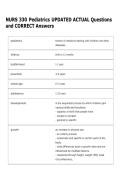
NURS 330 Pediatrics UPDATED ACTUAL Questions
and CORRECT Answers
pediatrics branch of medicine dealing with children and their
diseases
Infancy birth to 12 months
toddlerhood 1-2 years
preschool 3-5 years
school age 6-12 years
adolesence 11-20 years
Development is the sequential process by which children gain
various skills and functions
- capacity of skills that people have
- simple to complex
- general to specific
growth an increase in physical size
- an orderly process
- systematic and specific to certain parts of the
body
- wide differences exist in growth rates and are
influenced by multiple factors
- measured through height, weight, BMI, head
circumference,
,Assessment of Developmental Status Motor
- gross and fine motor skills
Language
- how many words are they saying? are they
logical?
- how are the nonverbals?
Cognition
- thinking piece
- are they understanding their environment,
language, problems, reasoning
Psychosocial
- family process
- relationships
- friends
, attachment theory (bowlby) infants need one special relationship for internal
development
- attaching to someone in early development
personlity development starts with attachment to
parents
- solid attachment provides social cues within
family and others
- allows the child to develop the ability to engage
in social relationships to make friends and build
intimacy
four characteristics of attachment proximity maintenance
theory - infant wants to be close to attachment figure
safe haven
- infant has a sadeplace to go and come back to
secure base
- attachment figure provides a secure based for
infant to explore their environment
separation distress
- child distressed when separated from attachment
figure
Erikson's Theory of Psychosocial Trust vs. Mistrust (Birth to 1 Year)
Development Autonomy vs. Shame (1-3 years)
Initiative vs. Guilt (3-6 years)
Industry vs. Inferiority (6-12 years)
Identity vs. Role Confusion (Puberty)
and CORRECT Answers
pediatrics branch of medicine dealing with children and their
diseases
Infancy birth to 12 months
toddlerhood 1-2 years
preschool 3-5 years
school age 6-12 years
adolesence 11-20 years
Development is the sequential process by which children gain
various skills and functions
- capacity of skills that people have
- simple to complex
- general to specific
growth an increase in physical size
- an orderly process
- systematic and specific to certain parts of the
body
- wide differences exist in growth rates and are
influenced by multiple factors
- measured through height, weight, BMI, head
circumference,
,Assessment of Developmental Status Motor
- gross and fine motor skills
Language
- how many words are they saying? are they
logical?
- how are the nonverbals?
Cognition
- thinking piece
- are they understanding their environment,
language, problems, reasoning
Psychosocial
- family process
- relationships
- friends
, attachment theory (bowlby) infants need one special relationship for internal
development
- attaching to someone in early development
personlity development starts with attachment to
parents
- solid attachment provides social cues within
family and others
- allows the child to develop the ability to engage
in social relationships to make friends and build
intimacy
four characteristics of attachment proximity maintenance
theory - infant wants to be close to attachment figure
safe haven
- infant has a sadeplace to go and come back to
secure base
- attachment figure provides a secure based for
infant to explore their environment
separation distress
- child distressed when separated from attachment
figure
Erikson's Theory of Psychosocial Trust vs. Mistrust (Birth to 1 Year)
Development Autonomy vs. Shame (1-3 years)
Initiative vs. Guilt (3-6 years)
Industry vs. Inferiority (6-12 years)
Identity vs. Role Confusion (Puberty)


