

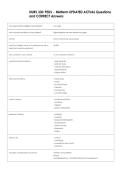
NURS 330 PEDS - Midterm UPDATED ACTUAL Questions
and CORRECT Answers
How long are infants obligate nose breathers? 4-6 weeks
why is hypoxia more likely in young children? higher respiratory rate and demand for oxygen
asthma chronic inflammatory airway disorder
what % of children move on to adolescence with a 30-50%
reduction in asthma symptoms?
does constriction cause asthma? no, it is a symptom of asthma
protective factors for asthma - large family size
- later birth order
- childcare attendance
- dog in the family
- living on a farm
risk factors for asthma - Family history
- Smoke
- Air contaminants
- Pollutants
- Viral infections
- Low-birth-weight
causes of asthma - environmental factors
- viral illness
- allergens
- genetic predisposition
symptoms of asthma - wheezing
- coughing
- laboured breathing/SOB
- dys/orthopnea
- anxiety and stress
- diaphoresis
- fatigue
asthma cues - cyanosis
- nasal flaring
- pursed lips or open mouth
- retractions
examples of medications for asthma Ventolin - bronchodilator
Flovent
Methylprednisolone - anti-inflammatory/immunosuppressant
, what is the most common cause of lower respiratory tract respiratory syncytial virus (RSV)
infections in children?
symptoms of RSV - rhinorrhea
- wheezing
- irritability and restlessness
- low grade fever
- nasal flaring and retractions
- the liver and spleen may be palpable several centimeters below the costal
margins
Hemophilius influenza B (HIB) bacterial infection that can affect several different body tissues and organs
side effects of HIB - meningitis
- severe throat and lung infections
what % of HIB positive children will suffer from deafness 20-50%
and/or permanent brain damage?
signs and symptoms of HIB - significant cold
- meningitis
- fever
- stiff neck
- drowsiness
- extreme irritability
- sudden vomiting
signs and symptoms of COVID-19 - fever
- cough
- trouble breathing
- symptoms of a cold (congestion, sore throat)
- chills
- muscle pain
- headache
- loss of taste of smell
- N/V/D
Multisystem Inflammatory Syndrome in Children (MIS-C) acute inflammatory illness that has been reported in a small number of children
(associated with COVID)
manifestations of MIS-C - persistent fever
- toxic shock-like syndrome
- euvolemic shock
- severe GI illness
- severe myocardial dysfunction
- multiple organ failure (rare)
- potential syndrome
pertussis highly contagious, bacterial disease which affects the respiratory system and
produces coughing spasms that usually end in high-pitched, deep inspirations
("whoop")
and CORRECT Answers
How long are infants obligate nose breathers? 4-6 weeks
why is hypoxia more likely in young children? higher respiratory rate and demand for oxygen
asthma chronic inflammatory airway disorder
what % of children move on to adolescence with a 30-50%
reduction in asthma symptoms?
does constriction cause asthma? no, it is a symptom of asthma
protective factors for asthma - large family size
- later birth order
- childcare attendance
- dog in the family
- living on a farm
risk factors for asthma - Family history
- Smoke
- Air contaminants
- Pollutants
- Viral infections
- Low-birth-weight
causes of asthma - environmental factors
- viral illness
- allergens
- genetic predisposition
symptoms of asthma - wheezing
- coughing
- laboured breathing/SOB
- dys/orthopnea
- anxiety and stress
- diaphoresis
- fatigue
asthma cues - cyanosis
- nasal flaring
- pursed lips or open mouth
- retractions
examples of medications for asthma Ventolin - bronchodilator
Flovent
Methylprednisolone - anti-inflammatory/immunosuppressant
, what is the most common cause of lower respiratory tract respiratory syncytial virus (RSV)
infections in children?
symptoms of RSV - rhinorrhea
- wheezing
- irritability and restlessness
- low grade fever
- nasal flaring and retractions
- the liver and spleen may be palpable several centimeters below the costal
margins
Hemophilius influenza B (HIB) bacterial infection that can affect several different body tissues and organs
side effects of HIB - meningitis
- severe throat and lung infections
what % of HIB positive children will suffer from deafness 20-50%
and/or permanent brain damage?
signs and symptoms of HIB - significant cold
- meningitis
- fever
- stiff neck
- drowsiness
- extreme irritability
- sudden vomiting
signs and symptoms of COVID-19 - fever
- cough
- trouble breathing
- symptoms of a cold (congestion, sore throat)
- chills
- muscle pain
- headache
- loss of taste of smell
- N/V/D
Multisystem Inflammatory Syndrome in Children (MIS-C) acute inflammatory illness that has been reported in a small number of children
(associated with COVID)
manifestations of MIS-C - persistent fever
- toxic shock-like syndrome
- euvolemic shock
- severe GI illness
- severe myocardial dysfunction
- multiple organ failure (rare)
- potential syndrome
pertussis highly contagious, bacterial disease which affects the respiratory system and
produces coughing spasms that usually end in high-pitched, deep inspirations
("whoop")


