
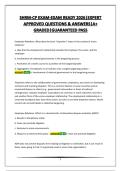
Employee Relations: What does the term "tripartism" mean in the context of union
relations?
a. Idea that the employment relationship includes the employer, the union, and the
employee
b. Involvement of national governments in the bargaining process
c. Promotion of a works council to a position at the bargaining table
d. Aggregation of employers in an industry into a single bargaining position -
ANSWER b. Involvement of national governments in the bargaining process
Tripartism refers to the collaboration of governments, employers, and unions in developing
contracts and resolving disputes. This is a common feature in some countries and an
occasional feature in others (e.g., government intervention in times of national
emergencies). Industry employer associations are common in some industries, but this is
just another form of the union-employer relationship. The employment relationship in a
unionized workplace does have three actors, but this is not what tripartism means. Works
councils do not participate in collective bargaining.
Employee Relations: Which is a characteristic of alternative dispute resolution (ADR)?
a. Results in disciplinary action
b. Does not preclude litigation
c. Exclusive to union environments
d. Requires an external third party - ANSWER b. Does not preclude litigation
ADR does not prevent disputes from leading to litigation or arbitration, but it can result in
fewer cases going to trial. It is generally used in union-free organizations.
1
,Employee Relations: What is a broad statement that reflects an organization's philosophy,
objectives, or standards?
a. Business case
b. Policy
c. Contract
d. Mission statement - ANSWER b. Policy
A policy is a broad statement that reflects an organization's philosophy, objectives, or
standards concerning a particular set of management or employment activities.
Employee Relations: Which is an appropriate action for HR during an investigation into
charges of discriminatory employment practices?
a. Conduct an HR audit.
b. Provide the accused party with legal representation.
c. Involve local law enforcement.
d. Ensure confidentiality as much as possible. - ANSWER d. Ensure confidentiality as
much as possible
Initially supporting a timely investigation and then ensuring confidentiality as much as
possible is the best course of action for HR.
Employee Relations: In what form of alternative dispute resolution (ADR) is an employee
encouraged to speak to management regarding suggestions, concerns, or complaints?
a. Formal steps
b. Open door
c. Suggestion box
d. Equal opportunity - ANSWER b. Open door
Best-practice organizations encourage open-door/person-to-person meetings. If the meeting
involves complaints or grievances, the issues are carefully documented. For these meetings
2
,to be effective, there has to be top management commitment. Neither formal steps nor
equal opportunity describe a specific ADR process. Ideas from a suggestion box do not
necessarily lead to discussions with management.
Employee Relations: What advice would you give an HR colleague facing an employee
grievance in a unionized environment?
a. Immediately escalate the matter to the vice president of HR.
b. Agree to change some work rules to settle the grievance.
c. Try to exclude the union representative from all meetings.
d. Document all grievance meetings and take notes. - ANSWER d. Document all
grievance meetings and take notes
The best advice is to document all meetings related to the grievance, since individual
grievances can become the grounds for union reactions.
Employee Relations: An employer with a unionized workplace wants to offer employees gift
cards for reporting on a recent union meeting. How should HR advise the employer?
a. Don't. This would be an unfair labor practice.
b. Go ahead, as long as the reward is not cash.
c. Try to get the information without using an incentive.
d. You don't need to. You have a right to ask the union. - ANSWER a. Don't. This would
be an unfair labor practice.
According to the National Labor Relations Act, promising or giving benefits to employees
who oppose a union (e.g., rewarding employees who infiltrate or spy on union meetings or
question other workers about their support for a union) is an unfair labor practice. The
nature of the reward is irrelevant. The act of spying itself could be seen as intimidation and
therefore a ULP. The union is not obliged to share this type of information with employers.
Employee Relations: How should an HR professional best work with other leaders to achieve
an employee-friendly, non-unionized workplace?
3
, a. Ensure that two-way feedback mechanisms are encouraged.
b. Create an open-door policy to allow for airing grievances.
c. Analyze the leaders' span of control to ensure an appropriate ratio.
d.Encourage frequent promotions of high-potential employees. - ANSWER a .Ensure
that two-way feedback mechanisms are encouraged.
The most effective of the methods listed is creating feedback mechanisms that promote
two-way communication.
Employee Relations: Which would constitute an unfair labor practice (ULP)?
a. The union fines a member for criticizing union actions.
b. A supervisor refuses to give a union member preferential treatment.
c. Management issues a statement expressing its dislike for unions.
d. The union distributes buttons for employees to wear to work. - ANSWER a. The
union fines a member for criticizing union actions.
ULPs can be committed by employers and unions. In this question, the union commits a ULP
by coercing a member and interfering with the member's freedom of speech. It is not a ULP
for the union to distribute to employees items such as hats or buttons, and, in most cases,
employees can wear them to work. An employer is not required to give union members
preferential treatment, although it is obliged to honor the terms of a collective bargaining
agreement. Employers also have the right to discourage unionization as long as they do not
threaten, interrogate, punish, or spy on employees.
Employee Relations: Which action is an ombudsperson empowered to take after hearing
both sides of a workplace dispute?
a. Negotiating a mutually acceptable agreement on behalf of the employee
b. Referring the matter for litigation if facts support the finding
c. Referring the matter to further alternative dispute resolution (ADR)
d. Imposing specific discipline on an employee if facts support the finding - ANSWER c.
Referring the matter to further alternative dispute resolution (ADR)
4
relations?
a. Idea that the employment relationship includes the employer, the union, and the
employee
b. Involvement of national governments in the bargaining process
c. Promotion of a works council to a position at the bargaining table
d. Aggregation of employers in an industry into a single bargaining position -
ANSWER b. Involvement of national governments in the bargaining process
Tripartism refers to the collaboration of governments, employers, and unions in developing
contracts and resolving disputes. This is a common feature in some countries and an
occasional feature in others (e.g., government intervention in times of national
emergencies). Industry employer associations are common in some industries, but this is
just another form of the union-employer relationship. The employment relationship in a
unionized workplace does have three actors, but this is not what tripartism means. Works
councils do not participate in collective bargaining.
Employee Relations: Which is a characteristic of alternative dispute resolution (ADR)?
a. Results in disciplinary action
b. Does not preclude litigation
c. Exclusive to union environments
d. Requires an external third party - ANSWER b. Does not preclude litigation
ADR does not prevent disputes from leading to litigation or arbitration, but it can result in
fewer cases going to trial. It is generally used in union-free organizations.
1
,Employee Relations: What is a broad statement that reflects an organization's philosophy,
objectives, or standards?
a. Business case
b. Policy
c. Contract
d. Mission statement - ANSWER b. Policy
A policy is a broad statement that reflects an organization's philosophy, objectives, or
standards concerning a particular set of management or employment activities.
Employee Relations: Which is an appropriate action for HR during an investigation into
charges of discriminatory employment practices?
a. Conduct an HR audit.
b. Provide the accused party with legal representation.
c. Involve local law enforcement.
d. Ensure confidentiality as much as possible. - ANSWER d. Ensure confidentiality as
much as possible
Initially supporting a timely investigation and then ensuring confidentiality as much as
possible is the best course of action for HR.
Employee Relations: In what form of alternative dispute resolution (ADR) is an employee
encouraged to speak to management regarding suggestions, concerns, or complaints?
a. Formal steps
b. Open door
c. Suggestion box
d. Equal opportunity - ANSWER b. Open door
Best-practice organizations encourage open-door/person-to-person meetings. If the meeting
involves complaints or grievances, the issues are carefully documented. For these meetings
2
,to be effective, there has to be top management commitment. Neither formal steps nor
equal opportunity describe a specific ADR process. Ideas from a suggestion box do not
necessarily lead to discussions with management.
Employee Relations: What advice would you give an HR colleague facing an employee
grievance in a unionized environment?
a. Immediately escalate the matter to the vice president of HR.
b. Agree to change some work rules to settle the grievance.
c. Try to exclude the union representative from all meetings.
d. Document all grievance meetings and take notes. - ANSWER d. Document all
grievance meetings and take notes
The best advice is to document all meetings related to the grievance, since individual
grievances can become the grounds for union reactions.
Employee Relations: An employer with a unionized workplace wants to offer employees gift
cards for reporting on a recent union meeting. How should HR advise the employer?
a. Don't. This would be an unfair labor practice.
b. Go ahead, as long as the reward is not cash.
c. Try to get the information without using an incentive.
d. You don't need to. You have a right to ask the union. - ANSWER a. Don't. This would
be an unfair labor practice.
According to the National Labor Relations Act, promising or giving benefits to employees
who oppose a union (e.g., rewarding employees who infiltrate or spy on union meetings or
question other workers about their support for a union) is an unfair labor practice. The
nature of the reward is irrelevant. The act of spying itself could be seen as intimidation and
therefore a ULP. The union is not obliged to share this type of information with employers.
Employee Relations: How should an HR professional best work with other leaders to achieve
an employee-friendly, non-unionized workplace?
3
, a. Ensure that two-way feedback mechanisms are encouraged.
b. Create an open-door policy to allow for airing grievances.
c. Analyze the leaders' span of control to ensure an appropriate ratio.
d.Encourage frequent promotions of high-potential employees. - ANSWER a .Ensure
that two-way feedback mechanisms are encouraged.
The most effective of the methods listed is creating feedback mechanisms that promote
two-way communication.
Employee Relations: Which would constitute an unfair labor practice (ULP)?
a. The union fines a member for criticizing union actions.
b. A supervisor refuses to give a union member preferential treatment.
c. Management issues a statement expressing its dislike for unions.
d. The union distributes buttons for employees to wear to work. - ANSWER a. The
union fines a member for criticizing union actions.
ULPs can be committed by employers and unions. In this question, the union commits a ULP
by coercing a member and interfering with the member's freedom of speech. It is not a ULP
for the union to distribute to employees items such as hats or buttons, and, in most cases,
employees can wear them to work. An employer is not required to give union members
preferential treatment, although it is obliged to honor the terms of a collective bargaining
agreement. Employers also have the right to discourage unionization as long as they do not
threaten, interrogate, punish, or spy on employees.
Employee Relations: Which action is an ombudsperson empowered to take after hearing
both sides of a workplace dispute?
a. Negotiating a mutually acceptable agreement on behalf of the employee
b. Referring the matter for litigation if facts support the finding
c. Referring the matter to further alternative dispute resolution (ADR)
d. Imposing specific discipline on an employee if facts support the finding - ANSWER c.
Referring the matter to further alternative dispute resolution (ADR)
4


