Into Faery Land:
A review of Book One of Spenser’s The Faerie Queene
The Faerie Queene is the longest epic poem ever written in the English language, and,
despite its being more than four centuries old, still retains significant literary value today.
Its influences can be found in the works of many well-known writers, such as John
Milton, John Keats, and more recently, C.S. Lewis and James Joyce.
The Faerie Queene was written by the Renaissance poet Edmund Spenser, who is most
well-known for his first major poem, The Shepheardes Calender, and for his lengthy
sonnet sequence, Amoretti and Epithalamion. The Faerie Queene is an allegorical poem
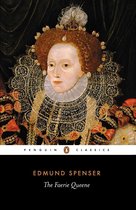
written in honor of Queen Elizabeth, who, in the poem, is the Queen of Faery Land
(which is, therefore, allegorical for England). Upon the publication of the poem’s first
three books in 1590, Queen Elizabeth honored Spenser in return by providing him with a
yearly pension of fifty pounds.
The poem features a unique form of stanza invented by Spenser, which is now known as
“Spenserian stanza”, and has been used by several other poets since, such as Wordsworth,
Keats, and Tennyson. Spenser worked on this poem for much of his life, and intended to
write twelve books total, but was only able to complete six before his death in 1599.
The first book of The Faerie Queene tells the story of the knight of holiness, RedCrosse
(so called because he bears a blood-red cross on his shield). RedCrosse has pledged
himself to the aid of a woman named Una, whose castle is being besieged by a dragon.
Book One recounts the adventures and encounters that RedCrosse experiences as he
travels with Una to her homeland, where he eventually battles and kills the dragon.
Book One of the poem is rich with Christian symbolism. To begin with, the cross on
RedCrosse’s shield is a clear representation of his faith in Christianity, and most of the
obstacles that RedCrosse has to overcome during his travels represent the spiritual
struggles that Christians may encounter over their lifetimes. For example, in Canto IV,
RedCrosse is detained at the House of Pride. Since pride is often considered one of the
worst sins, and was, in fact, the sin which caused Satan to fall from Heaven, it is fitting
that the Queen of this House is named Lucifera. In Canto XI, RedCrosse finally defeats
the dragon, after being aided by the Well of Life (representing baptism) and the Tree of
Life (representing the Eucharist), which parallels the Christian view of triumph over
Satan, with the aid of Christ’s salvation.
During Spenser’s time, the controversy over the Protestant Reformation had not yet died
down, and his beloved Queen Elizabeth was Protestant herself. Spenser, like many other
Protestants, saw the Catholic Church as the “false Church” and the Protestant Church as
the “true Church”. In Spenser’s poem, the evil witch Duessa, often referred to as “false
Duessa” who gives RedCrosse so much trouble, could be seen as a representation of the
“false religion’ of Catholicism, whereas Una, his faithful Lady, could be seen as a
representation of the “one true religion” or Protestantism.
A review of Book One of Spenser’s The Faerie Queene
The Faerie Queene is the longest epic poem ever written in the English language, and,
despite its being more than four centuries old, still retains significant literary value today.
Its influences can be found in the works of many well-known writers, such as John
Milton, John Keats, and more recently, C.S. Lewis and James Joyce.
The Faerie Queene was written by the Renaissance poet Edmund Spenser, who is most
well-known for his first major poem, The Shepheardes Calender, and for his lengthy
sonnet sequence, Amoretti and Epithalamion. The Faerie Queene is an allegorical poem
written in honor of Queen Elizabeth, who, in the poem, is the Queen of Faery Land
(which is, therefore, allegorical for England). Upon the publication of the poem’s first
three books in 1590, Queen Elizabeth honored Spenser in return by providing him with a
yearly pension of fifty pounds.
The poem features a unique form of stanza invented by Spenser, which is now known as
“Spenserian stanza”, and has been used by several other poets since, such as Wordsworth,
Keats, and Tennyson. Spenser worked on this poem for much of his life, and intended to
write twelve books total, but was only able to complete six before his death in 1599.
The first book of The Faerie Queene tells the story of the knight of holiness, RedCrosse
(so called because he bears a blood-red cross on his shield). RedCrosse has pledged
himself to the aid of a woman named Una, whose castle is being besieged by a dragon.
Book One recounts the adventures and encounters that RedCrosse experiences as he
travels with Una to her homeland, where he eventually battles and kills the dragon.
Book One of the poem is rich with Christian symbolism. To begin with, the cross on
RedCrosse’s shield is a clear representation of his faith in Christianity, and most of the
obstacles that RedCrosse has to overcome during his travels represent the spiritual
struggles that Christians may encounter over their lifetimes. For example, in Canto IV,
RedCrosse is detained at the House of Pride. Since pride is often considered one of the
worst sins, and was, in fact, the sin which caused Satan to fall from Heaven, it is fitting
that the Queen of this House is named Lucifera. In Canto XI, RedCrosse finally defeats
the dragon, after being aided by the Well of Life (representing baptism) and the Tree of
Life (representing the Eucharist), which parallels the Christian view of triumph over
Satan, with the aid of Christ’s salvation.
During Spenser’s time, the controversy over the Protestant Reformation had not yet died
down, and his beloved Queen Elizabeth was Protestant herself. Spenser, like many other
Protestants, saw the Catholic Church as the “false Church” and the Protestant Church as
the “true Church”. In Spenser’s poem, the evil witch Duessa, often referred to as “false
Duessa” who gives RedCrosse so much trouble, could be seen as a representation of the
“false religion’ of Catholicism, whereas Una, his faithful Lady, could be seen as a
representation of the “one true religion” or Protestantism.