

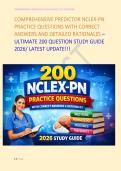
COMPREHENSIVE PREDICTOR NCLEX-PN PRACTICE QUESTIONS
COMPREHENSIVE PREDICTOR NCLEX-PN
PRACTICE QUESTIONS WITH CORRECT
ANSWERS AND DETAILED RATIONALES –
ULTIMATE 200 QUESTION STUDY GUIDE
2026/ LATEST UPDATE!!!
1|Page
,COMPREHENSIVE PREDICTOR NCLEX-PN PRACTICE QUESTIONS
Introduction:
Preparing for the NCLEX-PN exam can be overwhelming, but having the right practice resources
makes all the difference. This comprehensive guide features 200 NCLEX-PN practice questions
with correct answers and detailed rationales, designed to help practical and vocational nursing
students strengthen their knowledge, improve critical thinking skills, and boost exam
confidence. Each question covers key areas such as med-surg nursing, pharmacology,
pediatrics, mental health, maternity, and fundamentals, ensuring a well-rounded review that
mirrors the real NCLEX-PN exam. Whether you’re revising for your first attempt or seeking to
reinforce weak areas, this guide provides clear explanations and practical tips to enhance your
understanding and exam performance.
A 70-year-old client with congestive heart failure reports gaining 3 pounds in 2 days. What
is the nurse’s first action?
Correct Answer: Assess for edema and shortness of breath
Examiner Notes:
Assessment comes first. Sudden weight gain may indicate fluid retention; the nurse must
evaluate edema, lung sounds, and respiratory status before taking further action. NCLEX-PN
emphasizes prioritization: assess before intervene.
A nurse is preparing to administer digoxin (Lanoxin) to a client with heart failure. Which
finding requires holding the medication?
Correct Answer: Apical pulse 48 bpm
Examiner Notes:
Digoxin can slow the heart rate. Hold the medication if the apical pulse is less than 60 bpm in
adults. NCLEX-PN tests safe medication administration and recognition of risk for bradycardia.
A client with COPD is experiencing increased dyspnea and wheezing. What is the nurse’s
first action?
Correct Answer: Administer prescribed albuterol inhaler
Examiner Notes:
Priority is to relieve airway obstruction with a bronchodilator. Oxygen is important but must be
2|Page
,COMPREHENSIVE PREDICTOR NCLEX-PN PRACTICE QUESTIONS
carefully titrated in COPD clients to avoid hypercapnia. NCLEX-PN prioritizes Airway →
Breathing → Circulation interventions.
Which client statement about foot care indicates a need for further teaching in a client with
diabetes?
Correct Answer: “I will soak my feet daily to keep them clean.”
Examiner Notes:
Soaking feet daily can cause skin breakdown and infection in diabetic clients. NCLEX-PN
tests patient education skills and the ability to identify unsafe practices.
A client is receiving IV potassium chloride. Which is most important for the nurse to do?
Correct Answer: Infuse slowly per protocol
Examiner Notes:
IV potassium must never be given as a rapid IV push—this can cause cardiac arrest. NCLEX-
PN focuses on safe IV medication administration, including proper rate. Monitoring and urine
output are secondary safety checks.
A nurse is caring for a client with a new tracheostomy. Which intervention is most important?
Correct Answer: Ensure the client has an emergency tracheostomy kit at the bedside
Examiner Notes:
Safety first: a tracheostomy can become blocked or dislodged. An emergency kit must always
be at the bedside. NCLEX-PN emphasizes safety and airway management priority.
A client reports severe sudden-onset abdominal pain. Which action should the nurse take
first?
Correct Answer: Assess vital signs and abdomen
Examiner Notes:
Assessment is always the first step to determine severity and potential life-threatening
conditions (e.g., perforation). NCLEX-PN tests prioritization: assess before intervening.
3|Page
, COMPREHENSIVE PREDICTOR NCLEX-PN PRACTICE QUESTIONS
A nurse is providing discharge teaching to a client prescribed warfarin (Coumadin). Which
statement indicates understanding?
Correct Answer: “I will use a soft-bristled toothbrush and electric razor.”
Examiner Notes:
Warfarin increases bleeding risk. Using a soft toothbrush and electric razor helps prevent
trauma and bleeding. NCLEX-PN tests patient teaching and safety awareness.
A client with a new colostomy reports skin irritation around the stoma. Which is the
nurse’s best action?
Correct Answer: Assess the stoma and peristomal skin for cause of irritation
Examiner Notes:
Assessment comes first. Irritation may result from improper appliance fit or leakage. NCLEX-
PN emphasizes problem identification before intervention.
A client with hypertension is prescribed hydrochlorothiazide. Which finding requires
immediate intervention?
Correct Answer: Potassium level 2.8 mEq/L
Examiner Notes:
Thiazide diuretics can cause hypokalemia. Low potassium can lead to arrhythmias. NCLEX-PN
tests medication safety and lab interpretation skills.
A nurse is caring for a client receiving IV morphine. Which assessment finding requires
immediate action?
Correct Answer: Respiratory rate 8 breaths per minute
Examiner Notes:
Respiratory depression is a life-threatening adverse effect of opioids. NCLEX-PN emphasizes
monitoring for critical side effects before continuing therapy.
4|Page
COMPREHENSIVE PREDICTOR NCLEX-PN
PRACTICE QUESTIONS WITH CORRECT
ANSWERS AND DETAILED RATIONALES –
ULTIMATE 200 QUESTION STUDY GUIDE
2026/ LATEST UPDATE!!!
1|Page
,COMPREHENSIVE PREDICTOR NCLEX-PN PRACTICE QUESTIONS
Introduction:
Preparing for the NCLEX-PN exam can be overwhelming, but having the right practice resources
makes all the difference. This comprehensive guide features 200 NCLEX-PN practice questions
with correct answers and detailed rationales, designed to help practical and vocational nursing
students strengthen their knowledge, improve critical thinking skills, and boost exam
confidence. Each question covers key areas such as med-surg nursing, pharmacology,
pediatrics, mental health, maternity, and fundamentals, ensuring a well-rounded review that
mirrors the real NCLEX-PN exam. Whether you’re revising for your first attempt or seeking to
reinforce weak areas, this guide provides clear explanations and practical tips to enhance your
understanding and exam performance.
A 70-year-old client with congestive heart failure reports gaining 3 pounds in 2 days. What
is the nurse’s first action?
Correct Answer: Assess for edema and shortness of breath
Examiner Notes:
Assessment comes first. Sudden weight gain may indicate fluid retention; the nurse must
evaluate edema, lung sounds, and respiratory status before taking further action. NCLEX-PN
emphasizes prioritization: assess before intervene.
A nurse is preparing to administer digoxin (Lanoxin) to a client with heart failure. Which
finding requires holding the medication?
Correct Answer: Apical pulse 48 bpm
Examiner Notes:
Digoxin can slow the heart rate. Hold the medication if the apical pulse is less than 60 bpm in
adults. NCLEX-PN tests safe medication administration and recognition of risk for bradycardia.
A client with COPD is experiencing increased dyspnea and wheezing. What is the nurse’s
first action?
Correct Answer: Administer prescribed albuterol inhaler
Examiner Notes:
Priority is to relieve airway obstruction with a bronchodilator. Oxygen is important but must be
2|Page
,COMPREHENSIVE PREDICTOR NCLEX-PN PRACTICE QUESTIONS
carefully titrated in COPD clients to avoid hypercapnia. NCLEX-PN prioritizes Airway →
Breathing → Circulation interventions.
Which client statement about foot care indicates a need for further teaching in a client with
diabetes?
Correct Answer: “I will soak my feet daily to keep them clean.”
Examiner Notes:
Soaking feet daily can cause skin breakdown and infection in diabetic clients. NCLEX-PN
tests patient education skills and the ability to identify unsafe practices.
A client is receiving IV potassium chloride. Which is most important for the nurse to do?
Correct Answer: Infuse slowly per protocol
Examiner Notes:
IV potassium must never be given as a rapid IV push—this can cause cardiac arrest. NCLEX-
PN focuses on safe IV medication administration, including proper rate. Monitoring and urine
output are secondary safety checks.
A nurse is caring for a client with a new tracheostomy. Which intervention is most important?
Correct Answer: Ensure the client has an emergency tracheostomy kit at the bedside
Examiner Notes:
Safety first: a tracheostomy can become blocked or dislodged. An emergency kit must always
be at the bedside. NCLEX-PN emphasizes safety and airway management priority.
A client reports severe sudden-onset abdominal pain. Which action should the nurse take
first?
Correct Answer: Assess vital signs and abdomen
Examiner Notes:
Assessment is always the first step to determine severity and potential life-threatening
conditions (e.g., perforation). NCLEX-PN tests prioritization: assess before intervening.
3|Page
, COMPREHENSIVE PREDICTOR NCLEX-PN PRACTICE QUESTIONS
A nurse is providing discharge teaching to a client prescribed warfarin (Coumadin). Which
statement indicates understanding?
Correct Answer: “I will use a soft-bristled toothbrush and electric razor.”
Examiner Notes:
Warfarin increases bleeding risk. Using a soft toothbrush and electric razor helps prevent
trauma and bleeding. NCLEX-PN tests patient teaching and safety awareness.
A client with a new colostomy reports skin irritation around the stoma. Which is the
nurse’s best action?
Correct Answer: Assess the stoma and peristomal skin for cause of irritation
Examiner Notes:
Assessment comes first. Irritation may result from improper appliance fit or leakage. NCLEX-
PN emphasizes problem identification before intervention.
A client with hypertension is prescribed hydrochlorothiazide. Which finding requires
immediate intervention?
Correct Answer: Potassium level 2.8 mEq/L
Examiner Notes:
Thiazide diuretics can cause hypokalemia. Low potassium can lead to arrhythmias. NCLEX-PN
tests medication safety and lab interpretation skills.
A nurse is caring for a client receiving IV morphine. Which assessment finding requires
immediate action?
Correct Answer: Respiratory rate 8 breaths per minute
Examiner Notes:
Respiratory depression is a life-threatening adverse effect of opioids. NCLEX-PN emphasizes
monitoring for critical side effects before continuing therapy.
4|Page


