

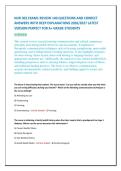
NUR 302 EXAM1 REVIEW 140 QUESTIONS AND CORRECT
ANSWERS WITH DEEP EXPLANATIONS 2026/2027 LATEST
VERSION PERFECT FOR A+ GRADE STUDENTS
OVERVIEW
This content reviews essential nursing communication and cultural competency
principles used during health interviews and assessments. It emphasizes
therapeutic communication techniques such as focusing, paraphrasing, open-ended
questioning, and avoiding biased or leading questions. It also highlights strategies
for interviewing clients in pain, those with hearing or language barriers, and
appropriate interpreter use. Additionally, the material covers cultural health beliefs,
including perspectives such as yin/yang balance, magicoreligious views of illness,
and traditional healing practices. The focus is on effective communication,
accurate documentation, cultural sensitivity, and building rapport to ensure safe,
patient-centered care.
The Nurse is interviewing their patient. The nurse states "Can you tell me exactly what you feel when
you are having difficulty catching your breath?" Which of the following communication techniques is
the nurse utilizing?
A) Attending to cues
B) Paraphrasing
C) Focusing
D) Summarazing - correct answer -C) Focusing
The nurse is obtaining a family health history when the client reports that a grandparent has type 1
diabetes. Where can the nurse document this information?
A) Present health/ illness
B) Family Genogram
C) Past Medical History
D) Health Belief Model - correct answer -B) Family Genogram
,The Nurse is interviewing a patient with acute pain. Which of the following actions by the nurse
should be preformed first?
A) Attempt to reduce the pain and complete the interview later
B) Interview the family to get the information needed
C) Document why the interview could not be completed at this time
D) Proceed very quickly with the interview - correct answer -A) Attempt to reduce the pain and
complete the interview later
The nurse is interviewing her patient. The nurse says to the client "It sounds like you do not like your
new job because it is more stressful than you anticipated." Which of the following types of
communication is the nurse utilizing?
A) Questioning
B) Paraphrasing
C) Attending
D) Listening - correct answer -B) Paraphrasing
In an interview, the nurse may find it necessary to take notes to aid his or her memory later. Which
statement is true regarding note-taking?
A) Note-taking may impede the nurse's observation of the patient's nonverbal behaviors.
B) Note-taking allows the patient to continue at his or her own pace as the nurse records what is said.
C) Note-taking allows the nurse to shift attention away from the patient, resulting in an increased
comfort level.
D) Note-taking allows the nurse to break eye contact with the patient, which may increase his or her
level of comfort. - correct answer -A) Note-taking may impede the nurse's observation of the patient's
nonverbal behaviors.
Page: 31 Some use of history forms and note-taking may be unavoidable. But be aware that note-taking
during the interview has disadvantages. It breaks eye contact too often, and it shifts attention away
from the patient, which diminishes his or her sense of importance. It also may interrupt the patient's
narrative flow, and it impedes the observation of the patient's nonverbal behavior.
During an interview, the nurse states, "You mentioned shortness of breath. Tell me more about that."
Which verbal skill is used with this statement?
A) Reflection
, B) Facilitation
C) Direct question
D) Open-ended question - correct answer -D) Open-ended question
Page: 32 The open-ended question asks for narrative information. It states the topic to be discussed but
only in general terms. The nurse should use it to begin the interview, to introduce a new section of
questions, and whenever the person introduces a new topic.
A nurse is taking complete health histories on all of the patients attending a wellness workshop. On
the history form, one of the written questions asks, "You don't smoke, drink, or take drugs, do you?"
This question is an example of:
A) talking too much.
B) using confrontation.
C) using biased or leading questions.
D) using blunt language to deal with distasteful topics. - correct answer -C) using biased or leading
questions.
Page: 36 This is an example of using leading or biased questions. Asking, "You don't smoke, do you?"
implies that one answer is "better" than another. If the person wants to please someone, he or she is
either forced to answer in a way corresponding to their implied values or is made to feel guilty when
admitting the other answer.
During an interview, a parent of a hospitalized child is sitting in an open position. As the interviewer
begins to discuss his son's treatment, however, he suddenly crosses his arms against his chest and
crosses his legs. This would suggest that the parent is:
A) just changing positions.
B) more comfortable in this position.
C) tired and needs a break from the interview.
D) uncomfortable talking about his son's treatment. - correct answer -D) uncomfortable talking about
his son's treatment.
Page: 37 Note the person's position. An open position with the extension of large muscle groups shows
relaxation, physical comfort, and a willingness to share information. A closed position with the arms and
legs crossed tends to look defensive and anxious. Note any change in posture. If a person in a relaxed
position suddenly tenses, it suggests possible discomfort with the new topic.
ANSWERS WITH DEEP EXPLANATIONS 2026/2027 LATEST
VERSION PERFECT FOR A+ GRADE STUDENTS
OVERVIEW
This content reviews essential nursing communication and cultural competency
principles used during health interviews and assessments. It emphasizes
therapeutic communication techniques such as focusing, paraphrasing, open-ended
questioning, and avoiding biased or leading questions. It also highlights strategies
for interviewing clients in pain, those with hearing or language barriers, and
appropriate interpreter use. Additionally, the material covers cultural health beliefs,
including perspectives such as yin/yang balance, magicoreligious views of illness,
and traditional healing practices. The focus is on effective communication,
accurate documentation, cultural sensitivity, and building rapport to ensure safe,
patient-centered care.
The Nurse is interviewing their patient. The nurse states "Can you tell me exactly what you feel when
you are having difficulty catching your breath?" Which of the following communication techniques is
the nurse utilizing?
A) Attending to cues
B) Paraphrasing
C) Focusing
D) Summarazing - correct answer -C) Focusing
The nurse is obtaining a family health history when the client reports that a grandparent has type 1
diabetes. Where can the nurse document this information?
A) Present health/ illness
B) Family Genogram
C) Past Medical History
D) Health Belief Model - correct answer -B) Family Genogram
,The Nurse is interviewing a patient with acute pain. Which of the following actions by the nurse
should be preformed first?
A) Attempt to reduce the pain and complete the interview later
B) Interview the family to get the information needed
C) Document why the interview could not be completed at this time
D) Proceed very quickly with the interview - correct answer -A) Attempt to reduce the pain and
complete the interview later
The nurse is interviewing her patient. The nurse says to the client "It sounds like you do not like your
new job because it is more stressful than you anticipated." Which of the following types of
communication is the nurse utilizing?
A) Questioning
B) Paraphrasing
C) Attending
D) Listening - correct answer -B) Paraphrasing
In an interview, the nurse may find it necessary to take notes to aid his or her memory later. Which
statement is true regarding note-taking?
A) Note-taking may impede the nurse's observation of the patient's nonverbal behaviors.
B) Note-taking allows the patient to continue at his or her own pace as the nurse records what is said.
C) Note-taking allows the nurse to shift attention away from the patient, resulting in an increased
comfort level.
D) Note-taking allows the nurse to break eye contact with the patient, which may increase his or her
level of comfort. - correct answer -A) Note-taking may impede the nurse's observation of the patient's
nonverbal behaviors.
Page: 31 Some use of history forms and note-taking may be unavoidable. But be aware that note-taking
during the interview has disadvantages. It breaks eye contact too often, and it shifts attention away
from the patient, which diminishes his or her sense of importance. It also may interrupt the patient's
narrative flow, and it impedes the observation of the patient's nonverbal behavior.
During an interview, the nurse states, "You mentioned shortness of breath. Tell me more about that."
Which verbal skill is used with this statement?
A) Reflection
, B) Facilitation
C) Direct question
D) Open-ended question - correct answer -D) Open-ended question
Page: 32 The open-ended question asks for narrative information. It states the topic to be discussed but
only in general terms. The nurse should use it to begin the interview, to introduce a new section of
questions, and whenever the person introduces a new topic.
A nurse is taking complete health histories on all of the patients attending a wellness workshop. On
the history form, one of the written questions asks, "You don't smoke, drink, or take drugs, do you?"
This question is an example of:
A) talking too much.
B) using confrontation.
C) using biased or leading questions.
D) using blunt language to deal with distasteful topics. - correct answer -C) using biased or leading
questions.
Page: 36 This is an example of using leading or biased questions. Asking, "You don't smoke, do you?"
implies that one answer is "better" than another. If the person wants to please someone, he or she is
either forced to answer in a way corresponding to their implied values or is made to feel guilty when
admitting the other answer.
During an interview, a parent of a hospitalized child is sitting in an open position. As the interviewer
begins to discuss his son's treatment, however, he suddenly crosses his arms against his chest and
crosses his legs. This would suggest that the parent is:
A) just changing positions.
B) more comfortable in this position.
C) tired and needs a break from the interview.
D) uncomfortable talking about his son's treatment. - correct answer -D) uncomfortable talking about
his son's treatment.
Page: 37 Note the person's position. An open position with the extension of large muscle groups shows
relaxation, physical comfort, and a willingness to share information. A closed position with the arms and
legs crossed tends to look defensive and anxious. Note any change in posture. If a person in a relaxed
position suddenly tenses, it suggests possible discomfort with the new topic.


