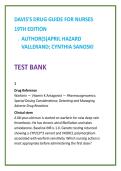
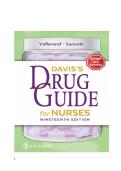
DAVIS'S DRUG GUIDE FOR NURSES
19TH EDITION
• AUTHOR(S)APRIL HAZARD
VALLERAND; CYNTHIA SANOSKI
TEST BANK
1
Drug Reference
Codeine — Opioid analgesic — Pharmacogenomics; The
Pediatric Patient
Stem
A 3-year-old (15 kg) is scheduled for oral codeine after
tonsillectomy. The chart notes no pharmacogenomic testing;
the child has intermittent noisy breathing and mild O2
desaturation (SpO₂ 92%) in recovery. What is the safest
immediate nursing action regarding the ordered codeine dose?
A. Administer the ordered dose and monitor SpO₂ every 15
minutes.
B. Withhold codeine and notify the prescriber about potential
,ultrarapid metabolism risk.
C. Substitute oral morphine at an equianalgesic dose without
consulting provider.
D. Give half the ordered dose and schedule a pharmacogenomic
test later.
Correct answer: B
Rationale — Correct (B)
Children who are unknown CYP2D6 metabolizers may be
ultrarapid metabolizers and convert codeine to morphine
rapidly, risking life-threatening respiratory depression.
Withholding and notifying the prescriber prioritizes safety and
allows selection of an alternative analgesic not reliant on
CYP2D6. This aligns with pediatric pharmacogenomics
recommendations.
Rationale — Incorrect
A: Administering before clarifying risk could precipitate severe
respiratory depression.
C: Substituting morphine without prescriber order risks dosing
errors and unapproved medication changes.
D: Giving a partial dose still risks unpredictable conversion;
delaying decision until testing is unsafe.
Teaching point:
Avoid codeine in children without CYP2D6 status; use non-
CYP2D6 opioids or nonopioids.
,Citation:
Vallerand, A. H., & Sanoski, C. (2025). Davis's Drug Guide for
Nurses (19th ed.). [Pharmacogenomics; The Pediatric Patient].
2
Drug Reference
Clopidogrel — Antiplatelet (P2Y12 inhibitor) —
Pharmacogenomics; Drug Interactions
Stem
A 62-year-old with recent drug-eluting coronary stent is taking
clopidogrel. A new lab result shows they are a CYP2C19 poor
metabolizer. Which nursing recommendation is best?
A. Continue clopidogrel—no change is necessary.
B. Instruct the patient to stop clopidogrel immediately without
replacement.
C. Notify prescriber to consider an alternative antiplatelet (e.g.,
ticagrelor).
D. Increase clopidogrel dose to overcome reduced metabolism.
Correct answer: C
Rationale — Correct (C)
CYP2C19 poor metabolizers have reduced activation of
clopidogrel, decreasing antiplatelet effect and increasing stent
thrombosis risk. The nurse should notify the prescriber to
consider alternative agents (ticagrelor or prasugrel) that do not
rely on CYP2C19 activation.
, Rationale — Incorrect
A: Continuing risks thrombotic events due to inadequate
platelet inhibition.
B: Stopping without replacement leaves patient unprotected
against stent thrombosis.
D: Increasing dose is not an evidence-based remedy for genetic
loss-of-function and may not restore efficacy.
Teaching point:
CYP2C19 poor metabolizers require alternative antiplatelet
therapy, not simply dose changes.
Citation:
Vallerand, A. H., & Sanoski, C. (2025). Davis's Drug Guide for
Nurses (19th ed.). [Pharmacogenomics; Drug Interactions].
3
Drug Reference
Insulin (Regular) — Short-acting insulin — Medication Errors:
Improving Practices and Patient Safety; Special Dosing
Considerations
Stem
An adult inpatient inadvertently received 10 units of IV regular
insulin rather than the intended 10 units subcutaneously;
current blood glucose is 72 mg/dL and the patient is alert.
Which action should the nurse take first?
19TH EDITION
• AUTHOR(S)APRIL HAZARD
VALLERAND; CYNTHIA SANOSKI
TEST BANK
1
Drug Reference
Codeine — Opioid analgesic — Pharmacogenomics; The
Pediatric Patient
Stem
A 3-year-old (15 kg) is scheduled for oral codeine after
tonsillectomy. The chart notes no pharmacogenomic testing;
the child has intermittent noisy breathing and mild O2
desaturation (SpO₂ 92%) in recovery. What is the safest
immediate nursing action regarding the ordered codeine dose?
A. Administer the ordered dose and monitor SpO₂ every 15
minutes.
B. Withhold codeine and notify the prescriber about potential
,ultrarapid metabolism risk.
C. Substitute oral morphine at an equianalgesic dose without
consulting provider.
D. Give half the ordered dose and schedule a pharmacogenomic
test later.
Correct answer: B
Rationale — Correct (B)
Children who are unknown CYP2D6 metabolizers may be
ultrarapid metabolizers and convert codeine to morphine
rapidly, risking life-threatening respiratory depression.
Withholding and notifying the prescriber prioritizes safety and
allows selection of an alternative analgesic not reliant on
CYP2D6. This aligns with pediatric pharmacogenomics
recommendations.
Rationale — Incorrect
A: Administering before clarifying risk could precipitate severe
respiratory depression.
C: Substituting morphine without prescriber order risks dosing
errors and unapproved medication changes.
D: Giving a partial dose still risks unpredictable conversion;
delaying decision until testing is unsafe.
Teaching point:
Avoid codeine in children without CYP2D6 status; use non-
CYP2D6 opioids or nonopioids.
,Citation:
Vallerand, A. H., & Sanoski, C. (2025). Davis's Drug Guide for
Nurses (19th ed.). [Pharmacogenomics; The Pediatric Patient].
2
Drug Reference
Clopidogrel — Antiplatelet (P2Y12 inhibitor) —
Pharmacogenomics; Drug Interactions
Stem
A 62-year-old with recent drug-eluting coronary stent is taking
clopidogrel. A new lab result shows they are a CYP2C19 poor
metabolizer. Which nursing recommendation is best?
A. Continue clopidogrel—no change is necessary.
B. Instruct the patient to stop clopidogrel immediately without
replacement.
C. Notify prescriber to consider an alternative antiplatelet (e.g.,
ticagrelor).
D. Increase clopidogrel dose to overcome reduced metabolism.
Correct answer: C
Rationale — Correct (C)
CYP2C19 poor metabolizers have reduced activation of
clopidogrel, decreasing antiplatelet effect and increasing stent
thrombosis risk. The nurse should notify the prescriber to
consider alternative agents (ticagrelor or prasugrel) that do not
rely on CYP2C19 activation.
, Rationale — Incorrect
A: Continuing risks thrombotic events due to inadequate
platelet inhibition.
B: Stopping without replacement leaves patient unprotected
against stent thrombosis.
D: Increasing dose is not an evidence-based remedy for genetic
loss-of-function and may not restore efficacy.
Teaching point:
CYP2C19 poor metabolizers require alternative antiplatelet
therapy, not simply dose changes.
Citation:
Vallerand, A. H., & Sanoski, C. (2025). Davis's Drug Guide for
Nurses (19th ed.). [Pharmacogenomics; Drug Interactions].
3
Drug Reference
Insulin (Regular) — Short-acting insulin — Medication Errors:
Improving Practices and Patient Safety; Special Dosing
Considerations
Stem
An adult inpatient inadvertently received 10 units of IV regular
insulin rather than the intended 10 units subcutaneously;
current blood glucose is 72 mg/dL and the patient is alert.
Which action should the nurse take first?