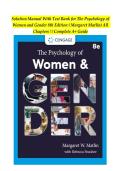
Solution Manual With Test Bank for The Psychology of
Women and Gender 8th Edition ( Margaret Matlin) All
Chapters ||Complete A+ Guide
, Contents
Syllabus d 1 from d 1 Dr. d 1 Matlin’s d 1 Course 1
Research Project Handout
d 1 d 1 8
Details About Research
d 1 d 1 d 1 Projects 13
Chapter Outlines
d 1 18
Test Bank
d 1 127
1 Introduction 127
2 Gender Stereotypes and Other Gender Biases
d1 d1 d1 d1 d1 151
3 Infancy and Childhood
d1 d1 171
4 Adolescence 194
5 Gender Comparisons in Cognitive Abilities and
d1 d1 d1 d1 d1
Attitudes About Achievement
d1 d1 213
6 Gender Comparisons in Social and
d1 d1 d1 d1
Personality Characteristics d1 232
7 Women and Work d1 d1 248
8 Love Relationships
d1 269
9 Sexuality 288
10 Pregnancy, Childbirth, and Motherhoodd1 d1 d1 307
11 Women and Physical Health d1 d1 d1 324
12 Women and Psychological Health
d1 d1 d1 343
13 Violence Against Women d1 d1 361
14 Women and Older Adulthood d1 d1 d1 378
15 Moving Onward . . . d1 d1 d1 d1 395
, SYLLABUS FROM d1
DR. MARGARET W. MATLIN‘S COURSE d1 d1 d1 d1
My syllabus changes somewhat from one semester to the next, but the
d 1 d 1 d 1 d 1 d 1 d 1 d 1 d 1 d 1 d 1 d 1
syllabus below is the version I used in Fall Semester, 2010. (However,
d 1 d 1 d 1 d 1 d 1 d 1 d 1 d 1 d 1 d 1 d 1 d 1
the textbook for that course was the 6th edition.) I think it‘s important for
d 1 d 1 d 1 d 1 d 1 d 1 d 1 d1 d 1 d 1 d 1 d 1 d 1 d 1
a syllabus to include a brief description of the course, as well as the
d 1 d 1 d 1 d 1 d 1 d 1 d 1 d 1 d 1 d 1 d 1 d 1 d 1 d 1
goals. From the first page of the syllabus, students should be able to
d 1 d 1 d 1 d 1 d 1 d 1 d 1 d 1 d 1 d 1 d 1 d 1 d 1
understand the general scope of the course.
d1 d 1 d 1 d 1 d 1 d 1 d 1
You can find several additional syllabi for courses on the Psychology of
d 1 d 1 d 1 d 1 d 1 d 1 d 1 d 1 d 1 d 1 d 1
Women or the Psychology of Gender on the website for the Society for
d 1 d 1 d 1 d1 d 1 d 1 d 1 d 1 d 1 d 1 d 1 d 1 d 1
the Teaching of Psychology (Division 2 of the American Psychological
d 1 d 1 d 1 d 1 d1 d 1 d 1 d 1 d 1 d 1
Association): http://teachpsych.org/otrp/syllabi/index.php
d 1 d1
Scroll down the list of courses on the right-hand side, and you will find the
d 1 d 1 d 1 d 1 d 1 d 1 d 1 d 1 d 1 d 1 d 1 d 1 d 1 d 1
topic ―Women and Gender.‖
d 1 d 1 d1 d 1
Additional note: Psychology of Women Quarterly now includes a ―Teaching
d 1 d 1 d 1 d 1 d 1 d 1 d 1 d 1 d 1
Section‖ in each issue. It features between one and three short articles in
d 1 d 1 d1 d 1 d 1 d 1 d 1 d 1 d 1 d 1 d 1 d 1 d 1
each issue, which focus on topics related to women and gender, such as
d 1 d 1 d 1 d 1 d 1 d1 d 1 d 1 d 1 d 1 d 1 d 1 d 1
critical thinking, social class, social justice advocacy. I am the current editor
d 1 d 1 d 1 d 1 d 1 d 1 d1 d 1 d 1 d 1 d 1 d 1
of this Teaching Section; please email me at , if you
d 1 d 1 d 1 d 1 d 1 d 1 d 1 d 1 d1 d 1 d 1
have an idea about a potential article related to this teaching!
d 1 d 1 d 1 d 1 d 1 d 1 d 1 d 1 d 1 d 1 d 1
On the first day of class, students also receive a description of the
d 1 d 1 d 1 d 1 d 1 d 1 d 1 d 1 d 1 d 1 d 1 d 1
Psychology of Women Research Project, an important component of my
d 1 d 1 d 1 d1 d 1 d 1 d 1 d 1 d 1 d 1
course. Later in this document you can find a description of this project,
d 1 d 1 d 1 d 1 d 1 d 1 d 1 d1 d 1 d 1 d 1 d 1 d 1
as well as some details about the project.
d 1 d 1 d 1 d 1 d 1 d 1 d 1 d 1
1 of 381
, Psychology of Women d 1 d 1 Dr. Margaret W.
d1 d1
Matlin Psychology 308
d1 d1 d 1 Department of d 1
d 1 Psychology
Fall, 2010d 1 SUNY Geneseo d 1
SYLLABUS
COURSE d 1 DESCRIPTION
The purpose of this course is to examine the lives of girls and women.
d 1 d 1 d 1 d 1 d 1 d 1 d 1 d 1 d 1 d 1 d 1 d 1 d 1
We will include topics such as gender stereotypes, the development of
d 1 d 1 d 1 d1 d 1 d 1 d 1 d 1 d 1 d 1 d 1
gender roles, gender comparisons, women and work, love relationships,
d 1 d 1 d 1 d 1 d1 d 1 d 1 d 1 d 1
sexuality, women‘s physical and mental health, violence against women, and
d 1 d 1 d 1 d 1 d 1 d 1 d1 d 1 d 1 d 1
women in later adulthood. Students who take this course should acquire a
d 1 d 1 d 1 d 1 d 1 d 1 d 1 d 1 d 1 d1 d 1 d 1
better understanding about girls, women, and gender in North America.
d 1 d 1 d 1 d 1 d 1 d 1 d 1 d 1 d 1 d 1
As the course instructor, I‘m hopeful that each of you will work toward the
d 1 d 1 d 1 d 1 d 1 d 1 d 1 d 1 d 1 d 1 d 1 d 1 d 1
following goals:
d 1 d 1
1. To understand the relevant information about the lives of girls and
d 1 d 1 d1 d 1 d 1 d1 d1 d 1 d1 d1
women—as well as gender—with a particular emphasis on the
d 1 d1 d 1 d 1 d 1 d 1 d 1 d 1 d 1
complexity of the issues.
d 1 d 1 d 1 d 1
2. To develop critical-thinking skills, so that you can evaluate both the
d 1 d 1 d 1 d 1 d1 d 1 d1 d 1 d1 d 1
research in professional journals and information described in the
d1 d 1 d1 d 1 d 1 d 1 d 1 d 1 d 1
popular media.
d 1 d 1
3. To know how to design your own psychology research project, to
d 1 d 1 d 1 d 1 d 1 d 1 d 1 d 1 d 1 d 1
conduct the research, and to write an appropriately professional summary
d 1 d 1 d1 d 1 d 1 d 1 d 1 d 1 d 1 d 1
of your own research, emphasizing the potential methodological flaws
d 1 d 1 d 1 d 1 d1 d 1 d 1 d 1 d 1
and strengths in your study.
d 1 d 1 d 1 d 1 d 1
4. To explore your own ideas and attitudes about gender, appreciating that we
d 1 d1 d 1 d 1 d 1 d 1 d 1 d1 d 1 d 1 d1
do not need to be constrained by our culture‘s traditional gender roles.
d1 d 1 d1 d1 d 1 d 1 d 1 d 1 d 1 d 1 d 1 d 1
5. To appreciate the inequalities that many individuals face, based on
d 1 d 1 d 1 d 1 d 1 d 1 d 1 d 1 d 1
social categories other than gender. These categories include age,
d 1 d 1 d1 d 1 d 1 d 1 d 1 d 1 d 1
disability, sexual orientation, ethnicity, religion, social class, and country
d 1 d 1 d 1 d1 d 1 d 1 d 1 d 1 d 1
of residence. We will also consider some information about inequalities
d 1 d 1 d 1 d 1 d 1 d 1 d1 d 1 d 1 d 1
in other cultures, outside North America.
d 1 d 1 d 1 d 1 d 1 d 1
READING d 1 MATERIALS
Our textbook for the course will be:
d 1 d 1 d 1 d 1 d 1 d 1
2 of 381
Women and Gender 8th Edition ( Margaret Matlin) All
Chapters ||Complete A+ Guide
, Contents
Syllabus d 1 from d 1 Dr. d 1 Matlin’s d 1 Course 1
Research Project Handout
d 1 d 1 8
Details About Research
d 1 d 1 d 1 Projects 13
Chapter Outlines
d 1 18
Test Bank
d 1 127
1 Introduction 127
2 Gender Stereotypes and Other Gender Biases
d1 d1 d1 d1 d1 151
3 Infancy and Childhood
d1 d1 171
4 Adolescence 194
5 Gender Comparisons in Cognitive Abilities and
d1 d1 d1 d1 d1
Attitudes About Achievement
d1 d1 213
6 Gender Comparisons in Social and
d1 d1 d1 d1
Personality Characteristics d1 232
7 Women and Work d1 d1 248
8 Love Relationships
d1 269
9 Sexuality 288
10 Pregnancy, Childbirth, and Motherhoodd1 d1 d1 307
11 Women and Physical Health d1 d1 d1 324
12 Women and Psychological Health
d1 d1 d1 343
13 Violence Against Women d1 d1 361
14 Women and Older Adulthood d1 d1 d1 378
15 Moving Onward . . . d1 d1 d1 d1 395
, SYLLABUS FROM d1
DR. MARGARET W. MATLIN‘S COURSE d1 d1 d1 d1
My syllabus changes somewhat from one semester to the next, but the
d 1 d 1 d 1 d 1 d 1 d 1 d 1 d 1 d 1 d 1 d 1
syllabus below is the version I used in Fall Semester, 2010. (However,
d 1 d 1 d 1 d 1 d 1 d 1 d 1 d 1 d 1 d 1 d 1 d 1
the textbook for that course was the 6th edition.) I think it‘s important for
d 1 d 1 d 1 d 1 d 1 d 1 d 1 d1 d 1 d 1 d 1 d 1 d 1 d 1
a syllabus to include a brief description of the course, as well as the
d 1 d 1 d 1 d 1 d 1 d 1 d 1 d 1 d 1 d 1 d 1 d 1 d 1 d 1
goals. From the first page of the syllabus, students should be able to
d 1 d 1 d 1 d 1 d 1 d 1 d 1 d 1 d 1 d 1 d 1 d 1 d 1
understand the general scope of the course.
d1 d 1 d 1 d 1 d 1 d 1 d 1
You can find several additional syllabi for courses on the Psychology of
d 1 d 1 d 1 d 1 d 1 d 1 d 1 d 1 d 1 d 1 d 1
Women or the Psychology of Gender on the website for the Society for
d 1 d 1 d 1 d1 d 1 d 1 d 1 d 1 d 1 d 1 d 1 d 1 d 1
the Teaching of Psychology (Division 2 of the American Psychological
d 1 d 1 d 1 d 1 d1 d 1 d 1 d 1 d 1 d 1
Association): http://teachpsych.org/otrp/syllabi/index.php
d 1 d1
Scroll down the list of courses on the right-hand side, and you will find the
d 1 d 1 d 1 d 1 d 1 d 1 d 1 d 1 d 1 d 1 d 1 d 1 d 1 d 1
topic ―Women and Gender.‖
d 1 d 1 d1 d 1
Additional note: Psychology of Women Quarterly now includes a ―Teaching
d 1 d 1 d 1 d 1 d 1 d 1 d 1 d 1 d 1
Section‖ in each issue. It features between one and three short articles in
d 1 d 1 d1 d 1 d 1 d 1 d 1 d 1 d 1 d 1 d 1 d 1 d 1
each issue, which focus on topics related to women and gender, such as
d 1 d 1 d 1 d 1 d 1 d1 d 1 d 1 d 1 d 1 d 1 d 1 d 1
critical thinking, social class, social justice advocacy. I am the current editor
d 1 d 1 d 1 d 1 d 1 d 1 d1 d 1 d 1 d 1 d 1 d 1
of this Teaching Section; please email me at , if you
d 1 d 1 d 1 d 1 d 1 d 1 d 1 d 1 d1 d 1 d 1
have an idea about a potential article related to this teaching!
d 1 d 1 d 1 d 1 d 1 d 1 d 1 d 1 d 1 d 1 d 1
On the first day of class, students also receive a description of the
d 1 d 1 d 1 d 1 d 1 d 1 d 1 d 1 d 1 d 1 d 1 d 1
Psychology of Women Research Project, an important component of my
d 1 d 1 d 1 d1 d 1 d 1 d 1 d 1 d 1 d 1
course. Later in this document you can find a description of this project,
d 1 d 1 d 1 d 1 d 1 d 1 d 1 d1 d 1 d 1 d 1 d 1 d 1
as well as some details about the project.
d 1 d 1 d 1 d 1 d 1 d 1 d 1 d 1
1 of 381
, Psychology of Women d 1 d 1 Dr. Margaret W.
d1 d1
Matlin Psychology 308
d1 d1 d 1 Department of d 1
d 1 Psychology
Fall, 2010d 1 SUNY Geneseo d 1
SYLLABUS
COURSE d 1 DESCRIPTION
The purpose of this course is to examine the lives of girls and women.
d 1 d 1 d 1 d 1 d 1 d 1 d 1 d 1 d 1 d 1 d 1 d 1 d 1
We will include topics such as gender stereotypes, the development of
d 1 d 1 d 1 d1 d 1 d 1 d 1 d 1 d 1 d 1 d 1
gender roles, gender comparisons, women and work, love relationships,
d 1 d 1 d 1 d 1 d1 d 1 d 1 d 1 d 1
sexuality, women‘s physical and mental health, violence against women, and
d 1 d 1 d 1 d 1 d 1 d 1 d1 d 1 d 1 d 1
women in later adulthood. Students who take this course should acquire a
d 1 d 1 d 1 d 1 d 1 d 1 d 1 d 1 d 1 d1 d 1 d 1
better understanding about girls, women, and gender in North America.
d 1 d 1 d 1 d 1 d 1 d 1 d 1 d 1 d 1 d 1
As the course instructor, I‘m hopeful that each of you will work toward the
d 1 d 1 d 1 d 1 d 1 d 1 d 1 d 1 d 1 d 1 d 1 d 1 d 1
following goals:
d 1 d 1
1. To understand the relevant information about the lives of girls and
d 1 d 1 d1 d 1 d 1 d1 d1 d 1 d1 d1
women—as well as gender—with a particular emphasis on the
d 1 d1 d 1 d 1 d 1 d 1 d 1 d 1 d 1
complexity of the issues.
d 1 d 1 d 1 d 1
2. To develop critical-thinking skills, so that you can evaluate both the
d 1 d 1 d 1 d 1 d1 d 1 d1 d 1 d1 d 1
research in professional journals and information described in the
d1 d 1 d1 d 1 d 1 d 1 d 1 d 1 d 1
popular media.
d 1 d 1
3. To know how to design your own psychology research project, to
d 1 d 1 d 1 d 1 d 1 d 1 d 1 d 1 d 1 d 1
conduct the research, and to write an appropriately professional summary
d 1 d 1 d1 d 1 d 1 d 1 d 1 d 1 d 1 d 1
of your own research, emphasizing the potential methodological flaws
d 1 d 1 d 1 d 1 d1 d 1 d 1 d 1 d 1
and strengths in your study.
d 1 d 1 d 1 d 1 d 1
4. To explore your own ideas and attitudes about gender, appreciating that we
d 1 d1 d 1 d 1 d 1 d 1 d 1 d1 d 1 d 1 d1
do not need to be constrained by our culture‘s traditional gender roles.
d1 d 1 d1 d1 d 1 d 1 d 1 d 1 d 1 d 1 d 1 d 1
5. To appreciate the inequalities that many individuals face, based on
d 1 d 1 d 1 d 1 d 1 d 1 d 1 d 1 d 1
social categories other than gender. These categories include age,
d 1 d 1 d1 d 1 d 1 d 1 d 1 d 1 d 1
disability, sexual orientation, ethnicity, religion, social class, and country
d 1 d 1 d 1 d1 d 1 d 1 d 1 d 1 d 1
of residence. We will also consider some information about inequalities
d 1 d 1 d 1 d 1 d 1 d 1 d1 d 1 d 1 d 1
in other cultures, outside North America.
d 1 d 1 d 1 d 1 d 1 d 1
READING d 1 MATERIALS
Our textbook for the course will be:
d 1 d 1 d 1 d 1 d 1 d 1
2 of 381