
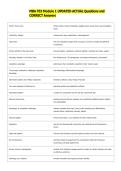
MBA 703 Module 1 UPDATED ACTUAL Questions and
CORRECT Answers
Porter's Five Forces threat of entry, threat of substitute, supplier power, buyer power, and competitive
rivalry
Productivity Paradox measurement, lags, redistribution, mismanagement
Value Chain The set of activities through which a product or service is created and delivered
to customers.
Primary activities in the value chain inbound logistics, operations, outbound logistics, marketing and sales, support
Secondary Activities in the Value Chain firm infrastructure, HR management, technology development, procurement
competitive advantage performance that consistently outperforms their industry peers
Two primary methods for obtaining Competitive Cost Advantage, Differentiation Advantage
Advantage
Information Systems has 5 Major components Hardware, Software, Data, People, Processes
Two main categories of software are operating systems and application software
Information Systems is about the components and the role the components play
Resource-based view Develop resources that are valuable, rare, imperfectly imitable (tough to imitate),
non-substitutable
Advantages of competitive advantage Imitation resistant value chain, brand, scale, switching cost, differentiation,
network effects, distribution channels, patents
Inbound logistics Process that brings in raw materials and other needed inputs
Operations Any part of a business that converts the raw materials into a final product or
service
Outbound logistics These are the functions required to get the product out to the customer
firm infrastructure activities needed to support the firm, including the CEO and the finance,
accounting, and legal departments
Human resource management consists of the activities managers perform to plan for, attract, develop, and retain
an effective workforce
technology and research Provides innovation that supports primary activities
CORRECT Answers
Porter's Five Forces threat of entry, threat of substitute, supplier power, buyer power, and competitive
rivalry
Productivity Paradox measurement, lags, redistribution, mismanagement
Value Chain The set of activities through which a product or service is created and delivered
to customers.
Primary activities in the value chain inbound logistics, operations, outbound logistics, marketing and sales, support
Secondary Activities in the Value Chain firm infrastructure, HR management, technology development, procurement
competitive advantage performance that consistently outperforms their industry peers
Two primary methods for obtaining Competitive Cost Advantage, Differentiation Advantage
Advantage
Information Systems has 5 Major components Hardware, Software, Data, People, Processes
Two main categories of software are operating systems and application software
Information Systems is about the components and the role the components play
Resource-based view Develop resources that are valuable, rare, imperfectly imitable (tough to imitate),
non-substitutable
Advantages of competitive advantage Imitation resistant value chain, brand, scale, switching cost, differentiation,
network effects, distribution channels, patents
Inbound logistics Process that brings in raw materials and other needed inputs
Operations Any part of a business that converts the raw materials into a final product or
service
Outbound logistics These are the functions required to get the product out to the customer
firm infrastructure activities needed to support the firm, including the CEO and the finance,
accounting, and legal departments
Human resource management consists of the activities managers perform to plan for, attract, develop, and retain
an effective workforce
technology and research Provides innovation that supports primary activities


