

MENTAL AND DIGITAL WELL-BEING
Session 1: mental well-being defined
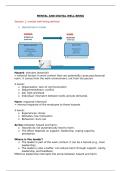
1. Hazard-harm model
Hazard: stimules (external)
= external factors in work context that can potentially cause psychosocial
harm. It comes from the work environment, not from the person.
4 levels:
o Organization: lack of communication
o Department/team: conflict
o Job: high workload
o Individual: mismatch between skills and job demands.
Harm: response (internal)
= internal response of the employee to those hazards
3 levels:
o Experiences: stress
o Attitudes: low motivation
o Behaviour: burn-out
Arrow: between hazard and harm:
o Hazards do not automatically lead to harm.
o The effect depends on support, leadership, coping capacity,
perception.
Where is the leader?
o The leader is part of the work context: it can be a hazard (e.g., toxic
leadership).
o The leader is also a buffer: can reduce harm through support, clarity,
leadership, and feedback.
Effective leadership interrupts the arrow between hazard and harm.
, MENTAL AND DIGITAL WELL-BEING
Session 2: incivil and transgressive behavior
1. Incivility
Why do employees and supervisors behave incivil?
o Because it is part of their personality.
o Because they do not feel well due to their work.
o Because they see others doing it.
Workplace incivility
Workplace civility
= behavior that reflects mutual care and respect (e.g., listening,
politeness)
Workplace incivility
= low-intensity social deviant behavior in the workplace with ambiguous
intent to harm another.
o Key characteristics: verbal, passive, indirect, subtle, and difficult to
interpret.
o Often called “Gray-zone behavior”
o It sits between clearly accepted and clearly unaccepted
behavior.
Is this so bad? Can we not be incivil?
Incivility is a serious problem, because it has many negative
consequences. Workplace incivility has 3 types of outcomes:
1) Effective and health-related outcomes
o Stress, depression, anxiety
o Burn-out
o Mental health
o Physical health
2) Social exchange-based outcomes
o Justice
o Trust
o Organizational commitment
o Perceived support
3) Behavioural and withdrawal outcomes
o Job performance
o Work engagement
o Withdrawal behavior
Incivility spiral
Incivility is inherently provocative, promotes reciprocity, and results in a
spiral of negative behavior in the workplace.
,2 main reasons:
1) Tit for tat
o Incivility triggers feelings of injustice and negative emotions.
o Because the behavior is subtle and ambiguous, people often:
o Do not confront directly.
o They respond indirectly with rudeness.
o This leads to reciprocity:
o You were rude to me I’ll be rude to you.
2) Monkey see monkey do
o Incivility also spreads because:
o People observe others’ behavior.
o They learn what is acceptable in the workplace.
o Especially when leaders behave uncivilly.
o According to:
o Social information processing theory (Salancik & Pfeffer)
o Social learning theory (Bandura)
o Incivility becomes “normalizing negative behavior”
How to end or reduce that spiral?
o Give leaders/employees control over their job.
o More control = more freedom to decide when and how tasks
are completed.
o Allow time and energy to detach from work and seek support
or address incivility.
o Ensuring polite teams.
o When others are polite, it sets a social norm.
o Train leaders/employees.
o Teach them how to manage their reactions when observing or
experiening incivil behavior from others.
Bad apple or bad barrel?
Employees or leaders mostly behave incivil because:
o It is part of their personality (bad apple)
o They do not feel well due to their work (bad barrel)
Preventive factors
Psychological and physical well-being, positive work attitudes, and positive
team characteristics serve as preventive factors.
3 groups of antecedents (risk factors):
1) Victim Dispositional individual differences
o Positive affectivity
o Negative affectivity
o Extraversion
, 2) Victim demographic individual differences
o Age
o Gender
o Race
3) Environmental factors
o Passive leadership
o Lack of civility norms
o Incivility climate
Then how can you avoid all this?
Some guidance from science:
o Cognitive exercise (Griffin, 2004)
o What it is:
Education about what incivility is.
Examples of assertive (not aggressive) responses.
Mental rehearsal of responses
Cue cards as reminders.
o CREW (Civil, Respect, and Engagement in the Workplace)
o What it is:
Team-building exercises
Training in recognizing incivility.
Practice in responding to incivility.
o Overall: effective prevention includes:
o Education about workplace incivility and its consequences.
o Communication skills training.
o Active practice (e.g., cognitive exercices, role-playing).
2. Transgressive behavior: workplace aggression
Workplace aggression
= incidents where staff are abused, threatened, and assaulted in
circumstances related to their work, including commuting to and from
work, involving explicit or implicit challenges to their safety, well-being, or
health.
o One incident can be sufficient.
o Can be verbal, non-verbal, or physical.
Why is this happening?
o Instrumental aggression (Felson, 2006)
o Rational – cognitive
o Goal-oriented
o Prevention decision making leading to the aggression.
Work context:
Expressing a complaint.
Getting right/justice.
Biases in who’s to blame.
Expectations.
Session 1: mental well-being defined
1. Hazard-harm model
Hazard: stimules (external)
= external factors in work context that can potentially cause psychosocial
harm. It comes from the work environment, not from the person.
4 levels:
o Organization: lack of communication
o Department/team: conflict
o Job: high workload
o Individual: mismatch between skills and job demands.
Harm: response (internal)
= internal response of the employee to those hazards
3 levels:
o Experiences: stress
o Attitudes: low motivation
o Behaviour: burn-out
Arrow: between hazard and harm:
o Hazards do not automatically lead to harm.
o The effect depends on support, leadership, coping capacity,
perception.
Where is the leader?
o The leader is part of the work context: it can be a hazard (e.g., toxic
leadership).
o The leader is also a buffer: can reduce harm through support, clarity,
leadership, and feedback.
Effective leadership interrupts the arrow between hazard and harm.
, MENTAL AND DIGITAL WELL-BEING
Session 2: incivil and transgressive behavior
1. Incivility
Why do employees and supervisors behave incivil?
o Because it is part of their personality.
o Because they do not feel well due to their work.
o Because they see others doing it.
Workplace incivility
Workplace civility
= behavior that reflects mutual care and respect (e.g., listening,
politeness)
Workplace incivility
= low-intensity social deviant behavior in the workplace with ambiguous
intent to harm another.
o Key characteristics: verbal, passive, indirect, subtle, and difficult to
interpret.
o Often called “Gray-zone behavior”
o It sits between clearly accepted and clearly unaccepted
behavior.
Is this so bad? Can we not be incivil?
Incivility is a serious problem, because it has many negative
consequences. Workplace incivility has 3 types of outcomes:
1) Effective and health-related outcomes
o Stress, depression, anxiety
o Burn-out
o Mental health
o Physical health
2) Social exchange-based outcomes
o Justice
o Trust
o Organizational commitment
o Perceived support
3) Behavioural and withdrawal outcomes
o Job performance
o Work engagement
o Withdrawal behavior
Incivility spiral
Incivility is inherently provocative, promotes reciprocity, and results in a
spiral of negative behavior in the workplace.
,2 main reasons:
1) Tit for tat
o Incivility triggers feelings of injustice and negative emotions.
o Because the behavior is subtle and ambiguous, people often:
o Do not confront directly.
o They respond indirectly with rudeness.
o This leads to reciprocity:
o You were rude to me I’ll be rude to you.
2) Monkey see monkey do
o Incivility also spreads because:
o People observe others’ behavior.
o They learn what is acceptable in the workplace.
o Especially when leaders behave uncivilly.
o According to:
o Social information processing theory (Salancik & Pfeffer)
o Social learning theory (Bandura)
o Incivility becomes “normalizing negative behavior”
How to end or reduce that spiral?
o Give leaders/employees control over their job.
o More control = more freedom to decide when and how tasks
are completed.
o Allow time and energy to detach from work and seek support
or address incivility.
o Ensuring polite teams.
o When others are polite, it sets a social norm.
o Train leaders/employees.
o Teach them how to manage their reactions when observing or
experiening incivil behavior from others.
Bad apple or bad barrel?
Employees or leaders mostly behave incivil because:
o It is part of their personality (bad apple)
o They do not feel well due to their work (bad barrel)
Preventive factors
Psychological and physical well-being, positive work attitudes, and positive
team characteristics serve as preventive factors.
3 groups of antecedents (risk factors):
1) Victim Dispositional individual differences
o Positive affectivity
o Negative affectivity
o Extraversion
, 2) Victim demographic individual differences
o Age
o Gender
o Race
3) Environmental factors
o Passive leadership
o Lack of civility norms
o Incivility climate
Then how can you avoid all this?
Some guidance from science:
o Cognitive exercise (Griffin, 2004)
o What it is:
Education about what incivility is.
Examples of assertive (not aggressive) responses.
Mental rehearsal of responses
Cue cards as reminders.
o CREW (Civil, Respect, and Engagement in the Workplace)
o What it is:
Team-building exercises
Training in recognizing incivility.
Practice in responding to incivility.
o Overall: effective prevention includes:
o Education about workplace incivility and its consequences.
o Communication skills training.
o Active practice (e.g., cognitive exercices, role-playing).
2. Transgressive behavior: workplace aggression
Workplace aggression
= incidents where staff are abused, threatened, and assaulted in
circumstances related to their work, including commuting to and from
work, involving explicit or implicit challenges to their safety, well-being, or
health.
o One incident can be sufficient.
o Can be verbal, non-verbal, or physical.
Why is this happening?
o Instrumental aggression (Felson, 2006)
o Rational – cognitive
o Goal-oriented
o Prevention decision making leading to the aggression.
Work context:
Expressing a complaint.
Getting right/justice.
Biases in who’s to blame.
Expectations.


