
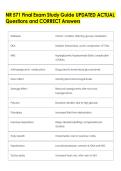
NR 571 Final Exam Study Guide UPDATED ACTUAL
Questions and CORRECT Answers
Diabetes Chronic condition affecting glucose metabolism.
DKA Diabetic Ketoacidosis; acute complication of T1DM.
HHS Hyperglycemic Hyperosmolar State; complication
of T2DM.
Antihyperglycemic medications Drugs used to lower blood glucose levels.
Dawn effect Morning rise in blood sugar levels.
Samogyi effect Rebound hyperglycemia after nocturnal
hypoglycemia.
Polyuria Excessive urination due to high glucose.
Polydipsia Increased thirst from dehydration.
Kussmaul respirations Deep, labored breathing; compensatory for
acidosis.
Fruity breath Characteristic odor of acetone in DKA.
Hypotension Low blood pressure, common in DKA and HHS.
Tachycardia Increased heart rate, often seen in DKA.
, CBC Complete Blood Count; assesses hemoglobin and
WBCs.
CMP Comprehensive Metabolic Panel; evaluates
electrolytes and renal function.
Lactic acidosis Acidosis due to elevated lactic acid levels.
Ketonuria Presence of ketones in urine, indicates ketosis.
Hyperglycemia Elevated blood glucose levels, usually > 300
mg/dL.
Fluid loss in DKA Average loss of 4-6 liters.
Insulin infusion rate 0.1 u/kg/h; adjusts based on glucose levels.
Electrolyte correction Monitor potassium; > 3.3 mEq/L before insulin.
Anion gap Calculated to assess metabolic acidosis severity.
Elevated β-hydroxybutyrate Key marker for DKA severity.
Fluid replacement 1-2 liters isotonic fluids in first 2 hours.
Blood Glucose Range Target range for stable patients: 150-250 mg/dL.
SC Insulin Injections Given when patient can eat, not before 2-4 hours.
DKA Diabetic Ketoacidosis, a severe metabolic
complication.
Questions and CORRECT Answers
Diabetes Chronic condition affecting glucose metabolism.
DKA Diabetic Ketoacidosis; acute complication of T1DM.
HHS Hyperglycemic Hyperosmolar State; complication
of T2DM.
Antihyperglycemic medications Drugs used to lower blood glucose levels.
Dawn effect Morning rise in blood sugar levels.
Samogyi effect Rebound hyperglycemia after nocturnal
hypoglycemia.
Polyuria Excessive urination due to high glucose.
Polydipsia Increased thirst from dehydration.
Kussmaul respirations Deep, labored breathing; compensatory for
acidosis.
Fruity breath Characteristic odor of acetone in DKA.
Hypotension Low blood pressure, common in DKA and HHS.
Tachycardia Increased heart rate, often seen in DKA.
, CBC Complete Blood Count; assesses hemoglobin and
WBCs.
CMP Comprehensive Metabolic Panel; evaluates
electrolytes and renal function.
Lactic acidosis Acidosis due to elevated lactic acid levels.
Ketonuria Presence of ketones in urine, indicates ketosis.
Hyperglycemia Elevated blood glucose levels, usually > 300
mg/dL.
Fluid loss in DKA Average loss of 4-6 liters.
Insulin infusion rate 0.1 u/kg/h; adjusts based on glucose levels.
Electrolyte correction Monitor potassium; > 3.3 mEq/L before insulin.
Anion gap Calculated to assess metabolic acidosis severity.
Elevated β-hydroxybutyrate Key marker for DKA severity.
Fluid replacement 1-2 liters isotonic fluids in first 2 hours.
Blood Glucose Range Target range for stable patients: 150-250 mg/dL.
SC Insulin Injections Given when patient can eat, not before 2-4 hours.
DKA Diabetic Ketoacidosis, a severe metabolic
complication.


