

BIOCHEM STUDY GUIDE BIOCHEM C785
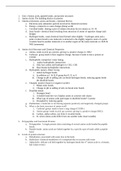
BIOCHEM STUDY GUIDE BIOCHEM C785 Unit 2 Amino acids, peptide bonds, and protein structures 2. Amino Acids: The building blocks of proteins 3. Chemical elements, atoms and bonds—Optional Review a. Electrons-only subatomic particle involved in chemical reactions b. Energy- compacity to cause change (doing work) c. Covalent bonds- sharing a pair of valance electrons by two atoms ex: H—H d. Ionic bonds- chemical bond resulting from attraction of atoms of opposite charge (salt bridge) e. Hydrogen bonds- weak chemical bond formed when slightly + hydrogen atom and a polar covalent bond in one molecule is attracted to the slightly negative atom of a polar covalent bond in another molecule or in another region of the same molecule ex: H20 & NH3 (ammonia) 4. Amino Acid Structure and Chemical Properties a. Amino- tends to pick up a proton- giving it a positive charge ex: NH2 b. Carboxyl- group tends to have negative charge- because it tends to lose a proton ex: COOH c. Hydrophobic (nonpolar)- water hating i. makes hydrophobic interactions ii. Only has carbon and hydrogen ex: CH2, CH3 iii. Heat breaks hydrophobic interactions d. Hydrophilic (polar)- Water loving i. makes hydrogen bonds ii. In addition to C & H, R group has O, N, or S iii. Change in pH or adding salt can break hydrogen bonds, reducing agents break the disulfide bonds. e. Charged- positive (basic) or negative (acidic) i. Makes ionic bonds ii. Change in pH or adding of salt can break ionic bonds f. Disulfide bonds i. Strongest bond ii. A double bond btw two Sulphur atoms in cysteine side chains iii. What type of amino acids participate in disulfide bonds? Cysteine iv. Disrupted by reducing agents g. Zwitterions- a molecule or ion having separate positively and negatively charged groups. h. What is the basic structure of amino acid? i. Carboxyl group- tends to have a neg charge (COOH-) ii. Amino group- tends to pick up a proton- giving it a positive charge (NH2) iii. Carbon- alpha carbon, can form 4 covalent bonds iv. R- where amino acids differ from one another (side chair/variable) 5. Polypeptides and Functional Proteins a. Polypeptides- A single protein chain consisting of several amino acids bonded by peptide bonds b. Peptide bonds- amino acids are linked together by a specific type of bond called a peptide bond. 6. Levels of protein structure a. Dehydration- associated with water loss in the body b. Hydrolysis- chemical breakdown of a compound due to reaction with water c. Alpha helix- delicate coil held together by hydrogen bonds btw 4th amino acid ex: a-keratin, hair (chain twists) d. Beta sheet- 2 or more segments of polypeptide chains lying side/side ex: spider web, silk fibers parallel to one another e. Denaturation-Process of ruining the functional structure of a molecule. It will no longer be able to carry out its intended function. A process by which the native functional structure of a molecule has been disrupted f. What are the 4 level of protein structure? List distinguishing features of each i. Primary sequence of amino acids forming a protein or polypeptide chain, the most basic element of its structure (peptide bonds) ii. Secondary three-dimensional structure of sheets, helices, or other forms taken on by polypeptide chain, due to electrostatic attractions between neighboring resides (stabilized by hydrogen bonds) iii. Tertiary three-dimensional structure resulting from folding and covalent crosslinking of a protein (hydrogen bonds, ionic bonds-positive or negative charges, and disulfide bridges) iv. Quaternary overall protein structure consisting of two/more polypeptide chains aggregated into one functional macromolecule ex: hem + iron= hemoglobin, connective tissues (hydrophobic and hydrophilic interactions, & disulfide bridges) 7. A Protein’s Structure Depends on its Environment a. Aggregation- clustering b. What environmental change breaks each type of bond? i. hydrophobic bond, weak strength, heat disrupts the interaction (fever, frying an egg) ii. ionic bonds, change in pH and adding salt disrupts the interaction iii. hydrogen bonds, change in pH or adding salt can break these bonds iv. disulfide bonds- reducing agents disrupts this process c. What type of amino acid side chain leads to protein aggregation? i. Hydrophobic interaction ii. Ex: sickle-cell hemoglobin in proteins lead to their aggregation into a fiber; capacity to carry oxygen is greatly reduced iii. Ex: Alzheimer’s disease, accumulation of proteins inside and around neurons leads to neuronal cell death and brain atrophy (jelly doughnut protein aggregation) 8. Protein Function and Disease a. How do environmental changes affect protein folding? i. High temp, pH and salt concentration or other aspects of its environment are altered, the weak chemical bonds and interactions within a protein may be destroyed causing the protein to u
Document information
- Uploaded on
- March 30, 2021
- Number of pages
- 27
- Written in
- 2020/2021
- Type
- Exam (elaborations)
- Contains
- Questions & answers


