

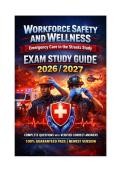
, Workforce Safety and Wellness – Emergency
Care in the Streets Study – EXAM STUDY
GUIDE 2026/2027 COMPLETE QUESTIONS
WITH VERIFIED CORRECT ANSWERS || 100%
GUARANTEED PASS | NEWEST VERSION
1. What is the primary goal of a comprehensive workforce safety and wellness program in
EMS?
A) To increase the number of calls answered.
B) To ensure the physical, mental, and emotional health and safety of providers so they can
deliver optimal patient care.
C) To reduce equipment maintenance costs.
D) To shorten response times.
Answer: B
2. Which of the following is a key reason why EMS providers are at high risk for work-related
injuries and illnesses?
A) Predictable work schedules.
B) Controlled, sterile environments.
C) Unpredictable scenes, physical demands, and potential for violence.
D) Lack of patient interaction.
Answer: C
3. What does the "Culture of Safety" in EMS emphasize?
A) Prioritizing speed over all other considerations.
B) The shared belief that safety is the responsibility of leadership only.
C) The collective commitment by all members to prioritize safety in every action and decision.
D) That safety protocols are optional in emergencies.
Answer: C
4. A comprehensive wellness program addresses which of the following areas?
A) Only physical fitness.
B) Only job skills and training.
C) Physical, mental, emotional, and spiritual well-being.
,D) Only the prevention of infectious diseases.
Answer: C
5. Why is personal health maintenance a critical component of professional readiness for an
EMS provider?
A) It is required for obtaining a driver's license.
B) A healthy provider is less prone to injury, illness, and burnout, and can perform demanding
physical tasks.
C) It allows providers to work unlimited overtime.
D) It is only important for providers over age 50.
Answer: B
6. What is the purpose of establishing infection control policies?
A) To make paperwork more difficult.
B) To protect providers, patients, and the community from the spread of disease.
C) To eliminate the need for immunizations.
D) To increase the use of antibiotics.
Answer: B
7. According to a safety culture, who is responsible for reporting a safety hazard or a near-
miss event?
A) Only the shift supervisor.
B) Only the medical director.
C) Every provider, regardless of rank or role.
D) Only the provider involved in the incident.
Answer: C
8. Which of the following is a benefit of a strong wellness program for an EMS agency?
A) Increased absenteeism and turnover.
B) Decreased morale and job satisfaction.
C) Reduced injury rates, workers' compensation claims, and improved retention.
D) Increased likelihood of medical errors.
Answer: C
9. What is one of the first steps in preventing a line-of-duty injury?
A) Ignoring minor aches and pains.
B) Recognizing potential hazards in your environment.
C) Working through fatigue without breaks.
D) Using equipment only when absolutely necessary.
Answer: B
, 10. The concept of "well-being" in EMS extends beyond the absence of illness to include:
A) Just having a high salary.
B) A state of holistic health where an individual can realize their own abilities and cope with
normal stresses of life.
C) The number of certifications held.
D) The ability to work 24-hour shifts regularly.
Answer: B
Components of Well-Being
1. Holistic well-being for an EMS provider is best described as:
A) Being physically strong.
B) A balance of physical, mental, emotional, and spiritual health.
C) Having a high tolerance for stress.
D) The ability to work long hours without sleep.
Answer: B
2. Which component of well-being involves maintaining a healthy body through diet, exercise,
and sleep?
A) Spiritual Well-Being
B) Mental Well-Being
C) Physical Well-Being
D) Emotional Well-Being
Answer: C
3. The component of well-being that involves processing feelings, building resilience, and
having healthy relationships is:
A) Mental Well-Being
B) Physical Well-Being
C) Emotional Well-Being
D) Spiritual Well-Being
Answer: C
4. What does mental well-being primarily encompass?
A) Cardiovascular endurance.
B) Cognitive abilities, problem-solving, and continuous learning.
C) Religious beliefs.
D) The ability to suppress all emotions.
Answer: B
Care in the Streets Study – EXAM STUDY
GUIDE 2026/2027 COMPLETE QUESTIONS
WITH VERIFIED CORRECT ANSWERS || 100%
GUARANTEED PASS | NEWEST VERSION
1. What is the primary goal of a comprehensive workforce safety and wellness program in
EMS?
A) To increase the number of calls answered.
B) To ensure the physical, mental, and emotional health and safety of providers so they can
deliver optimal patient care.
C) To reduce equipment maintenance costs.
D) To shorten response times.
Answer: B
2. Which of the following is a key reason why EMS providers are at high risk for work-related
injuries and illnesses?
A) Predictable work schedules.
B) Controlled, sterile environments.
C) Unpredictable scenes, physical demands, and potential for violence.
D) Lack of patient interaction.
Answer: C
3. What does the "Culture of Safety" in EMS emphasize?
A) Prioritizing speed over all other considerations.
B) The shared belief that safety is the responsibility of leadership only.
C) The collective commitment by all members to prioritize safety in every action and decision.
D) That safety protocols are optional in emergencies.
Answer: C
4. A comprehensive wellness program addresses which of the following areas?
A) Only physical fitness.
B) Only job skills and training.
C) Physical, mental, emotional, and spiritual well-being.
,D) Only the prevention of infectious diseases.
Answer: C
5. Why is personal health maintenance a critical component of professional readiness for an
EMS provider?
A) It is required for obtaining a driver's license.
B) A healthy provider is less prone to injury, illness, and burnout, and can perform demanding
physical tasks.
C) It allows providers to work unlimited overtime.
D) It is only important for providers over age 50.
Answer: B
6. What is the purpose of establishing infection control policies?
A) To make paperwork more difficult.
B) To protect providers, patients, and the community from the spread of disease.
C) To eliminate the need for immunizations.
D) To increase the use of antibiotics.
Answer: B
7. According to a safety culture, who is responsible for reporting a safety hazard or a near-
miss event?
A) Only the shift supervisor.
B) Only the medical director.
C) Every provider, regardless of rank or role.
D) Only the provider involved in the incident.
Answer: C
8. Which of the following is a benefit of a strong wellness program for an EMS agency?
A) Increased absenteeism and turnover.
B) Decreased morale and job satisfaction.
C) Reduced injury rates, workers' compensation claims, and improved retention.
D) Increased likelihood of medical errors.
Answer: C
9. What is one of the first steps in preventing a line-of-duty injury?
A) Ignoring minor aches and pains.
B) Recognizing potential hazards in your environment.
C) Working through fatigue without breaks.
D) Using equipment only when absolutely necessary.
Answer: B
, 10. The concept of "well-being" in EMS extends beyond the absence of illness to include:
A) Just having a high salary.
B) A state of holistic health where an individual can realize their own abilities and cope with
normal stresses of life.
C) The number of certifications held.
D) The ability to work 24-hour shifts regularly.
Answer: B
Components of Well-Being
1. Holistic well-being for an EMS provider is best described as:
A) Being physically strong.
B) A balance of physical, mental, emotional, and spiritual health.
C) Having a high tolerance for stress.
D) The ability to work long hours without sleep.
Answer: B
2. Which component of well-being involves maintaining a healthy body through diet, exercise,
and sleep?
A) Spiritual Well-Being
B) Mental Well-Being
C) Physical Well-Being
D) Emotional Well-Being
Answer: C
3. The component of well-being that involves processing feelings, building resilience, and
having healthy relationships is:
A) Mental Well-Being
B) Physical Well-Being
C) Emotional Well-Being
D) Spiritual Well-Being
Answer: C
4. What does mental well-being primarily encompass?
A) Cardiovascular endurance.
B) Cognitive abilities, problem-solving, and continuous learning.
C) Religious beliefs.
D) The ability to suppress all emotions.
Answer: B


