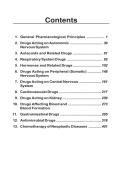
Contents
1. General Pharmacological Principles ................. 1
2. Drugs Acting on Autonomic ............................... 30
Nervous System
3. Autacoids and Related Drugs ............................ 61
4. Respiratory System Drugs .................................. 92
5. Hormones and Related Drugs ........................... 102
6. Drugs Acting on Peripheral (Somatic) ............. 148
Nervous System
7. Drugs Acting on Central Nervous ..................... 161
System
8. Cardiovascular Drugs ........................................ 217
9. Drugs Acting on Kidney ..................................... 259
10. Drugs Affecting Blood and ................................ 273
Blood Formation
11. Gastrointestinal Drugs ....................................... 295
12. Antimicrobial Drugs ........................................... 318
13. Chemotherapy of Neoplastic Diseases ............ 401
, General Pharmacological Principles 1
1
1234567890123456789
1234567890123456789
1234567890123456789
1234567890123456789
1234567890123456789
1234567890123456789
1234567890123456789
1234567890123456789
1234567890123456789
1234567890123456789
1234567890123456789
General Pharmacological
Principles
CHOOSE THE MOST APPROPRIATE RESPONSE
1.1 `Essential drugs’ are:
A. Life saving drugs
B. Drugs that meet the priority health care needs of
the population
C. Drugs that must be present in the emergency
bag of a doctor
D. Drugs that are listed in the pharmacopoia of a
country (p. 5)
1.2 An 'orphan drug' is:
A. A very cheap drug
B. A drug which has no therapeutic use
C. A drug needed for treatment or prevention of a
rare disease
D. A drug which acts on Orphanin receptors
(p. 5, 6)
1.3 Drug administered through the following route is most
likely to be subjected to first-pass metabolism:
A. Oral
B. Sublingual
C. Subcutaneous
D. Rectal (p. 7, 8, 25)
1.1 B 1.2 C 1.3 A
,2 MCQs in Pharmacology
1.4 Transdermal drug delivery systems offer the following
advantages except:
A. They produce high peak plasma concentration
of the drug
B. They produce smooth and nonfluctuating
plasma concentration of the drug
C. They minimise interindividual variations in
the achieved plasma drug concentration
D. They avoid hepatic first-pass metabolism of
the drug (p. 8, 9)
1.5 In addition to slow intravenous infusion, which of the
following routes of administration allows for titration of
the dose of a drug with the response:
A. Sublingual
B. Transdermal
C. Inhalational
D. Nasal insufflation (p. 9)
1.6 Which of the following drugs is administered by intra-
nasal spray/application for systemic action:
A. Phenylephrine
B. Desmopressin
C. Azelastine
D. Beclomethasone dipropionate (p. 9, 540)
1.7 Compared to subcutaneous injection, the intramus-
cular injection of drugs:
A. Is more painful
B. Produces faster response
C. Is unsuitable for depot preparations
D. Carries greater risk of anaphylactic reaction
(p. 9, 10)
1.4 A 1.5 C 1.6 B 1.7 B
, General Pharmacological Principles 3
1.8 Select the route of administration which carries the
highest risk of adversely affecting vital functions:
A. Intra arterial injection
B. Intrathecal injection
C. Intravenous injection
D. Intramuscular injection (p. 10)
2.1 Alkalinization of urine hastens the excretion of:
A. Weakly basic drugs
B. Weakly acidic drugs
C. Strong electrolytes
D. Nonpolar drugs (p. 13, 26)
2.2 Majority of drugs cross biological membranes primarily
by:
A. Passive diffusion
B. Facilitated diffusion
C. Active transport
D. Pinocytosis (p. 12)
2.3 Diffusion of drugs across cell membrane:
A. Is dependent upon metabolic activity of the cell
B. Is competitively inhibited by chemically
related drugs
C. Is affected by extent of ionization of drug mole-
cules
D. Exhibits saturation kinetics (p. 12)
2.4 Which of the following drugs is most likely to be
absorbed from the stomach:
A. Morphine sulfate
B. Diclofenac sodium
C. Hyoscine hydrobromide
D. Quinine dihydrochloride (p. 12)
1.8 C 2.1 B 2.2 A 2.3 C 2.4 B
1. General Pharmacological Principles ................. 1
2. Drugs Acting on Autonomic ............................... 30
Nervous System
3. Autacoids and Related Drugs ............................ 61
4. Respiratory System Drugs .................................. 92
5. Hormones and Related Drugs ........................... 102
6. Drugs Acting on Peripheral (Somatic) ............. 148
Nervous System
7. Drugs Acting on Central Nervous ..................... 161
System
8. Cardiovascular Drugs ........................................ 217
9. Drugs Acting on Kidney ..................................... 259
10. Drugs Affecting Blood and ................................ 273
Blood Formation
11. Gastrointestinal Drugs ....................................... 295
12. Antimicrobial Drugs ........................................... 318
13. Chemotherapy of Neoplastic Diseases ............ 401
, General Pharmacological Principles 1
1
1234567890123456789
1234567890123456789
1234567890123456789
1234567890123456789
1234567890123456789
1234567890123456789
1234567890123456789
1234567890123456789
1234567890123456789
1234567890123456789
1234567890123456789
General Pharmacological
Principles
CHOOSE THE MOST APPROPRIATE RESPONSE
1.1 `Essential drugs’ are:
A. Life saving drugs
B. Drugs that meet the priority health care needs of
the population
C. Drugs that must be present in the emergency
bag of a doctor
D. Drugs that are listed in the pharmacopoia of a
country (p. 5)
1.2 An 'orphan drug' is:
A. A very cheap drug
B. A drug which has no therapeutic use
C. A drug needed for treatment or prevention of a
rare disease
D. A drug which acts on Orphanin receptors
(p. 5, 6)
1.3 Drug administered through the following route is most
likely to be subjected to first-pass metabolism:
A. Oral
B. Sublingual
C. Subcutaneous
D. Rectal (p. 7, 8, 25)
1.1 B 1.2 C 1.3 A
,2 MCQs in Pharmacology
1.4 Transdermal drug delivery systems offer the following
advantages except:
A. They produce high peak plasma concentration
of the drug
B. They produce smooth and nonfluctuating
plasma concentration of the drug
C. They minimise interindividual variations in
the achieved plasma drug concentration
D. They avoid hepatic first-pass metabolism of
the drug (p. 8, 9)
1.5 In addition to slow intravenous infusion, which of the
following routes of administration allows for titration of
the dose of a drug with the response:
A. Sublingual
B. Transdermal
C. Inhalational
D. Nasal insufflation (p. 9)
1.6 Which of the following drugs is administered by intra-
nasal spray/application for systemic action:
A. Phenylephrine
B. Desmopressin
C. Azelastine
D. Beclomethasone dipropionate (p. 9, 540)
1.7 Compared to subcutaneous injection, the intramus-
cular injection of drugs:
A. Is more painful
B. Produces faster response
C. Is unsuitable for depot preparations
D. Carries greater risk of anaphylactic reaction
(p. 9, 10)
1.4 A 1.5 C 1.6 B 1.7 B
, General Pharmacological Principles 3
1.8 Select the route of administration which carries the
highest risk of adversely affecting vital functions:
A. Intra arterial injection
B. Intrathecal injection
C. Intravenous injection
D. Intramuscular injection (p. 10)
2.1 Alkalinization of urine hastens the excretion of:
A. Weakly basic drugs
B. Weakly acidic drugs
C. Strong electrolytes
D. Nonpolar drugs (p. 13, 26)
2.2 Majority of drugs cross biological membranes primarily
by:
A. Passive diffusion
B. Facilitated diffusion
C. Active transport
D. Pinocytosis (p. 12)
2.3 Diffusion of drugs across cell membrane:
A. Is dependent upon metabolic activity of the cell
B. Is competitively inhibited by chemically
related drugs
C. Is affected by extent of ionization of drug mole-
cules
D. Exhibits saturation kinetics (p. 12)
2.4 Which of the following drugs is most likely to be
absorbed from the stomach:
A. Morphine sulfate
B. Diclofenac sodium
C. Hyoscine hydrobromide
D. Quinine dihydrochloride (p. 12)
1.8 C 2.1 B 2.2 A 2.3 C 2.4 B