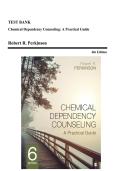
Burns' Pediatric Primary Care
8th Edition
• Author(s)Dawn Lee Garzon, Mary Dirks, Martha
Driessnack, Karen G. Duderstadt, Nan M. Gaylord
Burns Pediatric Primary Care 8th Edition
MCQ Study Guide & Practice Test Bank
1. Question: A 6-month-old infant presents for a well visit.
The caregiver asks whether routine anticipatory guidance
should prioritize injury prevention or immunizations at this
age. Which response best reflects primary care versus
primary prevention in pediatric practice?
A. Emphasize only immunizations because they are
primary prevention; injury prevention is not considered
primary care.
B. Combine immunization counseling with age-specific
, injury-prevention guidance because primary care
integrates health promotion and primary prevention.
C. Defer injury-prevention counseling until the toddler
visits when mobility increases.
D. Focus on treating current illnesses and postpone
preventive topics until next visit.
Correct Answer: B
Rationale: Primary care in pediatrics includes both ongoing
health promotion (anticipatory guidance) and primary
prevention (immunizations, injury prevention). Age-specific
counseling (e.g., safe sleep, car seats) is appropriate at 6
months. Options A, C, and D inappropriately narrow or delay
preventive care.
Citation: Burns’ Pediatric Primary Care, 8th Edition — Chapter 1:
Pediatric Primary Care
2. Question: A 14-year-old with a chronic seizure disorder is
transitioning from pediatric to adult services. Which
approach best reflects an effective transition strategy?
A. Transfer care when the teen turns 18 without prior
planning.
B. Begin transition planning early, involve the youth in self-
management skills, and coordinate with adult providers.
C. Keep the child in pediatric care indefinitely to avoid
disruption.
, D. Notify the family two weeks before transfer that adult
care will take over.
Correct Answer: B
Rationale: Effective transition is a planned, gradual process
starting in early adolescence, emphasizing self-management,
family involvement, and coordination with adult providers. A
and D are abrupt; C may not be feasible or optimal for
independence.
Citation: Burns’ Pediatric Primary Care, 8th Edition — Chapter 1:
Pediatric Primary Care
3. Question: During a well visit, a clinician identifies several
adverse childhood experiences (ACEs) in a 10-year-old’s
history. Which immediate action is the most appropriate
primary care response?
A. Document ACEs and schedule annual follow-up only.
B. Provide trauma-informed care, assess current safety and
functioning, and offer appropriate referrals and supports.
C. Tell the caregiver ACEs are not relevant to physical
health and move on.
D. Recommend psychotropic medication without further
assessment.
Correct Answer: B
Rationale: Recognition of ACEs requires trauma-informed care,
assessment of current risk and functioning, and linkage to
supports (behavioral health, social services). Documentation
, alone is insufficient (A); dismissing ACEs (C) is inappropriate;
starting meds (D) without assessment/referral is premature.
Citation: Burns’ Pediatric Primary Care, 8th Edition — Chapter 1:
Pediatric Primary Care
4. Question: A 3-year-old with complex congenital heart
disease is being seen in a primary care clinic. Which
strategy best exemplifies family-centered care for this
child?
A. Make all decisions without family input to streamline
care.
B. Involve the family in shared decision-making, respect
their values, and coordinate specialty and community
services.
C. Refer the family to specialists and discontinue primary
care involvement.
D. Limit visits to urgent issues only because specialty teams
manage the condition.
Correct Answer: B
Rationale: Family-centered care in pediatrics means partnering
with families for decisions, respecting cultural values, and
coordinating care across services. Options A, C, and D fragment
care and marginalize the family.
Citation: Burns’ Pediatric Primary Care, 8th Edition — Chapter 1:
Pediatric Primary Care
8th Edition
• Author(s)Dawn Lee Garzon, Mary Dirks, Martha
Driessnack, Karen G. Duderstadt, Nan M. Gaylord
Burns Pediatric Primary Care 8th Edition
MCQ Study Guide & Practice Test Bank
1. Question: A 6-month-old infant presents for a well visit.
The caregiver asks whether routine anticipatory guidance
should prioritize injury prevention or immunizations at this
age. Which response best reflects primary care versus
primary prevention in pediatric practice?
A. Emphasize only immunizations because they are
primary prevention; injury prevention is not considered
primary care.
B. Combine immunization counseling with age-specific
, injury-prevention guidance because primary care
integrates health promotion and primary prevention.
C. Defer injury-prevention counseling until the toddler
visits when mobility increases.
D. Focus on treating current illnesses and postpone
preventive topics until next visit.
Correct Answer: B
Rationale: Primary care in pediatrics includes both ongoing
health promotion (anticipatory guidance) and primary
prevention (immunizations, injury prevention). Age-specific
counseling (e.g., safe sleep, car seats) is appropriate at 6
months. Options A, C, and D inappropriately narrow or delay
preventive care.
Citation: Burns’ Pediatric Primary Care, 8th Edition — Chapter 1:
Pediatric Primary Care
2. Question: A 14-year-old with a chronic seizure disorder is
transitioning from pediatric to adult services. Which
approach best reflects an effective transition strategy?
A. Transfer care when the teen turns 18 without prior
planning.
B. Begin transition planning early, involve the youth in self-
management skills, and coordinate with adult providers.
C. Keep the child in pediatric care indefinitely to avoid
disruption.
, D. Notify the family two weeks before transfer that adult
care will take over.
Correct Answer: B
Rationale: Effective transition is a planned, gradual process
starting in early adolescence, emphasizing self-management,
family involvement, and coordination with adult providers. A
and D are abrupt; C may not be feasible or optimal for
independence.
Citation: Burns’ Pediatric Primary Care, 8th Edition — Chapter 1:
Pediatric Primary Care
3. Question: During a well visit, a clinician identifies several
adverse childhood experiences (ACEs) in a 10-year-old’s
history. Which immediate action is the most appropriate
primary care response?
A. Document ACEs and schedule annual follow-up only.
B. Provide trauma-informed care, assess current safety and
functioning, and offer appropriate referrals and supports.
C. Tell the caregiver ACEs are not relevant to physical
health and move on.
D. Recommend psychotropic medication without further
assessment.
Correct Answer: B
Rationale: Recognition of ACEs requires trauma-informed care,
assessment of current risk and functioning, and linkage to
supports (behavioral health, social services). Documentation
, alone is insufficient (A); dismissing ACEs (C) is inappropriate;
starting meds (D) without assessment/referral is premature.
Citation: Burns’ Pediatric Primary Care, 8th Edition — Chapter 1:
Pediatric Primary Care
4. Question: A 3-year-old with complex congenital heart
disease is being seen in a primary care clinic. Which
strategy best exemplifies family-centered care for this
child?
A. Make all decisions without family input to streamline
care.
B. Involve the family in shared decision-making, respect
their values, and coordinate specialty and community
services.
C. Refer the family to specialists and discontinue primary
care involvement.
D. Limit visits to urgent issues only because specialty teams
manage the condition.
Correct Answer: B
Rationale: Family-centered care in pediatrics means partnering
with families for decisions, respecting cultural values, and
coordinating care across services. Options A, C, and D fragment
care and marginalize the family.
Citation: Burns’ Pediatric Primary Care, 8th Edition — Chapter 1:
Pediatric Primary Care