

NSG 4100 Exam 1. Questions and answers
A nurse is caring for a client with end-stage renal disease (ESRD) on hemodialysis. The client asks about
dietary restrictions. Which foods should the nurse recommend as most appropriate for this client?
A. Bananas, oranges, and avocado
B. Apples, cabbage, and rice
C. Potatoes, tomatoes, and spinach
D. Dairy products and nuts
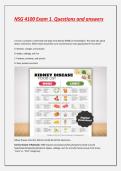
Kidney Disease Food List, Kidney Friendly Renal Diet Awareness ...
Correct Answer: B Rationale: ESRD requires low-potassium/low-phosphorus foods to avoid
hyperkalemia/hyperphosphatemia. Apples, cabbage, and rice are safe choices (visual chart shows
"more" vs. "limit" categories).
,Question 2
A client with chronic kidney disease (CKD) stage 4 asks why magnesium-containing antacids are
contraindicated. What is the nurse's best response?
A. "They can cause hypomagnesemia."
B. "They increase the risk of hypermagnesemia due to reduced excretion."
C. "They interfere with phosphate binders."
D. "They promote metabolic alkalosis."
Correct Answer: B Rationale: Reduced renal excretion in CKD causes magnesium buildup →
hypermagnesemia (symptoms: bradycardia, hypotension). Avoid magnesium antacids.
Question 3
A nurse assesses a client with uremia from ESRD. Which manifestation should the nurse expect as a
classic sign of increased metabolic toxins?
A. Hypotension
B. Pericardial friction rub
C. Hyperactive bowel sounds
D. Clear lung sounds
, Chest x-ray - Pericardial Effusion
Correct Answer: B Rationale: Uremic pericarditis from toxin accumulation causes friction rub and
potential effusion (visible on CXR as enlarged cardiac silhouette). Urgent dialysis needed.
Question 4
A client post-gastrectomy for cancer develops dumping syndrome. Which symptoms should the nurse
anticipate during an episode?
A. Constipation and weight gain
B. Diarrhea, dizziness, and tachycardia shortly after eating
C. Bradycardia and hypertension
D. Early satiety without distress
Dumping syndrome - Nikos Vlachos | General Surgeon
Correct Answer: B Rationale: Rapid emptying causes osmotic shift → vasomotor symptoms
(tachycardia, dizziness, diarrhea) 10-30 min post-meal (diagram shows postgastrectomy mechanisms).
Question 5
A nurse is caring for a client with end-stage renal disease (ESRD) on hemodialysis. The client asks about
dietary restrictions. Which foods should the nurse recommend as most appropriate for this client?
A. Bananas, oranges, and avocado
B. Apples, cabbage, and rice
C. Potatoes, tomatoes, and spinach
D. Dairy products and nuts
Kidney Disease Food List, Kidney Friendly Renal Diet Awareness ...
Correct Answer: B Rationale: ESRD requires low-potassium/low-phosphorus foods to avoid
hyperkalemia/hyperphosphatemia. Apples, cabbage, and rice are safe choices (visual chart shows
"more" vs. "limit" categories).
,Question 2
A client with chronic kidney disease (CKD) stage 4 asks why magnesium-containing antacids are
contraindicated. What is the nurse's best response?
A. "They can cause hypomagnesemia."
B. "They increase the risk of hypermagnesemia due to reduced excretion."
C. "They interfere with phosphate binders."
D. "They promote metabolic alkalosis."
Correct Answer: B Rationale: Reduced renal excretion in CKD causes magnesium buildup →
hypermagnesemia (symptoms: bradycardia, hypotension). Avoid magnesium antacids.
Question 3
A nurse assesses a client with uremia from ESRD. Which manifestation should the nurse expect as a
classic sign of increased metabolic toxins?
A. Hypotension
B. Pericardial friction rub
C. Hyperactive bowel sounds
D. Clear lung sounds
, Chest x-ray - Pericardial Effusion
Correct Answer: B Rationale: Uremic pericarditis from toxin accumulation causes friction rub and
potential effusion (visible on CXR as enlarged cardiac silhouette). Urgent dialysis needed.
Question 4
A client post-gastrectomy for cancer develops dumping syndrome. Which symptoms should the nurse
anticipate during an episode?
A. Constipation and weight gain
B. Diarrhea, dizziness, and tachycardia shortly after eating
C. Bradycardia and hypertension
D. Early satiety without distress
Dumping syndrome - Nikos Vlachos | General Surgeon
Correct Answer: B Rationale: Rapid emptying causes osmotic shift → vasomotor symptoms
(tachycardia, dizziness, diarrhea) 10-30 min post-meal (diagram shows postgastrectomy mechanisms).
Question 5


