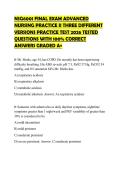
NSG6001 FINAL EXAM ADVANCED
NURSING PRACTICE II THREE DIFFERENT
VERSIONS PRACTICE TEST 2026 TESTED
QUESTIONS WITH 100% CORRECT
ANSWERS GRADED A+
⩥ Mr. Marks, age 54, has COPD. He recently has been experiecing
difficulty breathing. His ABG reveals: pH 7.3, PaO2 57 Hg, PaCO2 54
mmHg, and O2 saturation 84% Mr. Marks has:
A) respiratory acidosis
B) respiratory alkalosis
C) metabolic acidosis
D) metabolic alkalosis. Answer: A) respiratory acidosis
⩥ Someone with asham who as daily daytime symptoms, nighttime
symptoms greater than 1 night/week and PEF variability of greater than
30% is considered to be:
A) mild intermittent
B) mild peristent
C) moderate persistent
D) severe persistent. Answer: C) moderate persistent
,⩥ risk factors for pulm ebolism in womn include all except:
A) obesity
B)alcohol intake
C) smoking
D) hypertension. Answer: B) alcohol intake
⩥ increased tactle fremitus occurs with:
A) pleural effusion
B) lobar pneumonia
C) pneumothorax
D) emphysema. Answer: B) lobar pneumonia
⩥ hyperresonance on percussion of the chest occurs with
A) emphysema
B)pnumonia
C) pleural effusion
D) lung tumor. Answer: A) emphysema
⩥ the inspiratory rate equals the expiratory rate with which breath sound
A) bronchial
B) bronchovesicular
C)vesicular
,D)tracheal. Answer: A) bronchial
⩥ with which voice sound technique do you normally hear a muddld
"eeee" through the stethoscope on auscultting the chest when the client
says "eeee"
A) bronchophony
B) egophony
C) whispered pectoriloquy
D) tonometry. Answer: B) egophony
⩥ what is the name of the horizontal groove in the rib cage at the level
of the diaphragm, extending from the sternu to the midaxillary line, that
occurs normal in some children as well as in children with rickets?
A) the sternal grooe
B) the rickettsial groove
C) the manubrial groove
D) harrison's groove. Answer: D) harrison's groove
⩥ stridor can be heard on auscultation when a patient has
A)atelectasis
B)asthma
C)diaphragmatic hernia
D)acute epiglottis. Answer: D) acute epiglottis
, ⩥ what is the definition of the spirometric assessment of resdual volume
A)sum of vital capacity and residual volume
B) amount of gas left in the lung after exhaling all that is physically
possible
C)volume that can be maximally exhaled after a passive exhalation
D)measurement of the max flow rate during the forced capacity
maneuver. Answer: B) amount of gas left in the lung after exhaling all
that is physically possible
⩥ which conditions is characterstic by intermittent airway obstruction
caused by bronchospasm, excessive bronchial secretions, or edema of
bronchial mucosa?
A)asthma
B)atelectasis
C)acute bronchitis
D)emphysema. Answer: A)asthma
⩥ which conditon would you assess vesicular breath sounds, moderate
vocal resonance, and localized crackles with sibilant wheezes?
A)bronchiectasis
B)acute bronchitis
C)emphysema
D)asthma. Answer: B) acute bronchitis
NURSING PRACTICE II THREE DIFFERENT
VERSIONS PRACTICE TEST 2026 TESTED
QUESTIONS WITH 100% CORRECT
ANSWERS GRADED A+
⩥ Mr. Marks, age 54, has COPD. He recently has been experiecing
difficulty breathing. His ABG reveals: pH 7.3, PaO2 57 Hg, PaCO2 54
mmHg, and O2 saturation 84% Mr. Marks has:
A) respiratory acidosis
B) respiratory alkalosis
C) metabolic acidosis
D) metabolic alkalosis. Answer: A) respiratory acidosis
⩥ Someone with asham who as daily daytime symptoms, nighttime
symptoms greater than 1 night/week and PEF variability of greater than
30% is considered to be:
A) mild intermittent
B) mild peristent
C) moderate persistent
D) severe persistent. Answer: C) moderate persistent
,⩥ risk factors for pulm ebolism in womn include all except:
A) obesity
B)alcohol intake
C) smoking
D) hypertension. Answer: B) alcohol intake
⩥ increased tactle fremitus occurs with:
A) pleural effusion
B) lobar pneumonia
C) pneumothorax
D) emphysema. Answer: B) lobar pneumonia
⩥ hyperresonance on percussion of the chest occurs with
A) emphysema
B)pnumonia
C) pleural effusion
D) lung tumor. Answer: A) emphysema
⩥ the inspiratory rate equals the expiratory rate with which breath sound
A) bronchial
B) bronchovesicular
C)vesicular
,D)tracheal. Answer: A) bronchial
⩥ with which voice sound technique do you normally hear a muddld
"eeee" through the stethoscope on auscultting the chest when the client
says "eeee"
A) bronchophony
B) egophony
C) whispered pectoriloquy
D) tonometry. Answer: B) egophony
⩥ what is the name of the horizontal groove in the rib cage at the level
of the diaphragm, extending from the sternu to the midaxillary line, that
occurs normal in some children as well as in children with rickets?
A) the sternal grooe
B) the rickettsial groove
C) the manubrial groove
D) harrison's groove. Answer: D) harrison's groove
⩥ stridor can be heard on auscultation when a patient has
A)atelectasis
B)asthma
C)diaphragmatic hernia
D)acute epiglottis. Answer: D) acute epiglottis
, ⩥ what is the definition of the spirometric assessment of resdual volume
A)sum of vital capacity and residual volume
B) amount of gas left in the lung after exhaling all that is physically
possible
C)volume that can be maximally exhaled after a passive exhalation
D)measurement of the max flow rate during the forced capacity
maneuver. Answer: B) amount of gas left in the lung after exhaling all
that is physically possible
⩥ which conditions is characterstic by intermittent airway obstruction
caused by bronchospasm, excessive bronchial secretions, or edema of
bronchial mucosa?
A)asthma
B)atelectasis
C)acute bronchitis
D)emphysema. Answer: A)asthma
⩥ which conditon would you assess vesicular breath sounds, moderate
vocal resonance, and localized crackles with sibilant wheezes?
A)bronchiectasis
B)acute bronchitis
C)emphysema
D)asthma. Answer: B) acute bronchitis