

NUR242 MED SURG EXAM 4 2026 FINAL
REVIEW WITH EXPLANATORY ANSWERS
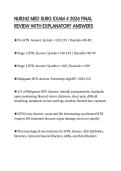
◉ Pre-HTN. Answer: Systolic =120-139 / Diastolic=80-89
◉ Stage 1 HTN. Answer: Systolic=140-159 / Diastolic=90-99
◉ Stage 2 HTN. Answer: Systolic=>160 / Diastolic=>100
◉ Malignant HTN. Answer: Extremely high BP >180/110
◉ S/S of Malignant HTN. Answer: initially asymptomatic, headache
upon awakening, blurred vision, dizziness, chest pain, difficult
breathing, numbness in face and legs, tinnitus, flushed face, epistaxis
◉ HTN Crisis. Answer: acute and life threatening; accelerated HTN
requires ER treatment because organ damage can occur quickly
◉ Pharmacological interventions for HTN. Answer: ACE Inhibitors,
Diuretics, Calcium Channel Blockers, ARBs, and Beta Blockers
,◉ What symptom should you report right away with ACE
Inhibitors?. Answer: Dry nagging cough- discontinue immediately
and teach about orthostatic HTN in elderly
◉ What is an example of an ACE inhibitor drug?. Answer: Lisinopril,
Enalapril
◉ What is an example of a Calcium Channel Blocker?. Answer:
Verapamil, Amlodopine
◉ What is an example of an ARB?. Answer: Losartan, Valsartan
◉ What is an example of a Beta Blocker?. Answer: Metoprolol,
Atenolol
◉ Pt. teaching for Raynauds disease. Answer: Stop smoking, avoid
cold and stress, wear warm clothing, take vasodilators as prescribed
◉ Pt. teaching for Burgers Disease. Answer: Use vasodilators as
prescribed, smoking cessation, avoid injury to upper and lower
extremities, can cause gangrene
, ◉ S/S of Peripheral Arterial Disease (PAD). Answer: Leg pain,
burning, cramping muscle discomfort when walking that stops at
rest. As the disease persists the pt can walk shorter distances
◉ Post-OP Care for Femoral Artery Bypass graft?. Answer: warmth,
redness and edema are expected. Monitor for possible occlusion and
continuous aching pain (first sign of occlusion) Throbbing pain is
due to increased blood flow to the area.
◉ Notify the physician immediately if they experience what S/S after
a femoral artery graft?. Answer: Cold, pale, cyanotic skin or
decreased pulse
◉ Amputation complications:. Answer: infection, phantom limb
pain, flexion contractions
◉ Amputation Post-OP care:. Answer: -DO NOT elevate limb on
pillow (can cause flexion contractures)
-1st 24 hours elevate the foot of the bed to decrease edema then
keep the bed flat
-24-48 hours- place the pt. in prone position to stretch muscles and
prevent hip flexion contractures
◉ Pt with a DVT is at high risk for?. Answer: PE
REVIEW WITH EXPLANATORY ANSWERS
◉ Pre-HTN. Answer: Systolic =120-139 / Diastolic=80-89
◉ Stage 1 HTN. Answer: Systolic=140-159 / Diastolic=90-99
◉ Stage 2 HTN. Answer: Systolic=>160 / Diastolic=>100
◉ Malignant HTN. Answer: Extremely high BP >180/110
◉ S/S of Malignant HTN. Answer: initially asymptomatic, headache
upon awakening, blurred vision, dizziness, chest pain, difficult
breathing, numbness in face and legs, tinnitus, flushed face, epistaxis
◉ HTN Crisis. Answer: acute and life threatening; accelerated HTN
requires ER treatment because organ damage can occur quickly
◉ Pharmacological interventions for HTN. Answer: ACE Inhibitors,
Diuretics, Calcium Channel Blockers, ARBs, and Beta Blockers
,◉ What symptom should you report right away with ACE
Inhibitors?. Answer: Dry nagging cough- discontinue immediately
and teach about orthostatic HTN in elderly
◉ What is an example of an ACE inhibitor drug?. Answer: Lisinopril,
Enalapril
◉ What is an example of a Calcium Channel Blocker?. Answer:
Verapamil, Amlodopine
◉ What is an example of an ARB?. Answer: Losartan, Valsartan
◉ What is an example of a Beta Blocker?. Answer: Metoprolol,
Atenolol
◉ Pt. teaching for Raynauds disease. Answer: Stop smoking, avoid
cold and stress, wear warm clothing, take vasodilators as prescribed
◉ Pt. teaching for Burgers Disease. Answer: Use vasodilators as
prescribed, smoking cessation, avoid injury to upper and lower
extremities, can cause gangrene
, ◉ S/S of Peripheral Arterial Disease (PAD). Answer: Leg pain,
burning, cramping muscle discomfort when walking that stops at
rest. As the disease persists the pt can walk shorter distances
◉ Post-OP Care for Femoral Artery Bypass graft?. Answer: warmth,
redness and edema are expected. Monitor for possible occlusion and
continuous aching pain (first sign of occlusion) Throbbing pain is
due to increased blood flow to the area.
◉ Notify the physician immediately if they experience what S/S after
a femoral artery graft?. Answer: Cold, pale, cyanotic skin or
decreased pulse
◉ Amputation complications:. Answer: infection, phantom limb
pain, flexion contractions
◉ Amputation Post-OP care:. Answer: -DO NOT elevate limb on
pillow (can cause flexion contractures)
-1st 24 hours elevate the foot of the bed to decrease edema then
keep the bed flat
-24-48 hours- place the pt. in prone position to stretch muscles and
prevent hip flexion contractures
◉ Pt with a DVT is at high risk for?. Answer: PE


