
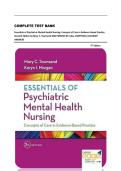
COMPLETE TEST BANK
Essentials of Psychiatric Mental Health Nursing: Concepts of Care in Evidence-Based Practice
Seventh Edition by Mary C. Townsend DSN PMHCNS-BC||ALL CHAPTERS||ACCURATE
ANSWERS
7th Edition
,Table of Contents
UNIT: Introduction to Psychiatric/Mental Health Concepts .................... 4
Chapter 1. Mental Health and Mental Illness ............................................................................. 4
Chapter 2. Biological Implications ............................................................................................. 11
Chapter 3. Ethical and Legal Issues ........................................................................................... 19
Chapter 4. Psychopharmacology .............................................................................................. 29
Chapter 5. Cultural and Spiritual Concepts Relevant to Psychiatric/Mental Health Nursing ... 40
UNIT II. Psychiatric/Mental Health Nursing Interventions .................... 51
Chapter 6. Relationship Development and Therapeutic Communication ................................ 51
Chapter 7. The Nursing Process in Psychiatric/Mental Health Nursing .................................... 61
Chapter 8. Milieu Therapy – The Therapeutic Community ...................................................... 70
Chapter 9. Intervention in Groups ............................................................................................ 76
Chapter 10. Crisis Intervention (new title – was called Intervening in Crisis) .......................... 85
Chapter 11. The Recovery Model.............................................................................................. 94
Chapter 12. Suicide Prevention ............................................................................................... 103
UNIT III. Care of Clients with Psychiatric Disorders ........................... 112
Chapter 13. Neurocognitive Disorders .................................................................................... 112
Chapter 14. Substance Use and Addictive Disorders .............................................................. 122
Chapter 15. Schizophrenia Spectrum and Other Psychotic Disorders .................................... 137
Chapter 16. Depressive Disorders ........................................................................................... 152
Chapter 17. Bipolar and Related Disorders ............................................................................. 167
Chapter 18. Anxiety, Obsessive-Compulsive, and Related Disorders ..................................... 176
Chapter 19. Trauma- and Stressor-Related Disorders............................................................. 190
Chapter 20. Somatic Symptom and Dissociative Disorders .................................................... 204
Chapter 21. Issues Related to Human Sexuality and Gender Dysphoria ................................ 213
Chapter 22. Eating Disorders .................................................................................................. 223
Chapter 23. Personality Disorders .......................................................................................... 230
UNIT IV. Psychiatric Mental Health Nursing of Special Populations .. 247
Chapter 24. Children and Adolescents.................................................................................... 247
,Chapter 25. The Aging Individual ............................................................................................ 258
Chapter 26. Survivors of Abuse and Neglect .......................................................................... 267
Chapter 27. Community Mental Health Nursing .................................................................... 277
Chapter 28. The Bereaved Individual ...................................................................................... 286
Chapter 29. Military Families .................................................................................................. 294
, UNIT: Introduction to Psychiatric/Mental Health Concepts
Chapter 1. Mental Health and Mental Illness
Multiple Choice
1. A nurse is assessing a client who is experiencing occasional feelings of sadness because
of the recent death of a beloved pet. The clients appetite, sleep patterns, and daily routine have
not changed. How should the nurse interpret the clients behaviors?
1. The clients behaviors demonstrate mental illness in the form of depression.
2. The clients behaviors are extensive, which indicates the presence of mental illness.
3. The clients behaviors are not congruent with cultural norms.
4. The clients behaviors demonstrate no functional impairment, indicating no mental
illness.
ACCURATE ANSWER: 4
Rationale: The nurse should assess that the clients daily functioning is not impaired. The client
who experiences feelings of sadness after the loss of a pet is responding within normal
expectations. Without significant impairment, the clients distress does not indicate a mental
illness.
Cognitive Level: Analysis Integrated Process: Assessment
2. At what point should the nurse determine that a client is at risk for developing a mental
illness?
1. When thoughts, feelings, and behaviors are not reflective of the DSM-5 criteria.
2. When maladaptive responses to stress are coupled with interference in daily
functioning.
3. When a client communicates significant distress.
4. When a client uses defense mechanisms as ego protection.
ACCURATE ANSWER: 2
Rationale: The nurse should determine that the client is at risk for mental illness when
responses to stress are maladaptive and interfere with daily functioning. The DSM-5 indicates
Essentials of Psychiatric Mental Health Nursing: Concepts of Care in Evidence-Based Practice
Seventh Edition by Mary C. Townsend DSN PMHCNS-BC||ALL CHAPTERS||ACCURATE
ANSWERS
7th Edition
,Table of Contents
UNIT: Introduction to Psychiatric/Mental Health Concepts .................... 4
Chapter 1. Mental Health and Mental Illness ............................................................................. 4
Chapter 2. Biological Implications ............................................................................................. 11
Chapter 3. Ethical and Legal Issues ........................................................................................... 19
Chapter 4. Psychopharmacology .............................................................................................. 29
Chapter 5. Cultural and Spiritual Concepts Relevant to Psychiatric/Mental Health Nursing ... 40
UNIT II. Psychiatric/Mental Health Nursing Interventions .................... 51
Chapter 6. Relationship Development and Therapeutic Communication ................................ 51
Chapter 7. The Nursing Process in Psychiatric/Mental Health Nursing .................................... 61
Chapter 8. Milieu Therapy – The Therapeutic Community ...................................................... 70
Chapter 9. Intervention in Groups ............................................................................................ 76
Chapter 10. Crisis Intervention (new title – was called Intervening in Crisis) .......................... 85
Chapter 11. The Recovery Model.............................................................................................. 94
Chapter 12. Suicide Prevention ............................................................................................... 103
UNIT III. Care of Clients with Psychiatric Disorders ........................... 112
Chapter 13. Neurocognitive Disorders .................................................................................... 112
Chapter 14. Substance Use and Addictive Disorders .............................................................. 122
Chapter 15. Schizophrenia Spectrum and Other Psychotic Disorders .................................... 137
Chapter 16. Depressive Disorders ........................................................................................... 152
Chapter 17. Bipolar and Related Disorders ............................................................................. 167
Chapter 18. Anxiety, Obsessive-Compulsive, and Related Disorders ..................................... 176
Chapter 19. Trauma- and Stressor-Related Disorders............................................................. 190
Chapter 20. Somatic Symptom and Dissociative Disorders .................................................... 204
Chapter 21. Issues Related to Human Sexuality and Gender Dysphoria ................................ 213
Chapter 22. Eating Disorders .................................................................................................. 223
Chapter 23. Personality Disorders .......................................................................................... 230
UNIT IV. Psychiatric Mental Health Nursing of Special Populations .. 247
Chapter 24. Children and Adolescents.................................................................................... 247
,Chapter 25. The Aging Individual ............................................................................................ 258
Chapter 26. Survivors of Abuse and Neglect .......................................................................... 267
Chapter 27. Community Mental Health Nursing .................................................................... 277
Chapter 28. The Bereaved Individual ...................................................................................... 286
Chapter 29. Military Families .................................................................................................. 294
, UNIT: Introduction to Psychiatric/Mental Health Concepts
Chapter 1. Mental Health and Mental Illness
Multiple Choice
1. A nurse is assessing a client who is experiencing occasional feelings of sadness because
of the recent death of a beloved pet. The clients appetite, sleep patterns, and daily routine have
not changed. How should the nurse interpret the clients behaviors?
1. The clients behaviors demonstrate mental illness in the form of depression.
2. The clients behaviors are extensive, which indicates the presence of mental illness.
3. The clients behaviors are not congruent with cultural norms.
4. The clients behaviors demonstrate no functional impairment, indicating no mental
illness.
ACCURATE ANSWER: 4
Rationale: The nurse should assess that the clients daily functioning is not impaired. The client
who experiences feelings of sadness after the loss of a pet is responding within normal
expectations. Without significant impairment, the clients distress does not indicate a mental
illness.
Cognitive Level: Analysis Integrated Process: Assessment
2. At what point should the nurse determine that a client is at risk for developing a mental
illness?
1. When thoughts, feelings, and behaviors are not reflective of the DSM-5 criteria.
2. When maladaptive responses to stress are coupled with interference in daily
functioning.
3. When a client communicates significant distress.
4. When a client uses defense mechanisms as ego protection.
ACCURATE ANSWER: 2
Rationale: The nurse should determine that the client is at risk for mental illness when
responses to stress are maladaptive and interfere with daily functioning. The DSM-5 indicates


