TESTBANKS BY TESTBANKSNERD
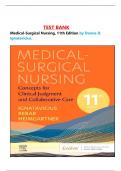
Test Bank for Applied Pathophysiology For The Advanced Practice Nurse 2nd Edition
By Lucie Dlugasch; Lachel Story
All Chapters (1-14)| Expert Verified Answers |Graded A+
1|Page
,TESTBANKS BY TESTBANKSNERD
TABLE OF CONTENT
Chapter 1 Cellular Function
Chapter 2 Immunity
Chapter 3 Hematopoietic Function
Chapter 4 Cardiovascular Function
Chapter 5 Pulmonary Function
Chapter 6 Fluid, Electrolyte, and Acid-Base Homeostasis
Chapter 7 Urinary Function
Chapter 8 Reproductive Function
Chapter 9 Gastrointestinal Function
Chapter 10 Endocrine Function
Chapter 11 Neural Function
Chapter 12 Musculoskeletal Function
Chapter 13 Integumentary Function
Chapter 14 Sensory Function
2|Page
,TESTBANKS BY TESTBANKSNERD
Answers at the End of Each Chapter
Chapter 1 Cellular Function
1. The nucleus
, which is essential for function and survival of th e cell.
A) is the site of protein synthesis
B) contains the genetic code
C) transforms cellular energy
D) initiates aerobic metabolism
2.
Although energy is not made in mitochondria, they are known as the po wer plants of the cell
because they:
A) contain RNA for protein synthesis.
B) utilize glycolysis for oxidative energy.
C) extract energy from organic compounds.
D) store calcium bonds for muscle contractions.
3.
Although the basic structure of the cell plasma membrane is formed b y a lipid bilayer, most of the
specific membrane functions are carried o
ut by:
A) bound and transmembrane proteins.
B) complex, long carbohydrate chains.
C) surface antigens and hormone receptors.
D) a gating system of selective ion channels.
4. To effectively relay signals, cell-to-
3|Page
, TESTBANKS BY TESTBANKSNERD
cell communication utilizes chemical messenger systems that:
A) displace surface receptor proteins.
B) accumulate within cell gap junctions.
C) bind to contractile microfilaments.
D) release secretions into extracellular fluid.
5.
Aerobic metabolism, also known as oxidative metabolism, provides ener gy by:
A) removing the phosphate bonds from ATP.
B) combining hydrogen and oxygen to form water.
C) activating pyruvate stored in the cytoplasm.
D) breaking down glucose to form lactic acid.
6. Exocytosis, the reverse of endocytosis, is important in
into the extracellular fluid.
A) Engulfing and ingesting fluid and proteins for transport
B) Killing, degrading, and dissolving harmful microorganisms
C) Removing cellular debris and releasing synthesized substances
D) Destruction of particles by lysosomal enzymes for secretion
7.
The process responsible for generating and conducting membrane potenti als is:
A) diffusion of current-carrying ions.
B) millivoltage of electrical potential.
C) polarization of charged particles.
4|Page
Test Bank for Applied Pathophysiology For The Advanced Practice Nurse 2nd Edition
By Lucie Dlugasch; Lachel Story
All Chapters (1-14)| Expert Verified Answers |Graded A+
1|Page
,TESTBANKS BY TESTBANKSNERD
TABLE OF CONTENT
Chapter 1 Cellular Function
Chapter 2 Immunity
Chapter 3 Hematopoietic Function
Chapter 4 Cardiovascular Function
Chapter 5 Pulmonary Function
Chapter 6 Fluid, Electrolyte, and Acid-Base Homeostasis
Chapter 7 Urinary Function
Chapter 8 Reproductive Function
Chapter 9 Gastrointestinal Function
Chapter 10 Endocrine Function
Chapter 11 Neural Function
Chapter 12 Musculoskeletal Function
Chapter 13 Integumentary Function
Chapter 14 Sensory Function
2|Page
,TESTBANKS BY TESTBANKSNERD
Answers at the End of Each Chapter
Chapter 1 Cellular Function
1. The nucleus
, which is essential for function and survival of th e cell.
A) is the site of protein synthesis
B) contains the genetic code
C) transforms cellular energy
D) initiates aerobic metabolism
2.
Although energy is not made in mitochondria, they are known as the po wer plants of the cell
because they:
A) contain RNA for protein synthesis.
B) utilize glycolysis for oxidative energy.
C) extract energy from organic compounds.
D) store calcium bonds for muscle contractions.
3.
Although the basic structure of the cell plasma membrane is formed b y a lipid bilayer, most of the
specific membrane functions are carried o
ut by:
A) bound and transmembrane proteins.
B) complex, long carbohydrate chains.
C) surface antigens and hormone receptors.
D) a gating system of selective ion channels.
4. To effectively relay signals, cell-to-
3|Page
, TESTBANKS BY TESTBANKSNERD
cell communication utilizes chemical messenger systems that:
A) displace surface receptor proteins.
B) accumulate within cell gap junctions.
C) bind to contractile microfilaments.
D) release secretions into extracellular fluid.
5.
Aerobic metabolism, also known as oxidative metabolism, provides ener gy by:
A) removing the phosphate bonds from ATP.
B) combining hydrogen and oxygen to form water.
C) activating pyruvate stored in the cytoplasm.
D) breaking down glucose to form lactic acid.
6. Exocytosis, the reverse of endocytosis, is important in
into the extracellular fluid.
A) Engulfing and ingesting fluid and proteins for transport
B) Killing, degrading, and dissolving harmful microorganisms
C) Removing cellular debris and releasing synthesized substances
D) Destruction of particles by lysosomal enzymes for secretion
7.
The process responsible for generating and conducting membrane potenti als is:
A) diffusion of current-carrying ions.
B) millivoltage of electrical potential.
C) polarization of charged particles.
4|Page