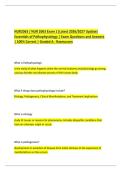
NUR2063 / NUR 2063 Exam 1 (Latest 2026/2027 Update)
Essentials of Pathophysiology | Exam Questions and Answers
| 100% Correct | Graded A - Rasmussen
What is Pathophysiology
is the study of what happens when the normal anatomy and physiology go wrong,
causing disorder and disease process of the human body.
What 4 things does pathophysiology include?
Etiology, Pathogenesis, Clinical Manifestations, and Treatment Implications
What is etiology
study of causes or reasons for phenomena. Includes Idiopathic conditions that
have an unknown origin or cause.
What is pathogenesis?
development or evolution of disease from initial stimulus to the expression of
manifestations as time occurs.
,What are clinical manifestations?
Signs and symptoms of disorder.
What are symptoms?
Subjective feelings of abnormality in the body.
What is objective data
What you observe and can measure.
What are examples of objective
data? rash, low blood pressure,
bleeding
What is subjective data?
,What the patient may report to you
What are examples of subjective
data? pain scale, they feel suicidal,
fatigued.
What are treatment implications?
Which combine the etology, pathogenesis, and clinical manifestations to
determine the best treatment of condition per individual.
What are signs?
Objective or observed manifestations of disease.
What is epidemiology?
study of the patterns of disease involving populations. Based on the spread and
contact of diseases in people.
, What are the levels of disease prevention?
Primary, Secondary, Tertiary
Explain Primary Prevention
"Preventing"; altering susceptibility or reducing exposure of disease for people.
Examples of Secondary Prevention
PAP smears for STDs, lab work for HBA1C check, mammogram
Explain Tertiary Prevention
"Treating" and preventing further complications from a disorder or disease after
the person has the condition
Essentials of Pathophysiology | Exam Questions and Answers
| 100% Correct | Graded A - Rasmussen
What is Pathophysiology
is the study of what happens when the normal anatomy and physiology go wrong,
causing disorder and disease process of the human body.
What 4 things does pathophysiology include?
Etiology, Pathogenesis, Clinical Manifestations, and Treatment Implications
What is etiology
study of causes or reasons for phenomena. Includes Idiopathic conditions that
have an unknown origin or cause.
What is pathogenesis?
development or evolution of disease from initial stimulus to the expression of
manifestations as time occurs.
,What are clinical manifestations?
Signs and symptoms of disorder.
What are symptoms?
Subjective feelings of abnormality in the body.
What is objective data
What you observe and can measure.
What are examples of objective
data? rash, low blood pressure,
bleeding
What is subjective data?
,What the patient may report to you
What are examples of subjective
data? pain scale, they feel suicidal,
fatigued.
What are treatment implications?
Which combine the etology, pathogenesis, and clinical manifestations to
determine the best treatment of condition per individual.
What are signs?
Objective or observed manifestations of disease.
What is epidemiology?
study of the patterns of disease involving populations. Based on the spread and
contact of diseases in people.
, What are the levels of disease prevention?
Primary, Secondary, Tertiary
Explain Primary Prevention
"Preventing"; altering susceptibility or reducing exposure of disease for people.
Examples of Secondary Prevention
PAP smears for STDs, lab work for HBA1C check, mammogram
Explain Tertiary Prevention
"Treating" and preventing further complications from a disorder or disease after
the person has the condition