
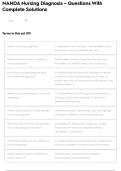
NANDA Nursing Diagnosis – Questions With
Complete Solutions
Save
Terms in this set (19)
What is a nursing diagnosis? A statement of the red flag or risk identified in your
assessment, guiding individualized care.
What are the first steps in creating a Gather data, including subjective and objective
nursing diagnosis? information, to identify needs, risks, and issues.
How does a nursing diagnosis differ A medical diagnosis deals with diseases or medical
from a medical diagnosis? conditions, while a nursing diagnosis focuses on
human responses to bio-psycho-social stressors and
health problems.
What are the components of a nursing 1. Problem/Need (NANDA approved statement), 2.
diagnosis? Etiology (cause of the problem), 3. Symptoms
(assessment evidence).
What is the purpose of clustering data To prioritize needs, identify high risks, and highlight
in nursing diagnosis? red flags for effective intervention planning.
What does the 'Problem Focused' part It identifies the actual issue or high risk, usually
of a nursing diagnosis indicate? beginning with terms like impaired, altered,
decreased, or ineffective.
What does 'Related To' (r/t) signify in a It indicates factors contributing to the problem and
nursing diagnosis? must be modifiable through nursing interventions.
What categories can the 'Related To' Pathophysical, Environmental, Situational,
factors fall into? Psychological, and Maturational.
Complete Solutions
Save
Terms in this set (19)
What is a nursing diagnosis? A statement of the red flag or risk identified in your
assessment, guiding individualized care.
What are the first steps in creating a Gather data, including subjective and objective
nursing diagnosis? information, to identify needs, risks, and issues.
How does a nursing diagnosis differ A medical diagnosis deals with diseases or medical
from a medical diagnosis? conditions, while a nursing diagnosis focuses on
human responses to bio-psycho-social stressors and
health problems.
What are the components of a nursing 1. Problem/Need (NANDA approved statement), 2.
diagnosis? Etiology (cause of the problem), 3. Symptoms
(assessment evidence).
What is the purpose of clustering data To prioritize needs, identify high risks, and highlight
in nursing diagnosis? red flags for effective intervention planning.
What does the 'Problem Focused' part It identifies the actual issue or high risk, usually
of a nursing diagnosis indicate? beginning with terms like impaired, altered,
decreased, or ineffective.
What does 'Related To' (r/t) signify in a It indicates factors contributing to the problem and
nursing diagnosis? must be modifiable through nursing interventions.
What categories can the 'Related To' Pathophysical, Environmental, Situational,
factors fall into? Psychological, and Maturational.


