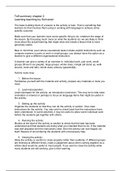
Tefl summary chapter 2
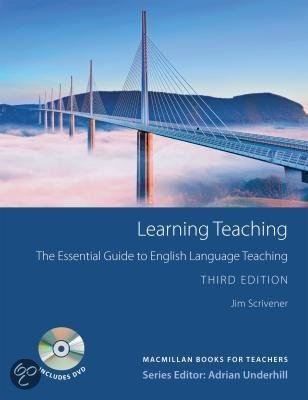
Learning teaching by Scrivener
The basic building block of a lesson is the activity or task. That is something that
learners do that involves them using or working with language to achieve some
specific outcome.
Make sure that your learners have some specific thing to do, whatever the stage of
the lesson. By focussing much more on what the students do, we are likely to think
more about the actual learning that might arise and create a lesson that is more
genuinely useful.
Bear in mind that, even where coursebook tasks include explicit instructions such as
compare answers in pairs or work in small groups, you always have the option as a
teacher to give a different organisational instruction.
A teacher can give a variety of an exercise in: individual work, pair work, small
groups (three to six people), large groups, whole class: mingle (all stand up, walk
around, meet and talk), whole class: plenary (gezamelijk).
Activity route map:
1. Before the lesson
Familiarise yourself with the material and activity; prepare any materials or texts you
need.
2. Lead-in/preparation:
Lead-in/prepare for the activity: an introduction (exercise). This may be to help raise
motivation or interest or perhaps to focus on language items that might be useful in
the activity.
3. Setting up the activity:
Organise the students so that they can do the activity or section. Give clear
instructions for the activity. You may wish to check back that the instructions have
been understood. In some activities, it may be useful to allow some individual work
before the students get together with others.
4. Running the activity:
Monitor at the start of the activity or section to check that the task has been
understood and that students are doing what you intended them to do. If the material
was well prepared and the instructions clear, then the activity can now largely run
itself. Beware of encumbering the students with unnecessary help.
5. Closing the activity:
Allow the activity or section to close properly rather than suddenly. If different groups
are finishing at different times, make a judgement about when coming together as a
whole class would be useful to most people. If you want to close the activity while
many students are still working, give a time warning.
Learning teaching by Scrivener
The basic building block of a lesson is the activity or task. That is something that
learners do that involves them using or working with language to achieve some
specific outcome.
Make sure that your learners have some specific thing to do, whatever the stage of
the lesson. By focussing much more on what the students do, we are likely to think
more about the actual learning that might arise and create a lesson that is more
genuinely useful.
Bear in mind that, even where coursebook tasks include explicit instructions such as
compare answers in pairs or work in small groups, you always have the option as a
teacher to give a different organisational instruction.
A teacher can give a variety of an exercise in: individual work, pair work, small
groups (three to six people), large groups, whole class: mingle (all stand up, walk
around, meet and talk), whole class: plenary (gezamelijk).
Activity route map:
1. Before the lesson
Familiarise yourself with the material and activity; prepare any materials or texts you
need.
2. Lead-in/preparation:
Lead-in/prepare for the activity: an introduction (exercise). This may be to help raise
motivation or interest or perhaps to focus on language items that might be useful in
the activity.
3. Setting up the activity:
Organise the students so that they can do the activity or section. Give clear
instructions for the activity. You may wish to check back that the instructions have
been understood. In some activities, it may be useful to allow some individual work
before the students get together with others.
4. Running the activity:
Monitor at the start of the activity or section to check that the task has been
understood and that students are doing what you intended them to do. If the material
was well prepared and the instructions clear, then the activity can now largely run
itself. Beware of encumbering the students with unnecessary help.
5. Closing the activity:
Allow the activity or section to close properly rather than suddenly. If different groups
are finishing at different times, make a judgement about when coming together as a
whole class would be useful to most people. If you want to close the activity while
many students are still working, give a time warning.