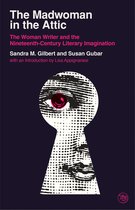
Sandra M. Gilbert and Susan Gubar, The Madwoman in the Attic: The Female Writer and the
Nineteenth-Century Literary Imagination (Yale University Press, 1979)
A Secret, Inward Wound: The Professor’s Pupil
‘the entranced obsessiveness with which she worked out recurrent themes and
metaphors seems to have been determined primarily by her gender, her sense of her
difficult sexual destiny, and her anxiety about her anomalous, “orphaned” position in
the world’ (p.312.)
Nineteenth- century women wrote obsessively ‘about their feelings of enclosure in
“feminine” roles and patriarchal houses, and wrote, too, about their passionate desire
to flee such roles or houses’ (p.313.)
G&G talk about the extent ‘to which her entranced reveries about escape pervaded
even her most craftsmanlike attempts at literary decorum’ (p.315.)
Narrator/ Author more distinguished- the narrator is male- even though based on
Bronte’s own experiences- attempt to disentangle herself.
‘many women working in a male-dominated literary tradition at first attempt to resolve
the ambiguities of their situation not merely by male mimicry but by some kind of
metaphorical male impersonation’ (p.316.)
Bronte- ‘was to attack the ideal of the perfect “lady” with similar anger’ in all 3 of her
later novels (p.318.)
‘In this world of passive, doll-like women and ferociously over-bearing men, Bronte’s
male narrator plays from the first a curiously androgynous part.’ (p.319)
o ‘disinherited and orphaned, as women are in a male society, he is powerless
like a woman’ (p.319.)
Bronte uses Crimsworth- ‘as a sort of lens through which to examine the narrow
female world of the pensionnat in which she herself was immured for two
extraordinarily painful years’ (p.320.)
o Crimsworth position in the pensionnat- ‘an expression of Bronte’s own desire
to analyze the walled garden of femininity’ (p.321.)
o ‘through the medium of Crimsworth she suggests that a female is a servile
and “mentally depraved” creature, more slave than angel, more animal than
flower’ (p.322.)- back-biting, flirting, leering etc.- slave traits- not submitting
while seeming to.
E.g. portrait of Zoraide- duplicity of character- like schoolgirls.
In Crimsworth- fantasy of transforming life of orphan- in Henri this is realised.
Zoraide’s treatment of Frances- ‘An agent of patriarchy, Zoraide is slavish to men but
despotic to women, especially to women who are not themselves slavish.’ (p.326.)
C transforms from servant-master. Note: even after marriage, Frances refers to
Crimsworth as ‘master’. C ‘comes to incarnate a male literary tradition that
discourages female writers even while it seems to encourage integrity, idealism, and
Romantic rebellion against social hypocrisy’ (p.327.)
Note: Crimsworth’s androgynous character. Link with mother etc.
Note- look at poem Frances composes called ‘Jane’- sense of pain a woman artist
must endure.
Victor- summarizes all the tensions in the novel?
Look at relationship between Crimsworth and Hunsden Yorke Hunsden.
o ‘Hunsden is a plot-manipulator, a narrator-in-disguise, seeing to it that the
action proceeds as it should’ (p.333.)
A Dialogue of Self and Soul: Plain Jane’s Progress
Jane Eyre- ‘a work permeated by angry, Angrian fantasises of escape-into-
wholeness’ (p.336.)
Rebellious feminism shocked readers more than coarseness and sexuality.
‘a story of enclosure and escape, a distinctively female Bildungsroman in which
the problems encountered by the protagonist as she struggles from the
imprisonment of her childhood toward an almost unthinkable goal of mature
freedom are symptomatic of difficulties Everywoman in a patriarchal society must
meet and overcome’ (p.339.)
Note: look at images of fire/ice in relation to Jane.
Look at ways Jane attempts to escape e.g. flight/starvation.
Nineteenth-Century Literary Imagination (Yale University Press, 1979)
A Secret, Inward Wound: The Professor’s Pupil
‘the entranced obsessiveness with which she worked out recurrent themes and
metaphors seems to have been determined primarily by her gender, her sense of her
difficult sexual destiny, and her anxiety about her anomalous, “orphaned” position in
the world’ (p.312.)
Nineteenth- century women wrote obsessively ‘about their feelings of enclosure in
“feminine” roles and patriarchal houses, and wrote, too, about their passionate desire
to flee such roles or houses’ (p.313.)
G&G talk about the extent ‘to which her entranced reveries about escape pervaded
even her most craftsmanlike attempts at literary decorum’ (p.315.)
Narrator/ Author more distinguished- the narrator is male- even though based on
Bronte’s own experiences- attempt to disentangle herself.
‘many women working in a male-dominated literary tradition at first attempt to resolve
the ambiguities of their situation not merely by male mimicry but by some kind of
metaphorical male impersonation’ (p.316.)
Bronte- ‘was to attack the ideal of the perfect “lady” with similar anger’ in all 3 of her
later novels (p.318.)
‘In this world of passive, doll-like women and ferociously over-bearing men, Bronte’s
male narrator plays from the first a curiously androgynous part.’ (p.319)
o ‘disinherited and orphaned, as women are in a male society, he is powerless
like a woman’ (p.319.)
Bronte uses Crimsworth- ‘as a sort of lens through which to examine the narrow
female world of the pensionnat in which she herself was immured for two
extraordinarily painful years’ (p.320.)
o Crimsworth position in the pensionnat- ‘an expression of Bronte’s own desire
to analyze the walled garden of femininity’ (p.321.)
o ‘through the medium of Crimsworth she suggests that a female is a servile
and “mentally depraved” creature, more slave than angel, more animal than
flower’ (p.322.)- back-biting, flirting, leering etc.- slave traits- not submitting
while seeming to.
E.g. portrait of Zoraide- duplicity of character- like schoolgirls.
In Crimsworth- fantasy of transforming life of orphan- in Henri this is realised.
Zoraide’s treatment of Frances- ‘An agent of patriarchy, Zoraide is slavish to men but
despotic to women, especially to women who are not themselves slavish.’ (p.326.)
C transforms from servant-master. Note: even after marriage, Frances refers to
Crimsworth as ‘master’. C ‘comes to incarnate a male literary tradition that
discourages female writers even while it seems to encourage integrity, idealism, and
Romantic rebellion against social hypocrisy’ (p.327.)
Note: Crimsworth’s androgynous character. Link with mother etc.
Note- look at poem Frances composes called ‘Jane’- sense of pain a woman artist
must endure.
Victor- summarizes all the tensions in the novel?
Look at relationship between Crimsworth and Hunsden Yorke Hunsden.
o ‘Hunsden is a plot-manipulator, a narrator-in-disguise, seeing to it that the
action proceeds as it should’ (p.333.)
A Dialogue of Self and Soul: Plain Jane’s Progress
Jane Eyre- ‘a work permeated by angry, Angrian fantasises of escape-into-
wholeness’ (p.336.)
Rebellious feminism shocked readers more than coarseness and sexuality.
‘a story of enclosure and escape, a distinctively female Bildungsroman in which
the problems encountered by the protagonist as she struggles from the
imprisonment of her childhood toward an almost unthinkable goal of mature
freedom are symptomatic of difficulties Everywoman in a patriarchal society must
meet and overcome’ (p.339.)
Note: look at images of fire/ice in relation to Jane.
Look at ways Jane attempts to escape e.g. flight/starvation.