

Discuss the aims of punishment (9)
➔ Gives knowledge and facts about the aims
- List all the aims in an introduction
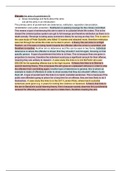
The primary aims of punishment are deterrence, retribution, reparation denunciation,
rehabilitation and public protection. Retribution is seeking revenge for the crimes committed.
This means a type of sentencing this aim is seen in is custodial whole life orders. This is the
closest the criminal justice system can get to full revenge and therefore retribution as there is no
death penalty. Revenge is taking away someone’s liberty for as long as they live. This is seen in
the case study of Peter Suttclife, who killed 13 women and attacked more, therefore retribution
was met through his whole life order as he died in prison. A theory this aim links to is Right
Realism, as it focuses on being harsh towards the offender after the crime is committed, and
therefore is reactive. Another aim is deterrence and this can be seen in two forms. Individual
deterrence is where the offender is shown that they shouldn’t commit again, focusing on that
specific person. A type of punishment this links to is fines. This is because fines are given in
proportion to income, therefore the individual could pay a significant amount for their offense,
meaning they are unlikely to repeat it. A case study this links to is Ant McPartin who paid
£86,000 for his speeding offense due to his high income. A theory this links to is Skinner’s
operant learning theory. This is because the aim gives an unpleasant stimulus in order to stop
the offender from committing again. Another type of deterrence is general, this is where an
example is made of offenders in order to show society that they too shouldn’t offend, it puts
them off. A type of punishment this links to is harsh custodial sentences. This is because if the
public see offenders going to prison for a long time for an offense, they are less likely to do it
themselves. A case study this links to is the 2011 London Riots, where harsh custodial
sentences were given e.g. 4 years for inciting the violence on facebook. A theory that links to
this aim is Bandura's social learning theory, this is because society observes the punishments
received for offending and does not want to imitate them, therefore meeting the aim.
➔ Gives knowledge and facts about the aims
- List all the aims in an introduction
The primary aims of punishment are deterrence, retribution, reparation denunciation,
rehabilitation and public protection. Retribution is seeking revenge for the crimes committed.
This means a type of sentencing this aim is seen in is custodial whole life orders. This is the
closest the criminal justice system can get to full revenge and therefore retribution as there is no
death penalty. Revenge is taking away someone’s liberty for as long as they live. This is seen in
the case study of Peter Suttclife, who killed 13 women and attacked more, therefore retribution
was met through his whole life order as he died in prison. A theory this aim links to is Right
Realism, as it focuses on being harsh towards the offender after the crime is committed, and
therefore is reactive. Another aim is deterrence and this can be seen in two forms. Individual
deterrence is where the offender is shown that they shouldn’t commit again, focusing on that
specific person. A type of punishment this links to is fines. This is because fines are given in
proportion to income, therefore the individual could pay a significant amount for their offense,
meaning they are unlikely to repeat it. A case study this links to is Ant McPartin who paid
£86,000 for his speeding offense due to his high income. A theory this links to is Skinner’s
operant learning theory. This is because the aim gives an unpleasant stimulus in order to stop
the offender from committing again. Another type of deterrence is general, this is where an
example is made of offenders in order to show society that they too shouldn’t offend, it puts
them off. A type of punishment this links to is harsh custodial sentences. This is because if the
public see offenders going to prison for a long time for an offense, they are less likely to do it
themselves. A case study this links to is the 2011 London Riots, where harsh custodial
sentences were given e.g. 4 years for inciting the violence on facebook. A theory that links to
this aim is Bandura's social learning theory, this is because society observes the punishments
received for offending and does not want to imitate them, therefore meeting the aim.


