NR566 Week 1 Study Guide
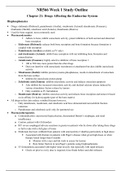
NR566 Week 1 Study Outline Chapter 21: Drugs Affecting the Endocrine System Bisphosphonates • Drugs: etidronate (Didronel), pamidronate (Aredia), risedronate (Actonel) alendronate (Fosamax), tiludronate (Skelid), zoledronic acid (Zometa), ibandronate (Boniva) • Used for bone support, most commonly used • Pharmacodynamics Adhere to bone, inhibit osteoclastic activity, potent inhibitors of both normal and abnormal bone resorption o Etidronate (Didronel): reduces both bone resorption and bone formation because formation is coupled with resorption o Pamidronate (Aredia) (available as IV only) o and risedronate (Actonel): inhibit bone resorption with out inhibiting bone formation and mineralization o Alendronate (Fosamax): highly selective inhibitor of bone resorption 1 100 to 500 time more potent than the other drugs Does not interfere with osteoclastic recruitment or attachment but does inhibit osteoclastic activity o Tiludronate (Skelid): inhibits protein-tyrosine-phosphatease, results in detachment of osteoclasts from the bone surface Inhibits the osteoclastic proton pump o Zoledronic acid (Zometa): inhibits osteoclastic activity and induces osteoclast apoptosis Also inhibits the increased osteoclastic activity and skeletal calcium release induced by various stimulatory factors release by tumors Only available as IV formulation o Ibandronate (Boniva): inhibits osteoclast activity and reduces bone resorption and turnover based on its affinity for hydroxyapatite (part of the bone matrix) • All drugs in this class reduce vertebral fracture however, o Only alendronate, risedronate, and zoledronic acid have demonstrated nonvertebral fracture reduction o Pamidronate and zoledronic acid: only for parenteral use • Pharmacotherapeutics o Contraindication: uncorrected hypocalcemia, documented Barrett’s esophagus, and renal insufficiency o Caution: patient with GI disorders o R/F severe esophageal adverse reactions is greater in patients who lie down after taking these drugs or fail to take with a full glass of water o Etidronate has been withheld from patients with enterocolitis r/t diarrhea particularly at high doses Associated with fracture in patients with Paget’s disease when given high doses or when therapy lasted longer than 6 months • Monitor with x-rays and lab work to assess for lesions • Rare femur fracture in non-Paget’s patients using bisphosphonates o IV formulations associated with higher renal toxicity risk especially with rapid infusion Check crt prior to every dose is required, force fluids before and after infusion • Clinical Use (Page 546 Dosing Chart) o Osteoporosis Prevention and treatment of osteoporosis and its risk for fracture in men and postmenopausal women (especially vertebral fractures) First line drugs: Alendronate, risedronate, and zolendronic acid with hip fracture reductions, FDA approved for this indication Second-line drug: Ibandronate Ibandronate and zoledronic acid come in IV form Alendronate PO solution (Binosto) and PO tablets Zoledronic acid: only alternative form that shows evidence of hip fracture reduction Prophylactic use in patients with early osteopenia r/t long term use of medications that contribute to bone loss • Includes (thyroid hormone, aromatase inhibitors, and glucocorticoids, PPIs, SSRIs) It is recommended that all adults taking more than 7.5 mg of prednisone or its equivalent for more than 3 weeks be given alendronate or risedrone In very high risk patients, maximum 2-year use of teriparatide (Forteo) (bone mass benefit disappears after d/c) a parathyroid hormone, may be more efficacious • Bisphosphonates: bone mass benefit does not decline for 5 years Alendronate and risedronate initial doses for prevention of bone loss: 5mg/day or 35mg/week For existing osteoporosis: alendronate 10mg/day or 70mg/week Risedronate: 75mg for 2 days or 150mg once a month o Paget’s Disease (Osteitis Deformans) All bisphosphonates are used to treat Paget’s disease when the alkaline phosphatase is at least twice the upper limit of normal Asymptomatic or at risk for future complications from their disease Symptomatic Paget’s best treated with etidronate Etidronate slows accelerated bone turnover in pagetic lesions and to a lesser extend in normal bone Reduced turnover causes symptomatic improvement: less bone pain and decreased fractures 5-10 mg/kg daily for up to 6 months or 11 to 20 mg/kg daily for 3 months For all drugs indications for retreatment are evidence of active disease or failure to normalize alkaline phosphatase levels
Geschreven voor
Documentinformatie
- Geüpload op
- 26 januari 2021
- Aantal pagina's
- 29
- Geschreven in
- 2020/2021
- Type
- Tentamen (uitwerkingen)
- Bevat
- Vragen en antwoorden
Onderwerpen
- tiludron
-
nr566 week 1 study outline chapter 21 drugs affecting the endocrine system bisphosphonates • drugs etidronate didronel
-
pamidronate aredia
-
risedronate actonel alendronate fosamax

Ook beschikbaar in voordeelbundel