WEEK 2 NOTES
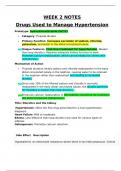
Drugs Used to Manage Hypertension
Prototype: hydrochlorothiazide (HCTZ)
Category: Thiazide diuretic
Primary Function: Increases excretion of sodium, chloride,
potassium, and water in the distal convoluted tubule.
Unique Features: First-line treatment for hypertension. Weaker
than loop diuretics. Requires adequate kidney function to work.
Promotes calcium reabsorption, which can be helpful for clients with
osteoporosis.
Mechanism of Action
Thiazide diuretics inhibit sodium and chloride reabsorption in the early
distal convoluted tubule in the nephron, causing water to be retained
in the nephron rather than reabsorbed and leading to increased
diuresis.
Since only 10% of the filtered sodium and chloride is normally
reabsorbed in the early distal convoluted tubule, the diuretic potential
for thiazides is weaker than loop diuretics.
Enhances calcium reabsorption in the nephron, beneficial for conditions
like postmenopausal osteoporosis.
Title: Diuretics and the kidney
Hypertension: Often the first drug prescribed for a new hypertension
diagnosis.
Heart Failure: Mild to moderate.
Edema: Less effective than loop diuretics but used for various types of
edemas.
Osteoporosis: Promotes calcium retention.
Side Effect Description
Hypokalemia An electrolyte imbalance where there is too little potassium. Clients
, Side Effect Description
can also experience low magnesium levels.
Hyponatremi An electrolyte imbalance where there is too little sodium. Clients can
a also experience low chlorine levels.
Hypovolemia Decreased blood volume and dehydration from excessive diuresis.
This side effect is less severe than in loop diuretics.
Hypotension Low blood pressure. Orthostatic blood pressure changes can also
occur.
Hyperglycem High blood sugar. Diabetic clients should use caution.
ia
Hyperuricemi High uric acid levels. Clients with gout should use caution.
a
High Elevated LDL levels.
cholesterol
Precautions:
Requires adequate kidney function for effectiveness.
Use with caution in clients with severe electrolyte imbalances.
Risks in clients with pre-existing hypotension or at risk for falls.
Potential for acute kidney injury in cases of severe dehydration.
Contraindications:
Contraindicated for clients with sulfa allergy.
Contraindicated for clients with severe renal impairment.
Drug Interactions
Potentiation of other antihypertensive drugs, leading
to [hypotension].
The potential for drugs like digoxin and lithium to accumulate
and cause toxicity due to [hypokalemia and hyponatremia].
[NSAIDs] can reduce the diuretic effect.
Drugs Used to Manage Hypertension
Prototype: hydrochlorothiazide (HCTZ)
Category: Thiazide diuretic
Primary Function: Increases excretion of sodium, chloride,
potassium, and water in the distal convoluted tubule.
Unique Features: First-line treatment for hypertension. Weaker
than loop diuretics. Requires adequate kidney function to work.
Promotes calcium reabsorption, which can be helpful for clients with
osteoporosis.
Mechanism of Action
Thiazide diuretics inhibit sodium and chloride reabsorption in the early
distal convoluted tubule in the nephron, causing water to be retained
in the nephron rather than reabsorbed and leading to increased
diuresis.
Since only 10% of the filtered sodium and chloride is normally
reabsorbed in the early distal convoluted tubule, the diuretic potential
for thiazides is weaker than loop diuretics.
Enhances calcium reabsorption in the nephron, beneficial for conditions
like postmenopausal osteoporosis.
Title: Diuretics and the kidney
Hypertension: Often the first drug prescribed for a new hypertension
diagnosis.
Heart Failure: Mild to moderate.
Edema: Less effective than loop diuretics but used for various types of
edemas.
Osteoporosis: Promotes calcium retention.
Side Effect Description
Hypokalemia An electrolyte imbalance where there is too little potassium. Clients
, Side Effect Description
can also experience low magnesium levels.
Hyponatremi An electrolyte imbalance where there is too little sodium. Clients can
a also experience low chlorine levels.
Hypovolemia Decreased blood volume and dehydration from excessive diuresis.
This side effect is less severe than in loop diuretics.
Hypotension Low blood pressure. Orthostatic blood pressure changes can also
occur.
Hyperglycem High blood sugar. Diabetic clients should use caution.
ia
Hyperuricemi High uric acid levels. Clients with gout should use caution.
a
High Elevated LDL levels.
cholesterol
Precautions:
Requires adequate kidney function for effectiveness.
Use with caution in clients with severe electrolyte imbalances.
Risks in clients with pre-existing hypotension or at risk for falls.
Potential for acute kidney injury in cases of severe dehydration.
Contraindications:
Contraindicated for clients with sulfa allergy.
Contraindicated for clients with severe renal impairment.
Drug Interactions
Potentiation of other antihypertensive drugs, leading
to [hypotension].
The potential for drugs like digoxin and lithium to accumulate
and cause toxicity due to [hypokalemia and hyponatremia].
[NSAIDs] can reduce the diuretic effect.